 Corgi
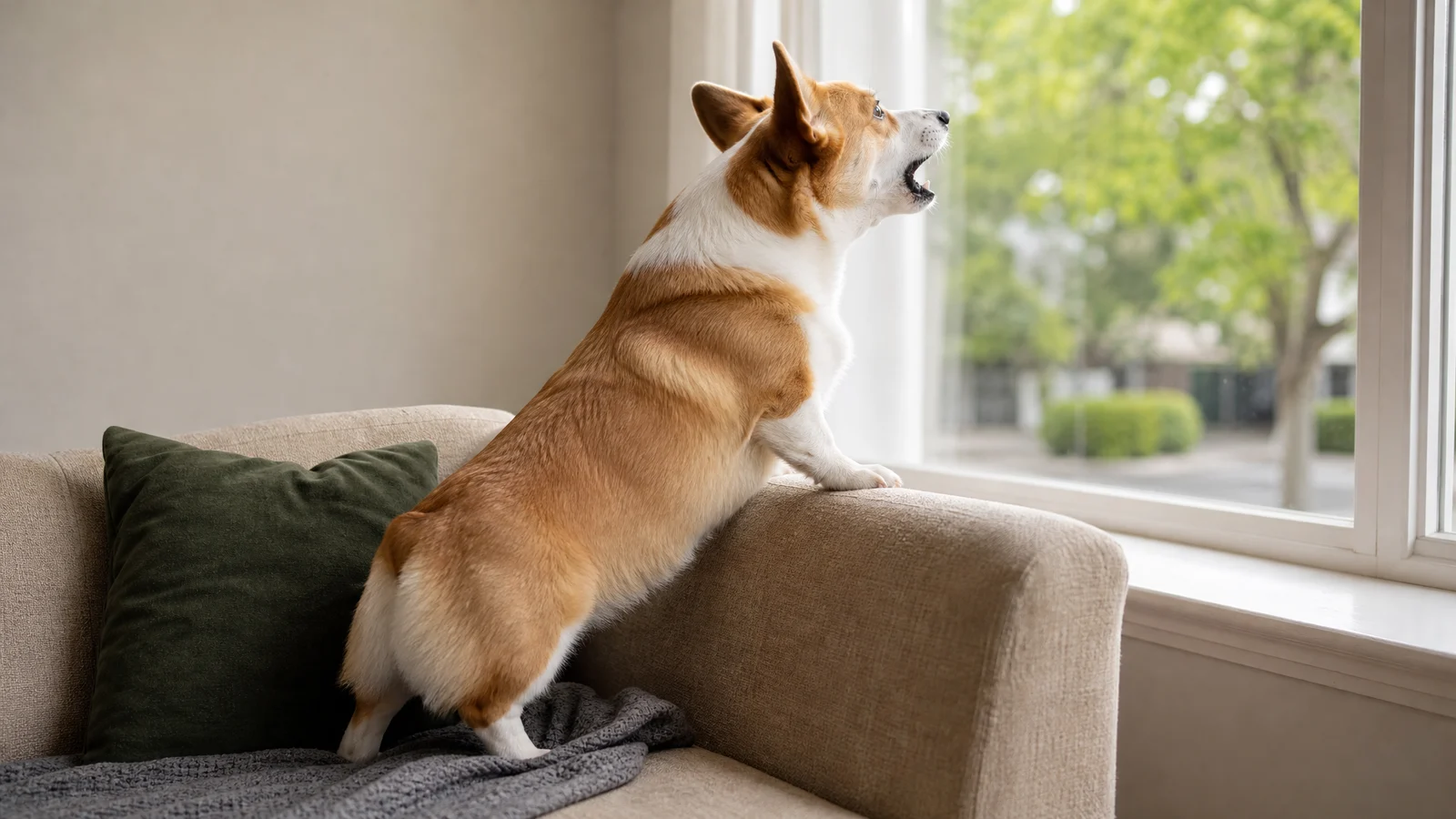
Less barking and easier recovery are useful goals for a Corgi. Complete silence is not a realistic promise, and counting a single alert tells you little if the dog then spends the afternoon watching for the next event. Notice how readily they return to resting, exploring or interacting after something attracts their attention.
Both Pembrokes and Cardigans can be vocal, although individuals differ in what they announce. A view through the front window, a sound beyond the door and a request for play may require different changes. This article starts with an alarm record, then examines visual access, household sounds and a quiet cue taught in manageable moments. We also look beyond the pause, because what your dog does afterward determines whether quiet becomes usable in everyday life.
A Useful Record of Corgi Barking
Write down the event that preceded the sound, the dog's location and how the episode ended. Include whether your Corgi could look away or resume another activity once the event passed. This turns a general impression of constant noise into information about the parts of the day that need attention.
The Cardigan is described as a watchful dog with a substantial barking voice. That helps explain why an alarm can feel large in a small home, but it does not establish the reason for every bark. Observe the actual event instead of assuming the breed description supplies a complete answer.
Record quiet encounters too. A person passing farther away without a response can help identify a manageable starting condition for practice.
- Note the sight or sound, where the dog was and whether the event appeared suddenly.
- Describe what people did next, including calling, approaching the window or starting another activity.
- Include the dog's recovery, especially whether they returned to watching the same location after receiving a reward.
Use the record to choose one change you can maintain. If every difficult episode occurs from the same chair overlooking the sidewalk, adjusting that view is more specific than adding several new cues at once. Keep the remaining routine familiar while you observe whether the change helps. Include both busy and quieter periods in your notes, so an empty sidewalk does not look like a trained response.
Visual Patrols and Window Barking
A low dog can still gain a wide street view from furniture or a glass door. Look from your Corgi's actual watching position before deciding the window is out of reach. A narrow gap beneath a curtain may be enough to keep movement visible, even when the room looks screened to a standing adult.
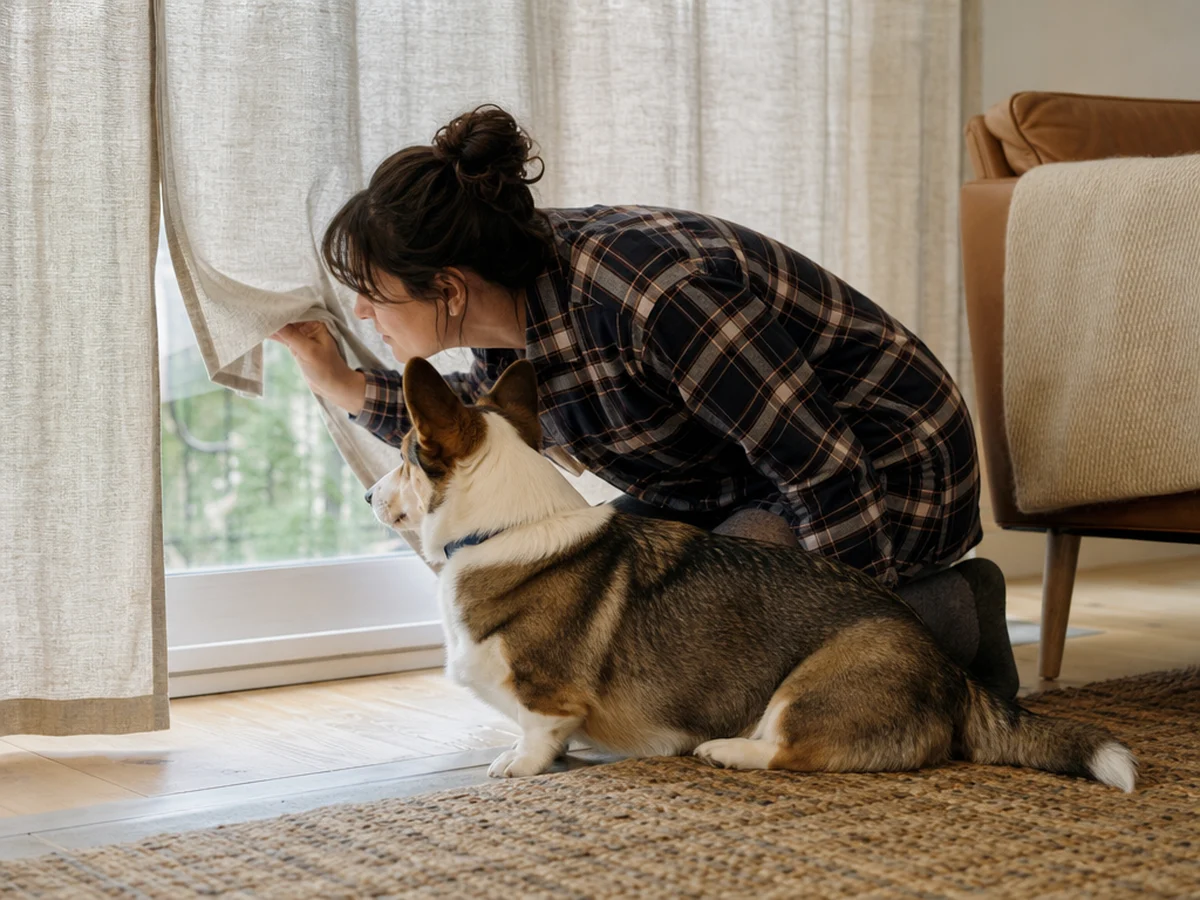
Choose a practical way to reduce that view during busy periods. Move the resting place, restrict access to a lookout or cover the relevant part of the glass. Preserve comfortable space and ordinary daylight where possible, while making the repeated passing event less available to monitor.
Guidance on managing excessive barking includes reducing access to views that trigger it. This supports learning by changing the setting. It does not demonstrate that the dog's response to the same passerby has already changed.
Provide a worthwhile alternative before the familiar busy period begins. A comfortable place beside you or a suitable supervised activity may be easier to use than a bed facing the covered window. Watch whether the dog actually leaves their watching job rather than simply moving to another gap. Check the arrangement when the dog is awake and active, as well as when they would normally be asleep.
Our Corgi behavior guide puts barking alongside other household patterns. Keep the window change specific here, so you can distinguish a quieter view from changes caused by a different play or rest routine.
Household Sounds Behind Corgi Barking
Sound can remain important after the view is covered. Door activity, footsteps outside an apartment and delivery noises may reach the dog from different directions. Identify the sound you can safely control for practice, and manage unavoidable events when their intensity is beyond what your Corgi can currently handle.
Arrange a quieter resting area away from the entrance when possible. A bed beside the busiest door may repeatedly interrupt sleep even when nobody intends to involve the dog.
Advice on manageable sound practice describes introducing a recorded trigger quietly and rewarding a calm response. Begin at a level the dog notices without becoming worried or noisy. If even the lowest useful version causes difficulty, stop the exercise and obtain individualized guidance.
A recording is only one version of an event. A real visitor also brings movement, scent and a change in household behavior, so success with a sound does not prove readiness for the complete arrival. Keep a separate management arrangement for visitors while the easier sound lesson develops.
Let adults agree on who handles the door and who supports the dog. Calling instructions across the room adds activity at the moment you want less of it. Prepare that division beforehand so the Corgi encounters a familiar arrangement instead of a hurried crowd.
A Quiet Cue for Manageable Barking
Teach quiet when you can recognize and reward a comfortable pause. A dog who is frightened, intensely focused or unable to disengage needs an easier situation before a word can help. Start with mild everyday moments, keeping the environment calm enough for your Corgi to notice the relationship between their response and the reward.
The Pause Comes First
Have a suitable reward ready and watch for a natural break in an easy episode. Acknowledge that quiet moment and deliver the reward promptly. Avoid repeatedly provoking barking just to produce a pause, since that would give the noisy beginning a dependable place in every practice sequence.
Also reward calm noticing before a bark occurs. Looking at a mild event and staying available is a useful response in its own right.
General advice on teaching quiet responses emphasizes identifying the reason for barking. Keep this exercise attached to manageable alerting. Silence obtained while the dog remains tense is not the same result as a dog who can comfortably turn their attention elsewhere.
A Word With a Clear Meaning
As the easy pause becomes predictable, say your chosen quiet word calmly just before it occurs, then reward the response. Keep the cue brief and consistent across adults. Repeating it continuously while the dog keeps barking gives them little information about which moment you intended to acknowledge.
Use your established marker and reward delivery. The Corgi foundation training guide covers those shared basics, allowing this lesson to fit the language the dog already understands.
A Pause That Can Last
Build duration in small, manageable changes after the initial response is clear. Reward while your Corgi is still comfortably quiet, before they need to restart the alarm. Change either the length of the pause or the difficulty of the event, leaving the other part easy enough to interpret.
Difficulty can increase without a louder sound. A second person entering, a closer position or a longer view of movement may change the lesson just as much.
If the response breaks down, lower the challenge and let the dog recover. Do not keep repeating the cue as a test of determination. The useful question is which condition changed and what would let the dog understand the next opportunity more easily.
What Follows the Corgi Barking Pause
Plan the activity after the reward. If your Corgi eats beside the window and immediately resumes watching, quiet may remain only a brief interruption in a longer patrol. Offer a comfortable next location or familiar activity that helps the dog leave the event behind without starting another burst of excitement.
Suitable searching, a supervised chew or quiet company can provide different options. Choose according to the response you observe, rather than assuming that every toy produces the same level of calm. The dog should be able to use the activity without continually checking the original trigger between rewards.
Keep the next activity available before the alarm when practical. It should not appear exclusively after barking, or the whole noisy sequence can become the way your dog obtains it.
- Move the activity away from the watching position when the view continues to hold the dog's attention.
- Allow time for comfortable participation without repeatedly calling the dog back to demonstrate the quiet cue.
- End practice after a manageable response and use environmental management for further unavoidable events.
Protect ordinary rest across the day. Frequent interruptions can make a well-planned quiet lesson compete with an environment that keeps asking the dog to become alert again. A useful resting area should remain usable when other family members come and go.
Barking That Needs a Different Explanation
Revisit the reason when the pattern does not fit the alarm record. Noise during absences, uncomfortable handling or an unmet need may require a different response. Barking directed at a person can also be a learned request, so the destination of the dog's gaze alone does not settle the question.
Compare observations without assigning a cause from one sound. These distinctions identify what to investigate next, rather than deciding the cause from a short description.
| Observed Pattern | Useful Next Question |
|---|---|
| Noise clusters around departures | Can the dog rest comfortably when people leave? |
| Barking continues after the event ends | What helps the dog recover, and are other needs being met? |
| A familiar quiet dog becomes unusually vocal | Has comfort, hearing, routine or another part of daily life changed? |
Maintain regular veterinary checkups and discuss sudden or persistent changes in vocal behavior. Bring the record of events and recovery, including patterns that seem unrelated to the original window problem. A qualified reward-based professional can help assess behavior while veterinary questions are addressed appropriately.
Usable Quiet for a Watchful Corgi
Review the whole day, including quiet encounters and recovery after an alert. Fewer repeated patrols, easier use of a resting place and a response to the familiar cue are different signs of progress. None requires the dog to become silent in every situation.
Keep the changes that make ordinary life easier and adjust the setting before increasing difficulty. A move, a visitor or a busier street can change the challenge even when your Corgi remembers the lesson.
Continue supporting both the environment and the learned response. Covering a difficult view, rewarding comfortable quiet and allowing recovery can work together, giving a vocal dog a manageable way to notice the world and then return to the household.
 BehaviorHelping a Corgi Who Growls Over the Food Bowl Feel Safe
 Training basicsRewards and Games That Bring Corgis Back From the Chase
 BehaviorSafe Chews and Swap Games for a Corgi Who Steals Everything