 Corgi
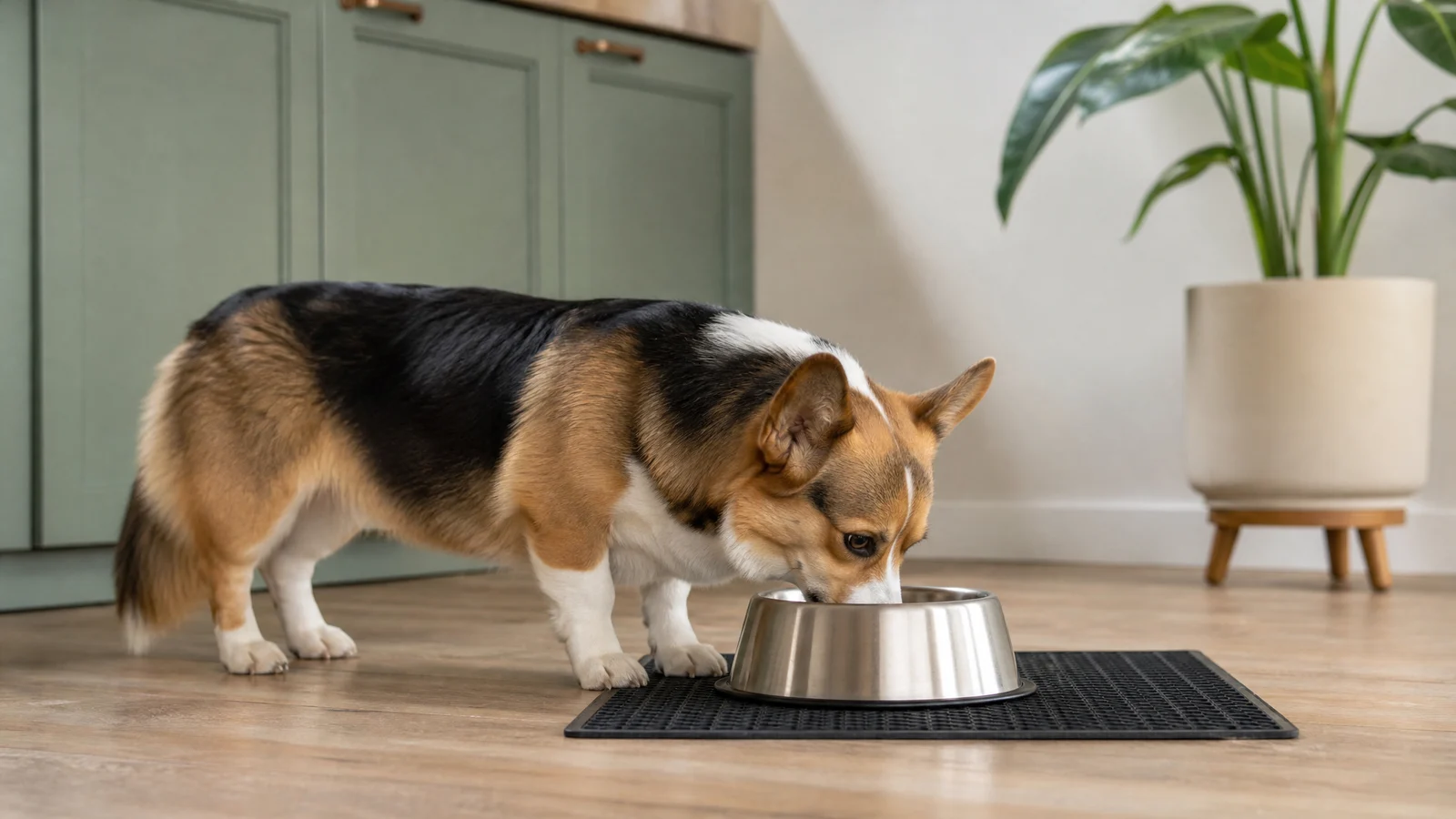
A food bowl should give a Corgi somewhere to eat without having to monitor approaching hands. If they stiffen or growl, the immediate priority is a safer feeding arrangement. Repeatedly touching the bowl to check whether they allow it adds another encounter to manage and tells you little about how comfortable the meal feels.
Food concerns are individual. Neither Pembroke nor Cardigan ancestry explains away a worrying response, and a dog who is friendly during play may still need substantial space around dinner. Small stature also makes it easy for a person to lean directly over the eating area without considering the dog's view.
Below, we set out practical feeding agreements, separate positive approach work from ordinary meals and examine food elsewhere in the home. The aim is relaxed eating and predictable human behavior, with qualified support wherever safety or comfort is uncertain.
A Protected Meal for Your Corgi
Stop approaching when the dog becomes still, covers the bowl or watches your hands closely. A growl is useful information that the encounter is already difficult. Create room for the dog to eat without continuing the interaction, and keep children and other animals away from the feeding area.
Guidance on early canine communication describes signals that can appear before a snap or bite. Early discomfort already gives you a reason to change the setup. Record what you already observed and use that information to seek suitable help.
A quiet dog may still be tense. Notice ordinary movement and eating behavior rather than treating the absence of a growl as permission to reach down.
For a dog who has snapped, bitten or made someone afraid to move near food, obtain professional guidance before attempting approach exercises. Safe separation remains useful while that help is arranged. Choose an arrangement the adults can operate without putting hands beside an eating dog or requiring a child to move past them.
Keep regular veterinary visits part of care and mention new food-related behavior, especially when appetite, movement or handling comfort also changes. The history of the response matters, but it should not replace attention to the dog's current physical comfort.
Food Placement Outside Household Traffic
Choose the meal location while your Corgi is elsewhere. The best place is not necessarily the most convenient corner for storing a bowl. Consider the paths people use, whether another animal can enter and how the dog will leave after eating. A cramped spot beside a busy doorway creates avoidable approaches. Check where people will go during the meal, including anyone who may need to leave the room unexpectedly.
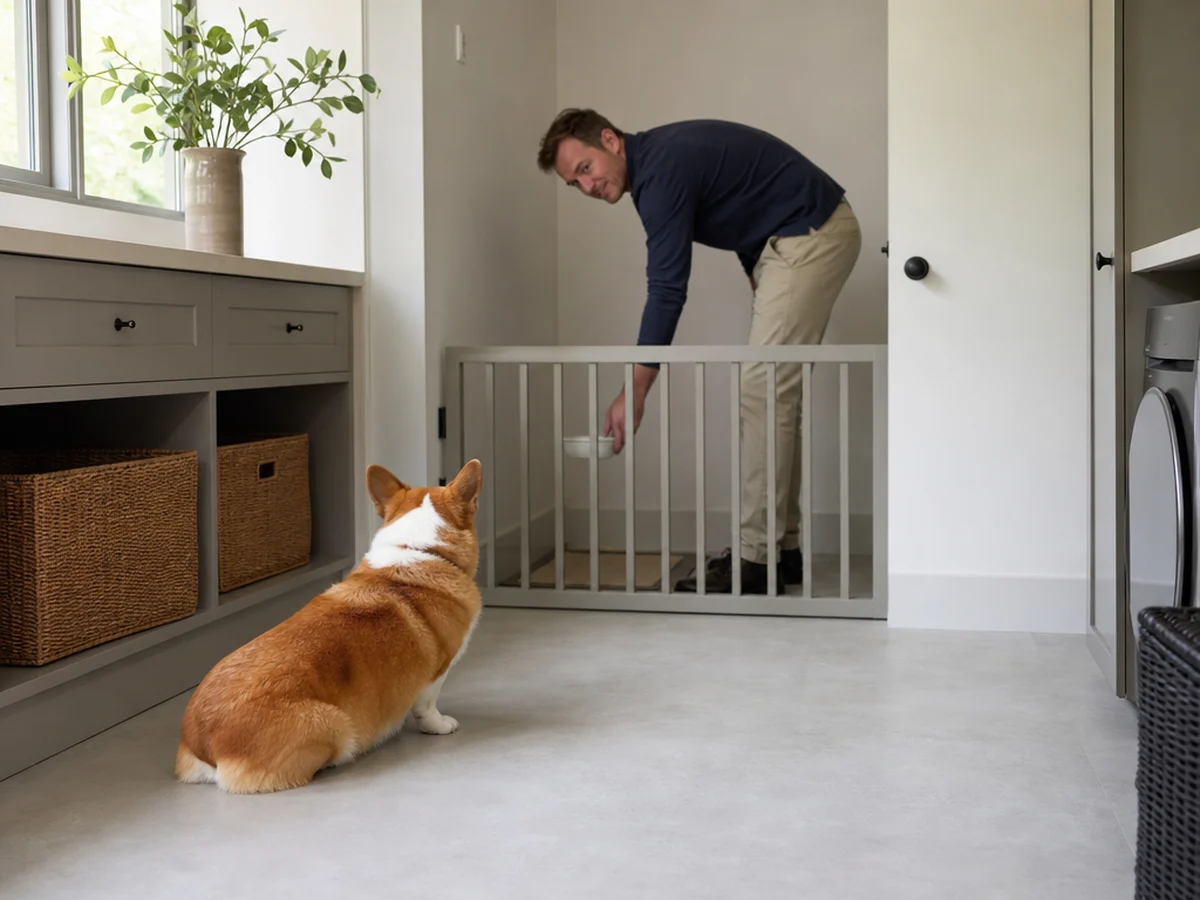
Check the room from the dog's level. A person bending toward a low bowl can fill much of a Corgi's view, while furniture may limit the available route away. Arrange access so the dog can approach and leave comfortably without passing between a person's legs.
Compare the location with these practical requirements. A useful feeding area supports an ordinary meal without asking everyone to remember an awkward exception.
| Feature of the Space | What It Should Allow |
|---|---|
| Distance from traffic | People can use essential rooms without passing the eating dog |
| Separation from pets | Other animals cannot approach the bowl during the meal |
| Adult access afterward | The bowl can be collected once the dog has left and is comfortably elsewhere |
Test the human arrangement without the dog first. If someone must open the barrier to reach a cupboard halfway through dinner, move the supplies or choose a different location. This is a planning problem for the household, not another challenge the Corgi needs to learn to tolerate.
Adult Responsibilities Around Corgi Food
Agree on who prepares the meal, who keeps the area separate and who collects the empty bowl later. Clear responsibilities prevent one person from setting up a protected meal while another walks in to tidy. Explain the arrangement to visitors before food appears, particularly if they help with pet care. Keep the instructions near the stored supplies so another adult can check them before preparing a meal.
Children should have no role in testing, trading for or collecting the bowl. An adult manages the entire feeding period, including the time when the dog is still near an apparently empty dish.
- Prepare and place the bowl while the dog is comfortably separated from the preparation area.
- Keep children and other pets outside the feeding space, using an arrangement adults can maintain consistently.
- Allow the dog to leave voluntarily after eating, then collect dishes only when they are safely elsewhere.
- Share any worrying observation with the responsible adult rather than repeating the encounter to show someone what happened.
Do not assume another pet will respect the boundary because previous meals were uneventful. One animal finishing sooner can create a new approach to a bowl still in use. Separate feeding spaces make the routine less dependent on every pet making the same choice at the same time.
The Corgi household socializing guide addresses wider relationships. Comfortable social contact does not establish that meals can be shared. Keep food boundaries explicit even between animals who otherwise rest or play together peacefully.
Good Things Near Food Without Testing Reach
The purpose of positive approach work is to change what a person's presence predicts. It is not to prove that a Corgi will surrender dinner. For a dog who already growls at the bowl, have a qualified reward-based professional assess the situation and decide whether, where and how this work can begin safely.
Advice on food guarding and professional support distinguishes practical precautions from behavior work that needs careful assessment. Risk, the dog's signals and the household arrangement all affect what is appropriate. A general article cannot determine the right working distance for an individual dog.
In an appropriate plan, a person may appear at an already comfortable distance, add something the dog values and leave. The good thing arrives without a hand entering the bowl or the meal being removed. The distance remains guided by comfort, rather than shrinking automatically because a certain number of sessions have passed.
Do not turn that principle into repeated close approaches during every meal. Your Corgi also needs ordinary uninterrupted eating. The professional can distinguish planned practice from management and explain what response means the exercise should stop.
Watch the whole encounter, including after the added food is eaten. A dog who takes a reward but then freezes or follows the departing hand has given different information from a dog who resumes comfortable eating. Share those details instead of recording only that the treat was accepted.
Trades Away From Food Bowl Concerns
A release skill can be useful without becoming a meal exercise. Practice with an ordinary, suitable toy only when your Corgi handles and leaves it comfortably. Keep that lesson away from the feeding area, where the object, setting and person's approach can all be easier for the dog to understand.
Guidance on rewarded trades and resources connects giving something up with a worthwhile outcome. The dog should be able to move away voluntarily before collection. A reward is not permission to reach beneath a dog who remains positioned over the possession.
Let safe practice have a predictable ending. When appropriate, return the suitable toy and allow undisturbed enjoyment, rather than immediately beginning another collection.
Success with an ordinary toy does not prove readiness around food. Keep records of those situations separately, and follow the professional plan for any object connected with tension. A Corgi can understand a familiar release word while still finding a particular approach uncomfortable.
Use the same marker language as your Corgi training foundations where suitable. That consistency helps with the easy skill, but it should never be used to justify asking for a more difficult exchange simply because the dog has responded to the word before.
Food Boundaries Beyond the Bowl
Look for other places where valuable food becomes available. A dropped snack, an open bag or another pet's dish can create a concern outside the planned meal area. Prevention needs to follow those opportunities too, especially when the household includes children who eat close to a low dog's reach. The same boundary should apply when a snack moves from a high table to a couch.
The goal is to make safe human habits convenient. Consider where food pauses during preparation, serving and cleanup, not only where the Corgi's own dinner is placed.
| Food Opportunity | Household Arrangement |
|---|---|
| A child's snack | Separate the dog before eating and have an adult handle cleanup |
| Another pet's meal | Maintain separate feeding areas until dishes are cleared |
| Food during kitchen cleanup | Keep the dog comfortably elsewhere while spills and accessible dishes are removed |
If the dog already has something dangerous or may have swallowed an unsuitable item, contact your veterinarian promptly for guidance. Protect people from a risky reach while arranging help. An urgent retrieval is not an opportunity to test the progress of a trade or approach lesson.
Discuss repeated concerns outside meals with the professional helping you. A plan limited to one bowl may miss the dog's wider pattern, while a clear description of locations and objects helps identify which household arrangements need changing first.
Useful Evidence About Your Corgi's Food Comfort
Bring ordinary observations to a professional assessment: which object was present, who approached, what movement occurred and how the dog responded. Include whether concern begins during preparation, eating or collection. Those are different parts of the meal, and each may suggest a different practical change.
Describe what the household can realistically maintain. A separate room is useful only if it can remain separate while the dog eats. Mention busy passages, other pets and caregiving arrangements honestly so the plan fits the home you actually use.
Guidance on management alongside behavior work explains why protective arrangements remain important during learning. Progress in a planned exercise does not immediately remove the need for safe everyday boundaries. Keep those boundaries until the professional and the dog's responses support changing them.
Do not stage another uncomfortable encounter for a better account. Notes about what has already happened can be useful without asking a family member to approach again.
Review subtle improvements as well as incidents. Easier entry into the feeding space, ordinary eating and a relaxed departure may show that the daily arrangement is becoming more comfortable. None requires someone to touch the bowl while it is in use.
Relaxed Food Time for Your Corgi
Keep the household agreement centered on predictable meals and comfortable space. Let the dog eat without unnecessary approaches, maintain separation from children and pets, and leave difficult behavior work within the individualized plan. A quieter meal is useful when it reflects comfort throughout the encounter.
Measure success by that comfort rather than how often a person can collect food. Pembrokes and Cardigans deserve the same clear boundaries around valued resources, with changes guided by the individual dog and continued support whenever the situation remains uncertain.
 Training basicsRewards and Games That Bring Corgis Back From the Chase
 BehaviorSafe Chews and Swap Games for a Corgi Who Steals Everything
 Training basicsHow to Teach a Corgi to Leave It