 Corgi
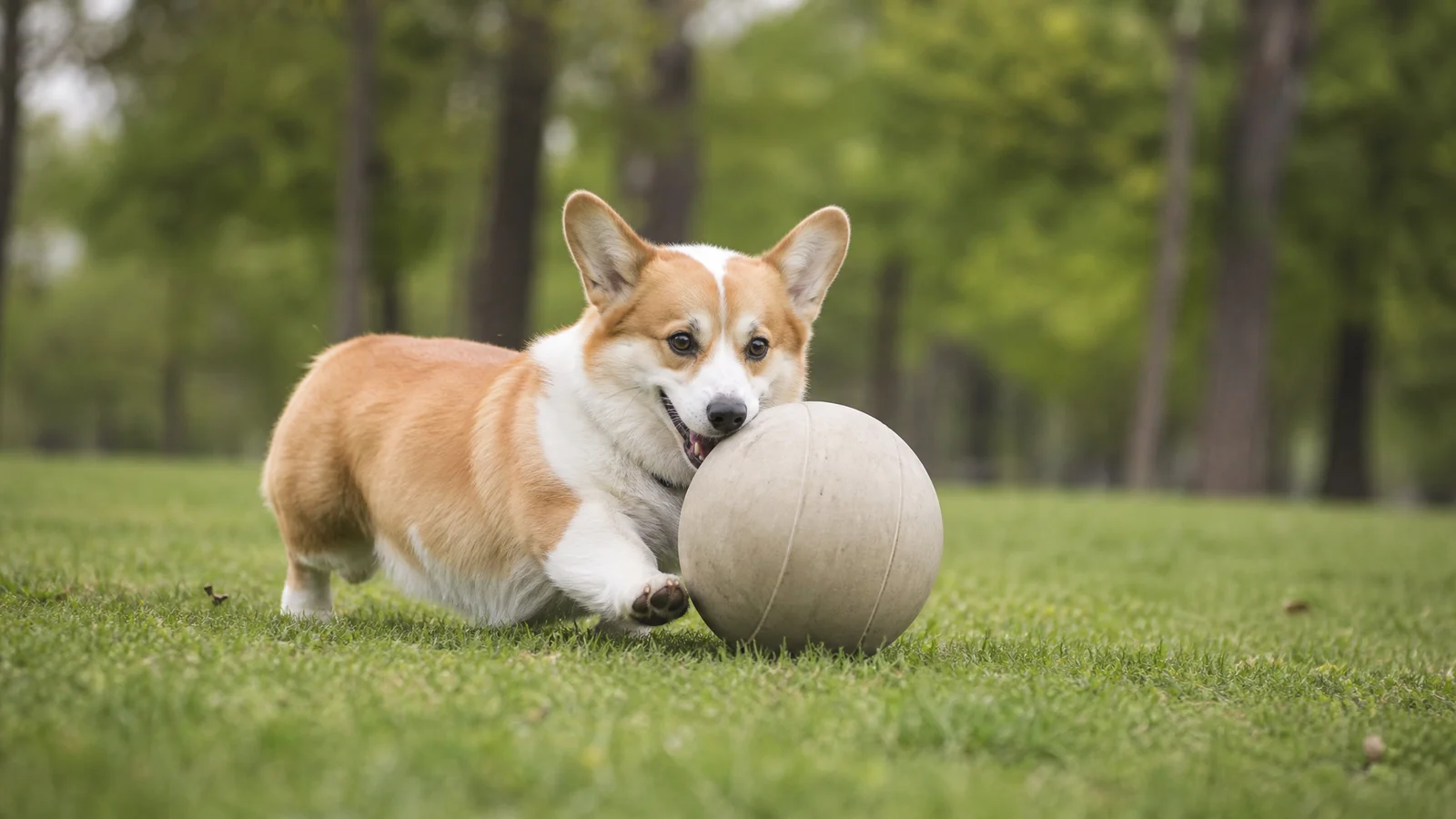
Most Corgi behavior problems, including heel nipping, barking, herding people and bossing other dogs, are the herding instinct working without a job. Corgis were bred to move cattle by getting close to the heels and applying pressure, so a running child, a noisy hallway or a larger housemate all look like stock to manage.
Handled badly, that means sore ankles, steady noise and friction between dogs. Handled well, you get a quick, willing partner who enjoys work. We specialize in Corgi behavior and training, and each fix below follows the way the breed thinks.
Below, you'll find the instinct mapped to each problem, including four household case files on apartment living, young kids, a second dog and a long day alone, plus an honest look at what changes as your Corgi ages.
The Herding Instinct Behind Corgi Behavior Problems
Each problem in this article is a herding behavior with nowhere to go. The Pembroke was bred for herding and driving, and the breed standard calls for the agility, freedom of movement and endurance to do that work. Pembrokes still work as stockdogs today. The drive is current, not a relic. A living room with no cattle in it does not turn it off, so it finds other targets.
Two traits decide how the drive shows up. The Pembroke is described as bright and bossy, so a Corgi decides fast and pushes to make things happen. The breed is also sensitive, and positive, reward-based training works best. The result is a dog who learns a bad habit quickly and a good one just as quickly, provided the good one pays.
The Cardigan shares the cattle-driving past. Their old job also included serving as a flock guardian at night, which helps explain a watchful bark. The table maps each problem to the instinct behind it and to the case file that handles it.
| Problem | Herding root | Case file |
|---|---|---|
| Heel nipping | Driving stock by contact at the heels | Young kids |
| Herding people and pets | Gathering anything that runs | Young kids |
| Barking | Watching the territory and reporting change | Apartment, long day alone |
| Bossing other dogs | Taking charge of the herd | Second dog |
Give the instinct a task and the symptoms shrink.
Barking Behavior Problems in a Corgi Apartment
An apartment packs triggers into a small space. Footsteps in the hallway, the elevator chime, a neighbor's door and a delivery knock all land within feet of your Corgi. Each one fires the same reflex: watch the territory and report change. That is a working dog's watch role, not defiance, and it runs many times a day when the territory is a thin wall.
Find the Trigger, Then Cut the Rehearsal
Barking serves many functions, so identify the cause and the payoff before you treat it. Log the time, the sound and what your Corgi was doing for several days. Hallway noise at predictable hours is alert barking. Barking at nothing while you are busy is boredom. Barking at your chair is demand barking, and it fades once it stops working.
Then reduce exposure. Block the view of the door with a gate or window film and move the bed away from the shared wall. Drop a treat on the bed each time a hallway sound passes without a bark. Every barked reply strengthens the habit, so fewer replies mean a weaker one.
Shared hallways also put your Corgi nose to nose with other dogs. Reactivity on leash is relatively common and can look like whining, barking or lunging at passing dogs, bikes or cars. Step aside, feed treats while the other dog goes by, and keep enough distance that your Corgi can still eat.
A Quiet-Cue Routine for Thin Walls
Shape the bark instead of banning it. A Corgi who reports once and earns a reward for stopping learns that the job is done.
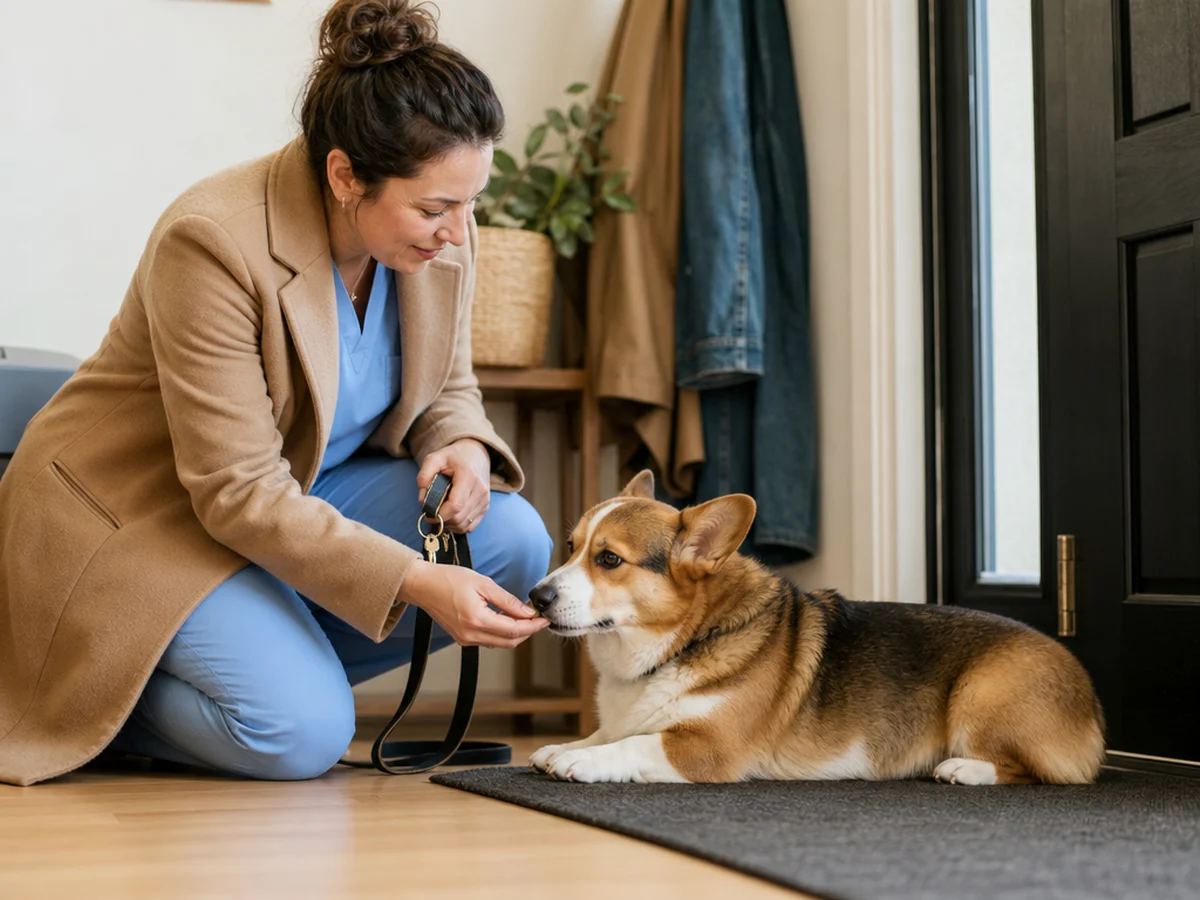
- Let your Corgi give a short alert bark, then say "thank you" in a calm voice.
- Call them to you and ask for a sit or a hand target away from the door.
- Mark the first second of quiet and drop a treat on their mat.
- Wait slightly longer each round before you pay.
- Add the cue "quiet" only once the silence is reliable.
- Practice with a recorded hallway sound at low volume before the real thing.
Keep your voice low and flat throughout. Shouting at a barking dog sounds to them like you are joining in. A short report and a paid silence beat a dog who is never allowed to speak.
Young Kids and a Heel-Nipping Corgi
A home with young children is the hardest test of the instinct. Children run, change direction and squeal, and to a Corgi, that looks exactly like stock breaking from the herd. The dog does not see a child. They see movement that needs to be gathered.
Why Running Children Set Off Nipping
Pembrokes are happy to herd up errant children, especially running ones. Parents need to be consistent from the beginning to prevent heel nipping later. Each nip that makes a child speed up pays the dog, and a paid habit grows.
The root is plain. The old job was to nip the heels of cattle and drive them, so contact at the heel is the original tool, not a flaw in your dog. Puppies do the same, only louder. Mouthing on hands is a separate habit, covered in our guide to Corgi puppy biting.
House Rules for Kids and Dog
Redirect the nip into a chase you control, then make the rules identical for everyone in the family.
- Children stop and stand still when the Corgi moves in, then toss a treat on the floor away from their feet.
- An adult cues a sit or a trip to the mat and pays for it while the activity continues.
- A toy chase or a treat scatter replaces chasing the children.
- If the Corgi nips or circles again, play ends calmly and the dog takes a brief break behind a gate.
- An adult supervises every stretch of play between dog and child, and the gate stays closed when nobody can watch.
Early exposure helps too. Well-socialized Cardigans are described as especially fond of kids and agreeable with other pets, and our guide to socializing a Corgi shows how to build that. Steady rules beat clever tricks here, because the dog learns from whatever pays every time.
Why Does a Corgi Boss the Other Dog Around?
Because a housemate looks like part of the herd. Pembrokes living with other dogs, especially larger breeds, generally become the "boss" and herd the others around, sometimes to the other dog's annoyance. Size does not matter to a driver.
The breed was built to move animals far larger than themselves, so a Corgi will happily push a much bigger dog around the yard. The bigger dog may tolerate it for a while, then run out of patience, and that is when a bossy habit becomes a fight.
Interrupt the Herding Calmly
Watch for circling, blocking doorways, nipping at the other dog's legs, staring and stalking. When you see it, call your Corgi to you, pay for the recall and give a brief break behind a gate. Stop the game, not the dog. Then reward your Corgi for walking away from the other dog on their own and for any calm greeting.
Give Each Dog Their Own Space
Space prevents most of the friction. Feed each dog in a separate spot and pick up bowls and chews afterward. Give the larger dog a resting place the Corgi cannot reach, and end play early if the bigger dog stiffens or avoids the game. Short, supervised sessions with a calm break in the middle keep intensity down.
Pay for polite play, such as loose bodies and pauses, so your Corgi learns that gentle gets rewarded. Manage the space, reward manners, and the bossing fades into background noise.
Corgi Behavior Problems During a Long Workday Alone
A Corgi home from morning to evening has a full day of drive and no task. Unspent herding energy comes out as barking at every sound, pacing, window patrol and, when you walk in, a burst of nipping at your ankles. Boredom is a likely cause when pain has been ruled out, so start by giving that drive work to do before you add more rules.
Mental work is the best answer to a dog who barks from boredom. Scent games and puzzle feeders give a Corgi a task, and so does training. A dog who has worked through a food puzzle has spent drive that would otherwise go into the window. The table splits the day into the parts you control.
| When | What to set up | What it does |
|---|---|---|
| Before you leave | A short find-it game, then a puzzle feeder at the door | Spends drive and gives the dog a job as you go |
| While you are out | Blinds or window film, a chew, a few hidden treats | Cuts the watch-and-bark loop |
| After you return | A calm arrival, a training game, then a walk | Gives the evening burst of energy a job instead of your ankles |
Keep arrivals quiet. A big, noisy reunion switches the herding drive on, while a quick find-it game turns the first minutes into a task. Ask everyone in the house to greet the dog the same way, since a single excited welcome can undo a week of calm ones.
If barking or restlessness appears suddenly, call your veterinarian. Pain can look like a behavior problem, and regular vet visits catch what training cannot. A tired mind at the door is the best defense against a loud house.
Will Herding Behavior Problems Ever Fade?
The drive does not fade, but the problems do. An adult Corgi is still a herding dog, and the pull that sent a puppy at heels stays for life. What changes is the dog's choice. Habits weaken when the alternative pays better and the old behavior stops working. They return when the household turns inconsistent or the dog goes without work.
Expect a mind of their own. Pembrokes often have one, yet they are energetic, willing and highly intelligent partners who respond well to training. Cardigans are described as expressive and trainable, and they excel in training because of a willing-to-please attitude. Keep sessions gentle and reward-based, since the breed is sensitive.
Real outlets exist. Pembrokes work in obedience and rally, herding, tracking and agility, and Cardigans do well in the same events. You do not need to compete. A few short training games a day give the same mental load, and our complete Corgi training guide lays out the foundation skills. Aim for a drive that is easy to manage, not one that is missing.
One Herding Job to Give Your Corgi Today
Pick one herding-style job and do it today for ten minutes. A herding ball is the closest match: a large ball your Corgi cannot pick up, which they push along with their nose. A find-it game is the easier start. Show a treat, ask for a wait, hide a few pieces around a room and release your dog to search.
Stop while your Corgi is still keen. Mark each nudge or find and pay on the spot. This is the first step in giving the instinct a job, and the rest follows from it.
Run it daily and watch the other problems loosen. The nip, the alert bark and the bossy shove are the same drive looking for work. A Corgi who has already moved something, found something and been paid for it has far less reason to start herding your ankles, the hallway or the other dog.
 Puppy trainingCorgi Puppy Biting: Why It Happens and How to Stop It
 Puppy trainingCorgi Puppy Training Timeline: 8 Weeks to 2 Years
 Training basicsCorgi Training: The Complete Guide for Owners