 Corgi
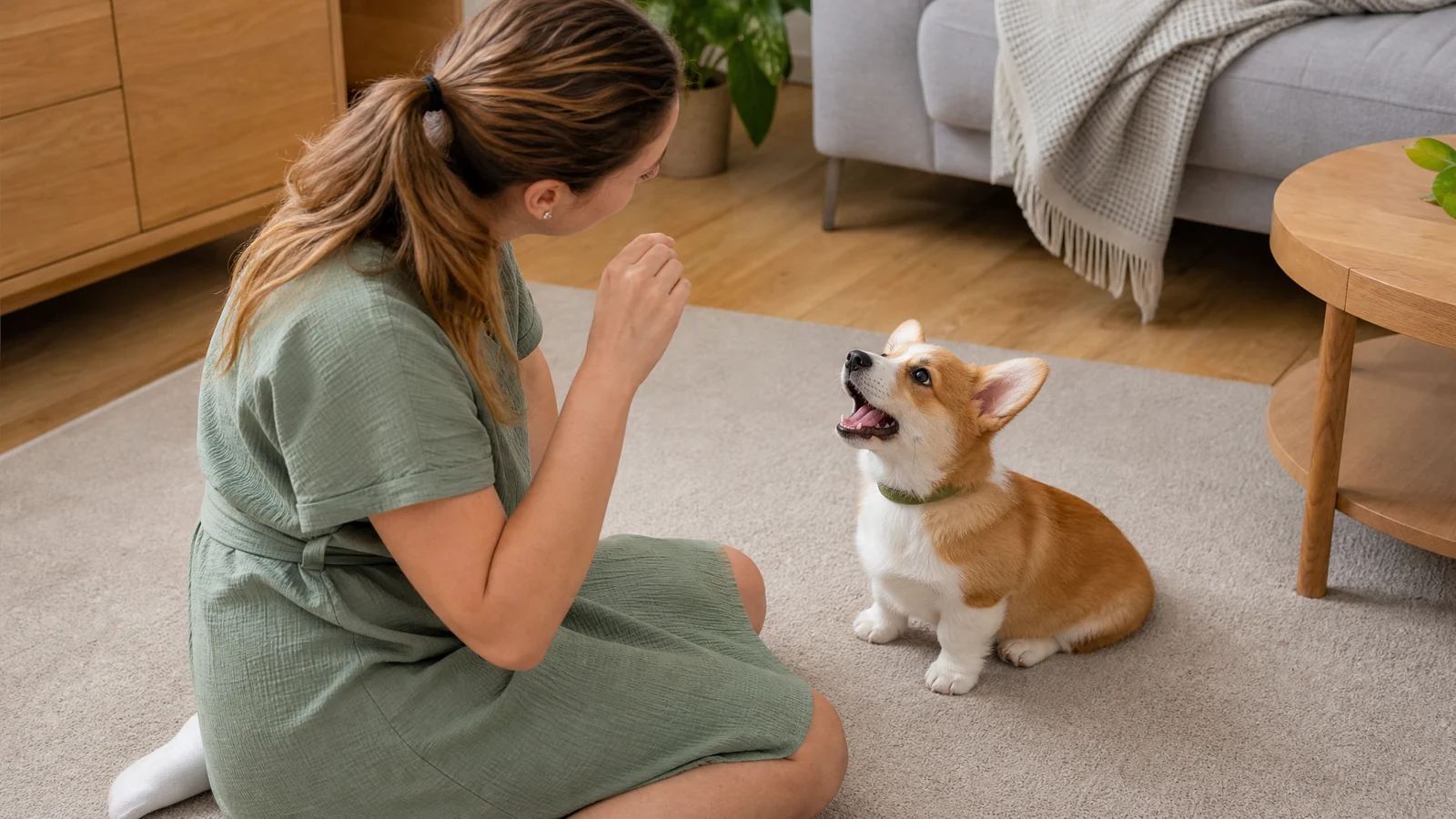
What should your Corgi know by when? It is the question every new owner asks, and the usual answer is a week-by-week chart that treats every puppy as the same dog on a different schedule. For this breed, that chart falls short. Corgis are smart enough to learn a cue in an afternoon, vocal enough to comment on the whole lesson, and built long and low enough that some standard milestones, like jumping games, need adjusting.
We have trained Corgis for many years, and the pattern holds: fast learning, slow growing up. Plan only for the fast part and you get a clever herder with opinions and no manners. Plan for both and you get a willing partner. In this article, we'll go through where to start based on your dog's age, the monthly session pace from 2 to 12 months, socialization and growth, and when the calm finally arrives.
Age at Arrival Decides Where Corgi Puppy Training Begins
Training starts the day the dog walks in, but the first month looks different depending on how old they are when they arrive. A puppy at 8 weeks, one at 12 weeks and a rescued adolescent each need their own opening, and borrowing the wrong one costs you weeks. Our verdict: match the first month to the dog's history, not to the calendar.
Arriving at 8 Weeks
A puppy this young knows nothing about houses, so the first month is mostly logistics. Set up the crate, a pen and a potty routine, then teach name, sit and settling on a mat in sessions of a few minutes. Pembrokes are sensitive dogs who do best with gentle, reward-based handling, so keep your voice light and the treats tiny.
Start on herding habits now, not later. Pembrokes are happy to herd running children, and parents who are consistent from the first week head off the heel nipping that otherwise shows up months on. Teach kids to freeze like statues when the puppy gets wound up, and let an adult do the toy handoff.
Arriving at 12 Weeks
A puppy at 12 weeks has already absorbed a month of someone else's habits, good or bad, so spend the first week watching before you teach. Do they startle at the vacuum, greet strangers, settle alone in the crate? Those answers decide whether you open with confidence building or with cues.
Ask the breeder what the puppy has already seen, because the socialization clock was running before you got there.
Arriving as a Rescue Adolescent
A rescued adolescent shows up with habits and no map of your house, so the first stretch is decompression. Keep the routine identical every day, offer a quiet space, skip the big outings and pay for anything calm. Some Cardigans withhold their favors from strangers until they know them better, and a newly arrived dog of either type may need the same patience from you.
After a couple of calm weeks, teach the puppy basics in a larger body. Slow warming up is not stubbornness.
Short Sessions Set the Monthly Puppy Training Pace
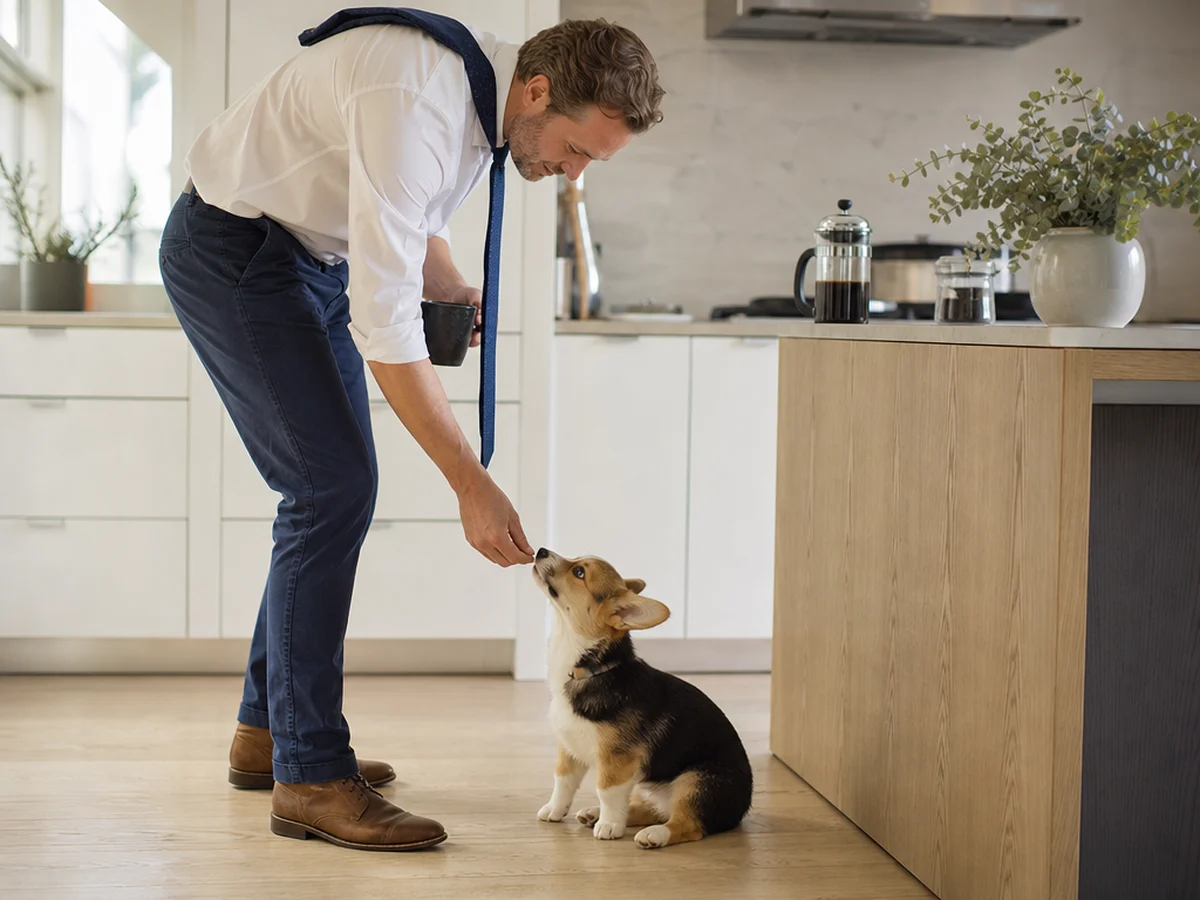
Corgis learn quickly, which tempts owners into long lessons, and long lessons are where this breed turns sloppy, bored or silly. Our verdict is several tiny sessions a day that end while the puppy still wants more. A bright, sensitive dog gets more from a few good repetitions and a small party than from a long stretch of tired ones. The table below sets the pace from 2 to 12 months, using bursts rather than clock time.
| Stage | Daily pattern | Main focus |
|---|---|---|
| Early months | Several bursts, a few minutes each | Name, sit, mat settle, potty routine |
| Teething months | Same bursts plus a calm chew break | Come indoors, down, handling, leash basics in the yard |
| Late puppyhood | Fewer sessions in new places | Loose-leash steps, longer settles, wait at doors |
| Nearing 12 months | A session or two plus cue practice on every walk | Recall with distractions, calm greetings, quiet cue |
Pay every time at first, then pay unpredictably once a cue is solid. Corgis notice a treat pouch the way a cat notices an open can, so vary when the jar appears and mix in tug games or a walk toward whatever they wanted. The club credits Cardigans with a willing-to-please attitude, and Pembrokes are energetic, willing and highly intelligent, so the hard part is your consistency, not their brains.
This is also the vocal period. Pembrokes are bright and bossy, and a bossy puppy tries demand barking the minute they notice it works. Reward the pause after the first few barks, say thank you calmly, and pay the quiet.
The nipping that peaks in the teething months has its own plan in our guide to Corgi puppy biting.
Socialization Windows Close Faster in Corgi Puppy Training
The easy part of socialization is short. In the first months a Corgi puppy meets new things with curiosity, and by adolescence the same things get a long stare and sometimes a bark. Our verdict: do the exposure early, in small doses, and make it boring on purpose. Your veterinarian sets the outing rules until vaccines are done, so ask before the first sidewalk trip. Then cover these one at a time, each paired with treats:
- Slippery floors, stairs and ramps, introduced slowly, because a long dog who slips once may refuse to go back.
- Household noises like the vacuum, the doorbell and delivery trucks, at low volume first.
- Calm adults and children who let the puppy approach instead of swooping in.
- Gentle handling of paws, ears, mouth and back end, since exams and grooming come for every Corgi.
- Short, easy stretches alone in the crate or pen.
- Brief meetings with calm, friendly dogs, ideally mellow larger ones, since Pembrokes living with bigger dogs tend to take charge and herd them around.
This slow, dull work pays off at the door and the park. Well-socialized Cardigans are especially fond of kids and agreeable with other pets, while a poorly socialized dog may greet the world with a bark and a lunge.
Greeting deserves its own attention. Some puppies dribble when excited, and to limit excited peeing you take the puppy outside first, greet them calmly once they settle, and ask visitors to ignore the puppy on arrival. That same habit becomes the calm greeting you want at 12 months.
Growth Stages and the Long-Backed Corgi Body
A Corgi grows on an odd schedule. The long body, short legs and big ears do not mature together, and the awkward middle months show it. Our verdict is to limit jumping and stairs during growth, and to do it with management rather than constant nagging.
In practice, that means ramps or steps for the sofa and the car, a gate at the top of the stairs for the youngest puppies, and non-slip floors for play. Carry small puppies on stairs. Teach wait before hopping out of the car, because a long-backed dog landing hard from a height is a risk you can remove with one cue and one treat.
Growth Spurts and Training
Growth spurts hit training too. Expect a ravenous appetite, clumsy movement, long naps and cues that worked last week vanishing. This is not defiance. Shorten sessions, lower the bar, pay more, and the skills usually return when the body settles. On walks, that can look like a puppy who suddenly sits down and refuses to go on, so turn around, call it a good outing and try again tomorrow.
Weight is part of the physical load. Training treats count as food, so use small pieces and take them out of the daily meals. A lean Corgi asks less of that long frame. Keep regular vet visits on the calendar through growth, since a sore puppy is a poor student.
This is general information, not medical advice. Check with your veterinarian about vaccinations and safe outings, what and how much to feed, and how much jumping and stair use suit your puppy's age and build.
When Do Corgis Calm Down?
No breed standard or source sets an age, and dogs vary, so treat these as working expectations from a team that specializes in this breed's behavior. The honest verdict: the bounce eases gradually through the second year and settles in the third, and only in dogs who get to practice settling.
What to Expect at Each Birthday
At 1 year, a Corgi looks adult and thinks like a teenager. Expect energy to spare, window barking and selective hearing, with real moments of calm mixed in. Do not judge the dog by the worst walk of the week.
Calming down comes in stages rather than on a birthday, and Corgis vary in how fast they get there. The first dependable signs are faster settling after walks, quicker recovery from excitement and a recall that holds more often. Over time, many Corgis become the dog you hoped for, still alert and chatty, but far easier to switch off.
Teach Calm Directly
The common advice is to tire the dog out. For this breed, that mostly builds a fitter Corgi who wants more. Pair daily exercise with mental work like puzzle feeders and scent games, then pay for settling on a mat while you eat, work or watch television. A dog who has practiced settling many times starts doing it unprompted, and that is what people mean when they say the dog calmed down.
Adolescent Months Test Every Puppy Training Rule
Somewhere after the puppy months, the dog who spun to attention at the treat bag starts treating you as a mild suggestion. That is adolescence, and it feels like failure. It is not. The dog is older, braver and more distractible, and is checking whether the rules still apply. Our verdict: hold the rules, rebuild the cues.
Rules to Hold Steady
Keep the same house rules, from the same people, in the same calm voice. Sensitive dogs who meet a stern, tense version of you tend to shut down or turn sneaky, so stay reward-based and keep the treat jar stocked. Keep the ramps and the wait at the car door too.
If your Corgi lives with bigger dogs, expect some bossing around. Reward polite play and call breaks before things wind up.
Cues to Rebuild
Recall, sit and mat settle are the usual casualties. Go back a step: practice in easier places, shorten sessions, and pay better than the squirrel does. Window barking also grows louder, and the standard calls the breed alert and watchful yet friendly, so the mail carrier will get opinions. Reward the pause again and teach the quiet cue from scratch if needed.
Our complete Corgi training guide covers the wider toolkit.
Proof Your Puppy Training Is Working, and Who to Call
Progress zigzags, so judge the trend across weeks rather than one bad afternoon. These signs say the plan is holding, even when a single cue is still messy:
- Your Corgi settles faster after walks, visitors and play, and stays settled longer.
- Recall works more often, with shorter delays and less distraction needed to break it.
- Greetings at the door end in a sit or a quick calm, not a spinning, dribbling mess.
- Nipping and barking come in shorter bursts and respond to a toy or a cue.
- Strangers and new places bring curiosity more than alarm.
Ask a professional when something does not fit that pattern. A qualified reward-based trainer is the right call for fear that deepens with exposure, biting that escalates or hurts people despite management, or no progress after steady practice. Your veterinarian is the call for sudden changes in behavior, appetite or house training, reluctance to jump or climb stairs, yelping, or a stiff back.
The breed is smart, loud and built long and low, so the plan that works is small sessions, gentle early exposure, ramps for the body and rewards for calm. Do a little of it every day for two years and settling stops being a lesson and becomes the dog's habit.
 Training basicsCorgi Training: The Complete Guide for Owners
 Training basicsCrate Training a Corgi and Preventing Separation Anxiety
 Training basicsHow to Potty Train a Corgi Puppy