 Corgi
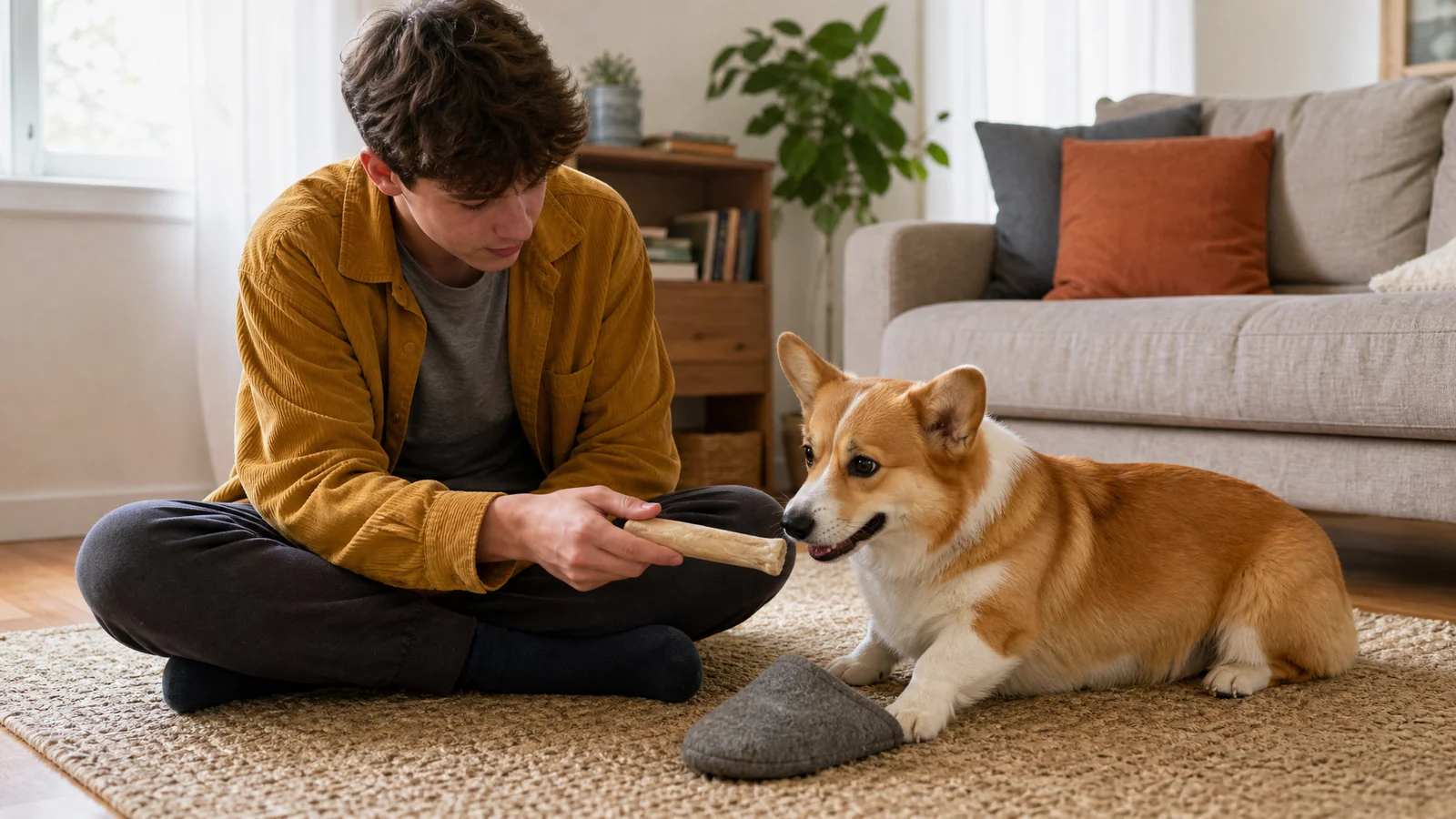
A chew can be appealing without being suitable, and recovering a stolen sock does not necessarily teach a release. Those are separate decisions. A Corgi needs appropriate things to use with their mouth, while the household needs a safe way to manage belongings and a cooperative skill for ordinary exchanges.
Pembrokes and Cardigans are active herding breeds, but that description cannot tell you which material an individual will carry, work on gently or pull apart. Watch the use of the object rather than choosing solely by the dog's size or the picture on the packaging.
This guide begins with evaluating chew use, then builds a release lesson with suitable practice toys. We keep theft prevention outside that lesson and finish by examining what progress actually looks like. Fewer missing belongings, comfortable exchanges and independent enjoyment of permitted items are related outcomes, but one does not automatically prove the others.
Evaluating a Corgi's Chewing Choices
Choose an item for the dog who will use it, with attention to size, material, intended use and supervision guidance. A low, compact Corgi may handle an object very differently from another dog of similar height. Start where you can observe the whole activity and make a calm change if the item proves unsuitable. Keep the first use free from interruptions that would draw your attention away from the dog and the object.
Watch the Way They Use It
Distinguish holding, steady chewing and tearing. A toy that remains intact during a carrying game may not suit a dog who settles down to dismantle it. The change in activity matters more than whether the object was enjoyable during its first introduction.
Advice on appropriate chewing opportunities recognizes chewing as a normal activity. Provide suitable options while controlling access to things the dog should not have, rather than expecting the desire to use their mouth to disappear.
Watch for damage throughout use. An item that has become small enough to swallow or is losing pieces needs a safe change of plan.
Match the Activity and Location
A Corgi who wants company may leave an otherwise appealing chew to follow the family. Arrange supervised use in a comfortable place near ordinary activity when that suits the dog. Quiet participation is easier to recognize when the location allows it without repeated calls back from another room.
If the dog wants a shared game, a solitary chew may not answer the request. Offer an appropriate play opportunity separately and then observe whether quiet chewing becomes useful afterward. That comparison gives you information about the activity sought, without treating every abandoned toy as a reason to buy another one. Notice whether a change in company makes the same item appealing again, since that changes what you need to provide.
Inspection Before the Next Session
Check items during cleanup while the dog is elsewhere. Look for damage and follow the manufacturer's guidance about use and replacement. Ask your veterinarian about appropriate choices when you are uncertain, particularly if your Corgi repeatedly damages items or uses them in a way that seems uncomfortable.
- Keep suitable items available for supervised use and store damaged or unsuitable objects out of reach.
- Separate toys intended for shared play from options the dog can use comfortably during quieter activity.
- Notice which choices remain useful without constant prompting, and keep those preferences in mind when arranging the next opportunity.
A rotation can renew interest, but avoid interrupting contented use just to change the selection. The dog should have time to enjoy a successful choice. Inspecting and rotating between sessions keeps that practical task separate from repeatedly collecting an object the Corgi is currently using.
A Release Lesson Beside Corgi Chewing
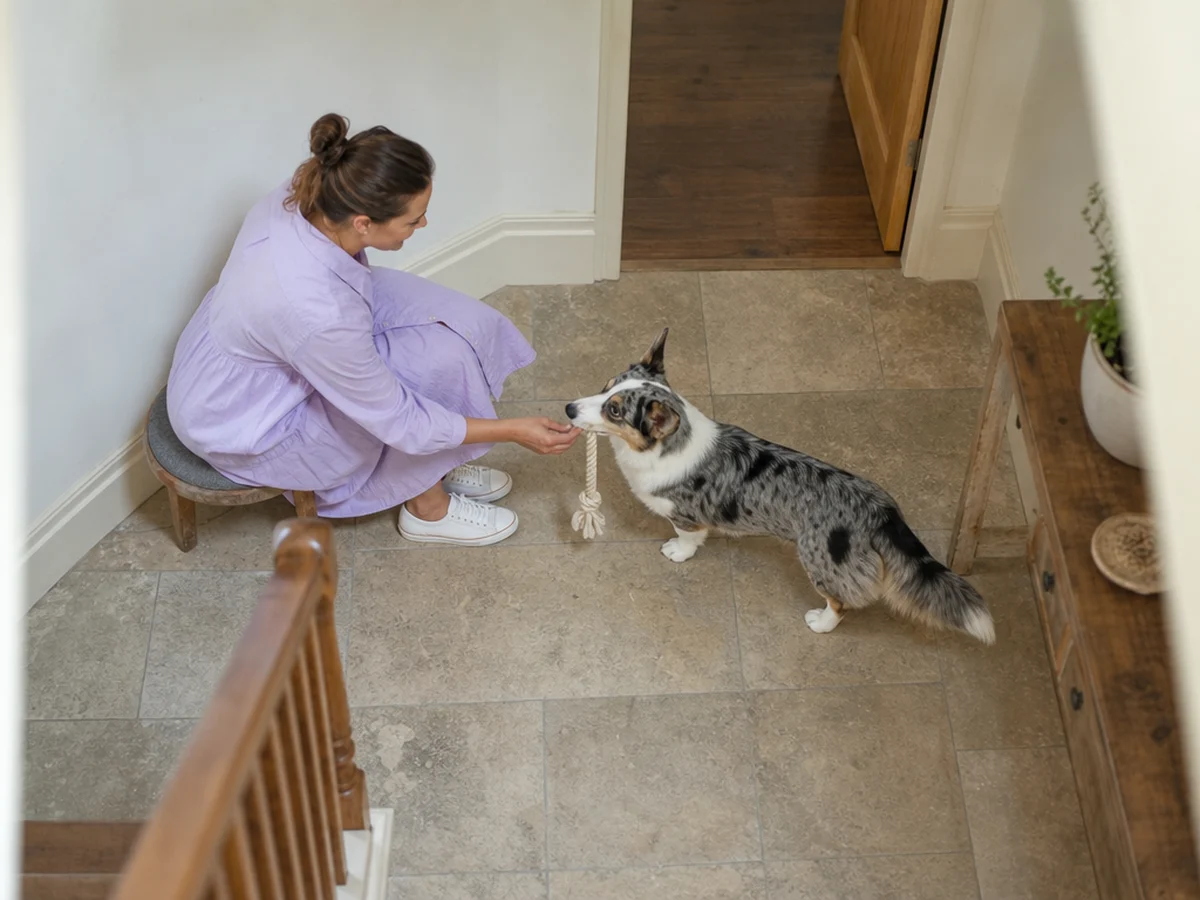
Begin with an ordinary toy the dog can hold and leave comfortably, away from valuable chews and stolen belongings. Prepare a reward they want in that setting. This is a planned lesson in cooperation, so there should be no urgency about obtaining the object and no need to reach close to the dog's mouth.
The Reward Has a Clear Destination
Guidance on teaching a drop cue uses rewarding exchanges instead of pursuit. Let your dog leave the suitable practice toy voluntarily, with the reward delivered where they can move away comfortably. Watch the whole departure before considering collection.
Keep your own movement simple. Shifting the reward repeatedly or reaching with the other hand too soon can make the interaction harder to understand.
If the Corgi stretches toward food while remaining over the object, the exchange is not ready for collection. Pause rather than using that moment to reach underneath them. When there is stiffness, hovering or concern about an approach, give space and seek individualized behavior guidance before repeating the lesson.
The Word Follows an Easy Action
Once a relaxed release is predictable, add the short word you want to use for it. Say it once in the familiar setup and reward the response. A new cue should identify an action the dog can already perform, rather than become a repeated demand while both participants wait over a valued object. Have the next adult observe the timing before trying the lesson with a different toy.
A release can also support toy rewards in our Corgi recall games. Practice each skill separately before asking the dog to return, release and settle in one sequence.
Do not reduce the reward immediately after the dog begins responding. Willing cooperation is the skill you are building, and a worthwhile outcome helps preserve it. Practice can become more varied without making the first successful release the last one that receives a useful payoff.
The Toy Can Return to Play
When the toy remains suitable, return it during easy practice and allow ordinary enjoyment. Releasing then need not predict permanent loss. Put it down where your Corgi can approach freely, leaving enough space that returning to the toy does not require pushing past your hands or feet.
Keep some toy time free from exchanges. Comfortable possession between lessons matters as much as the moment when you obtain the item.
Change the practice toy only when the current interaction is relaxed. A different texture or a much more valued object can alter the task, even in the same room with the same adult. Start easier after that change rather than assuming the familiar word makes every possession equivalent.
Preventing Theft Between Chewing Sessions
The release lesson should not depend on repeated access to household belongings. Put socks, shoes, remotes and open bags where your Corgi cannot reach them. Pay attention to temporary locations during dressing, unpacking or tidying, since a secure cupboard does little while the same item waits on the floor.
Guidance on preventing unwanted chewing combines controlling access with suitable alternatives. Prepare an appropriate activity before the household becomes busy, leaving the dog with a permitted choice that can compete with investigating whatever happens to be nearby.
- Arrange storage before starting a distracting household task, especially when belongings will be moved between rooms.
- Provide suitable supervised mouth activity or shared play according to what your dog is seeking.
- Have children get an adult when something is taken, keeping them out of retrievals and exchanges.
If a safe ordinary item has already been taken by a relaxed dog, use an appropriate exchange and collect it after a comfortable departure. Immediate safety comes first, even when the exchange includes food. Prevent the next theft through access and earlier rewarding choices, rather than making retrieval unpleasant to discourage another attempt.
Contact your veterinarian promptly about dangerous items or possibly swallowed pieces. Give space around a dog who is guarding and obtain suitable help. The Corgi puppy mouth guide covers a different early behavior pattern, which should not be confused with tension around possession.
Reading Progress in Corgi Chewing and Swaps
Look for changes in the dog's choices as well as in the number of belongings recovered. Better storage may prevent theft immediately while the release skill remains new. That is useful management, but it does not establish that the Corgi can comfortably leave every object they might encounter.
Comfort Across the Exchange
Observe the approach, release, departure and response when the toy returns. A dog who accepts food but immediately rushes back to cover the item may still be concerned. Let that observation change the plan instead of counting the exchange as successful solely because the mouth opened.
Compare the evidence with the skill being taught. The distinctions below help keep the next lesson specific and manageable.
| Current Result | What It Establishes |
|---|---|
| Belongings remain inaccessible | The household management is working |
| An ordinary toy is left comfortably | The easy release lesson is becoming familiar |
| The dog chooses a suitable chew independently | The permitted activity has value in that setting |
| A different adult gets an uncertain response | That version needs easier practice and closer assessment |
Keep observations about different adults separate. One person may stand nearer or move a hand earlier than another, changing the experience without changing the cue. Agree on those human movements before expecting the dog to respond equally comfortably to everyone.
Patterns That Need Wider Help
Discuss persistent, unusual or newly intense chewing at regular veterinary visits. Include when it occurs and whether the dog seems comfortable using their mouth. Avoid assuming that every change reflects boredom simply because suitable activities have helped in the past.
Damage during absences deserves its own assessment, especially when the dog also struggles to settle. A new toy is not a complete response to an unexplained departure pattern.
The veterinary behavior guidance on reward-based routines and structure supports humane management alongside teaching. A qualified professional can help apply that approach when the household cannot prevent repeated unsafe encounters or when concern around objects persists despite easier practice.
Chewing and Cooperation for Your Corgi
Retain the activities your dog uses comfortably and the storage habits people can follow. Appropriate chewing should have room in the day without becoming a series of interruptions, while the release lesson stays easy enough to keep cooperation worthwhile.
Practice with suitable objects during planned moments, then allow the dog to enjoy other activities. A reliable skill develops through clear opportunities, not through repeatedly leaving tempting belongings available to see what happens.
As your Corgi's preferences and the household change, reassess both sides of the arrangement. Safe access controls protect belongings, and rewarding practice teaches what to do when an exchange is appropriate. Keeping those jobs distinct makes progress easier to recognize and the routine easier to maintain.
 Training basicsHow to Teach a Corgi to Leave It
 Training basicsHow to Teach a Corgi to Heel
 Training basicsHow to Teach a Corgi to Focus on You