 Corgi
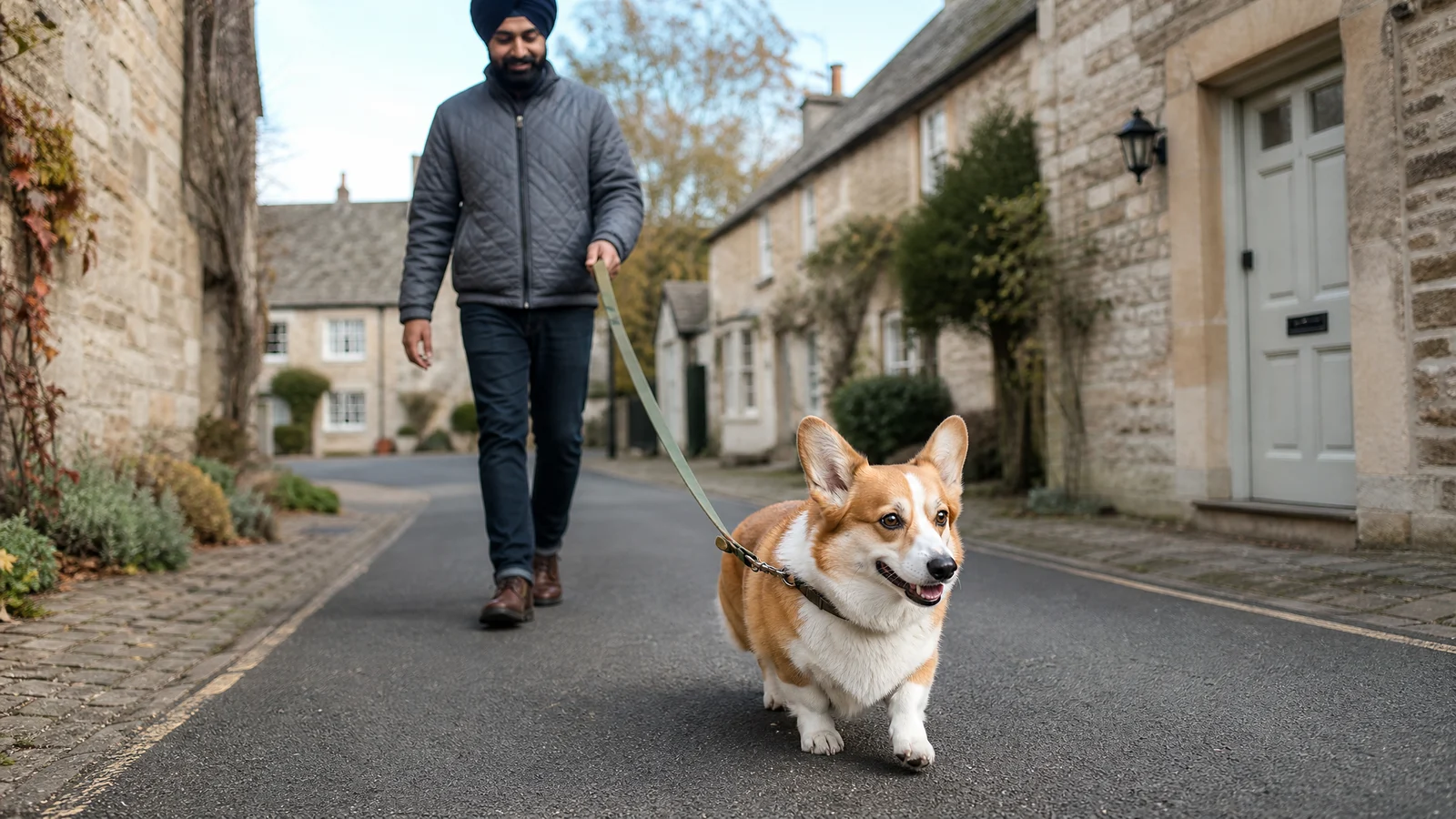
Nobody warns you that a Corgi's idea of beside you can be between your ankles. Heel fixes that by teaching one exact spot, and a few paid steps beside you are enough to begin.
Here, heel means a short stretch with your dog's shoulder level with your leg, paid every time they find it. It is not the whole walk, and it earns its keep at a crossing, a vet's waiting room or a narrow gate.
A Corgi quickly works out where the treats come from, so the lesson mostly comes down to where you stand, where the food lands and when you say yes. The steps below take you from a still spot to a turn on a sidewalk.
Choosing the Side and Setting Up for Heel
The spot has to be the same every time, so settle it before you start. Obedience and rally have traditionally used the left, though your Corgi will learn either, so choose what suits you. Hand over the reward with the hand nearest your dog, because rewarding with the near hand keeps a dog from crossing in front of you to get the treat. On a dog this low, that hand also stays down at your thigh, so your Corgi never has to reach up or hop for the food.
Before the first treat, put a few things in place so each lesson stays clean. Each one removes a reason for your dog to drift, so the stages that follow stay about the spot:
- Small, soft treats your Corgi can swallow in one bite, so the pause between rewards stays short.
- A quiet hallway or room with nothing to sniff and no other pets watching.
- A leash held in a loose loop, with your free hand resting at your side.
Keep that leash soft the whole way through. The Pembroke breed club describes these sensitive, intelligent dogs as easily trained as long as training is done with gentle handling, so think of the leash as a safety line rather than a steering wheel.
Teaching the Corgi Heel Position, Stage by Stage
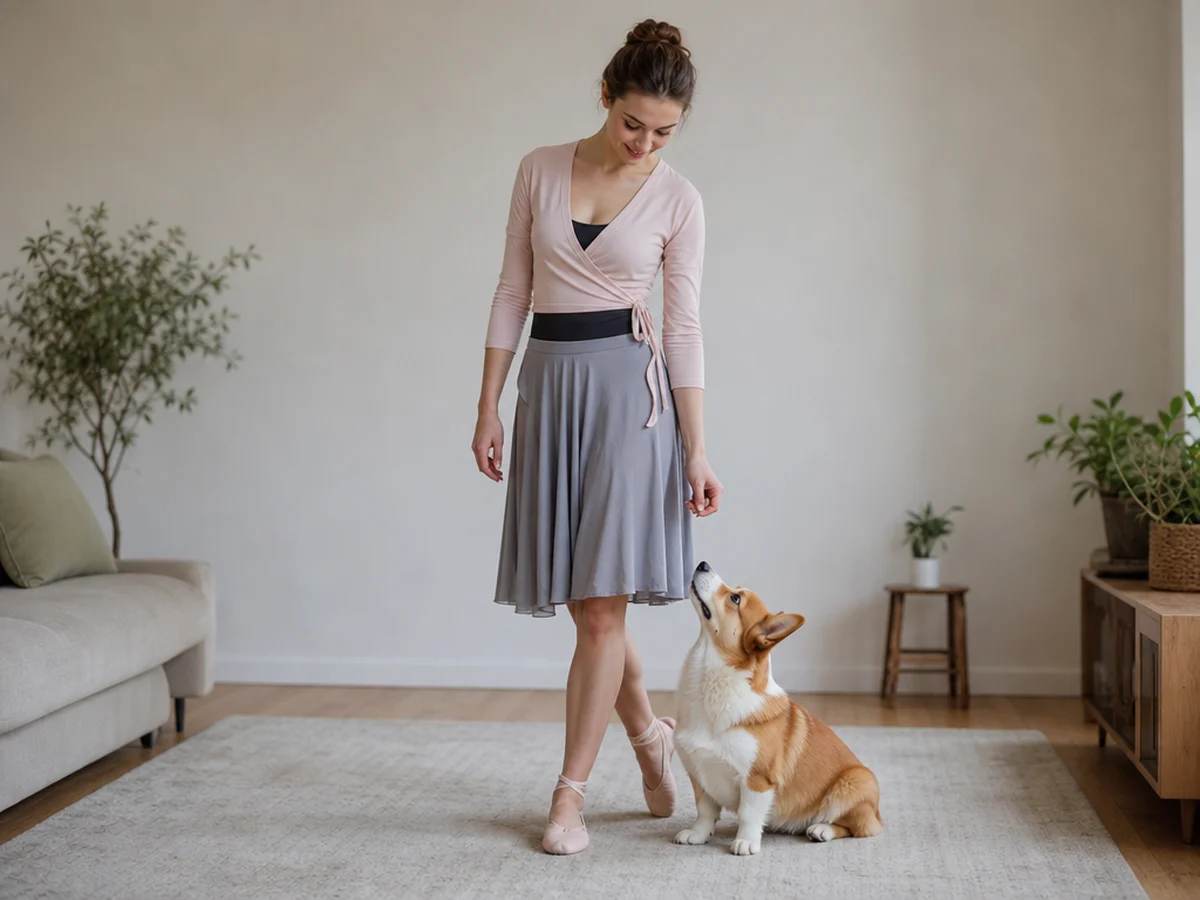
With the side and the treats settled, the lesson runs in three stages, and each one rests on the one before it. Move up only when the current stage looks easy, and expect your Corgi to need a different amount of time at each.
Finding the Spot Standing Still
Start without walking at all, because a dog who cannot find the spot while you stand still will not find it while you move. Standing still also lets you see exactly where their shoulder sits.
- Stand with a few treats in your near hand, held low at your thigh, and the leash in a loose loop.
- Say your dog's name and point to your side.
- The moment their shoulder comes alongside your leg, say "yes" and feed them right there.
- After a few rounds, stop pointing and wait. Mark and pay each time they step in on their own.
Move on when your Corgi swings into the spot as soon as you stand still, with no pointing hand. If they hover out in front, pay only when their shoulder lines up with your leg, and bring the reward hand closer to your shin so the food always arrives in the right place.
Adding One Step
Movement is a new difficulty, so introduce it in the smallest piece you can. One step is plenty to start with, however tempting a longer walk feels.
- With your dog in the spot, take one step forward without saying anything.
- If their shoulder stays level with your leg as they step with you, mark and feed at your leg.
- Stop, let them settle beside you, and pay again if they are still in place.
When one step goes smoothly several times in a row, ask for two, then three, paying after each little stretch. If your Corgi lags or scrambles, shorten your stride, because a normal human step leaves a short-legged dog hurrying to keep up. If they surge ahead, stop and wait for them to come back to the spot before you pay.
Pace, Turns and Distance
Once a short line of steps holds, let the distance grow a little at a time, paying every few steps and then at unpredictable moments instead of on a schedule. Each stretch can stay short, because a few tidy steps teach more than a long, sloppy line.
Then vary the walk itself. Slow down, speed up, and turn away from your dog's side so they have to find the spot again after you change direction. Mark the instant they are back in place. A dog who runs in front gets a turn the other way, and the reward waits at your leg when they catch up. Each change is a new question, so ask only one at a time.
Heel Command Training for a Corgi on Real Walks
When your Corgi finds the spot on their own through steps and turns, the word can finally mean something. Say "heel" once, a beat before they arrive, and then mark. Said that way, it predicts the spot instead of nagging after the fact, and saying it twice only teaches your dog that the first one did not count.
Next, keep the treats in a pouch or pocket so your dog is not following the food hand, and bring a reward out only after the mark, still at your leg. Then change one thing at a time: another room, then the driveway, then a quiet street. Pay more often in each new place, and thin the pay out again once the spot holds.
End every stretch with a release word so heel stays a short job. Giving your dog a cue for exploring afterward can improve the heel, because the chance to sniff around is a great reward for good behavior. For the rest of the outing, our loose-leash walking guide covers ordinary strolling and pulling. Regular vet visits belong in your Corgi's routine, and a dog who suddenly drags behind or will not move beside you deserves a vet's look before you blame training.
Heel Questions From a Low Dog
Three Corgi-shaped snags sit outside the stages above, and each has a short fix. All three come from the same low, quick, herding body, so none of them means your dog is being difficult.
Will heel stop my Corgi nipping my heels?
Heel gives your dog a better place to be, but it does not erase the herding background behind the nipping. If they dive at your feet mid-step, stop moving, wait for all four paws to settle, and pay at your leg for that first calm moment. Then take one step again. Our Corgi herding behavior page goes deeper on the nipping itself.
What if my Corgi barks for the treat?
A bark at the treat hand is a request, and paying it teaches your dog to make it louder. Stand still, wait for a pause, and pay the quiet before you take the next step. The guide to quiet requests shows what else your dog can offer to ask.
Why does my Corgi cut between my feet?
Usually the treat is arriving in the middle, so the gap between your legs looks like the shortest route to it. Feed beside the shin nearest your dog, shorten your stride so there is less gap to dive through, and pay the dog who stays at your side.
A Heel That Lets the Herder Rest
Corgis spend much of their lives arranging things that move: children crossing the kitchen, a cat on the stairs, your feet. Heel is the one cue where your dog does the arranging of themselves, for a few steps, around a person who is walking.
That is why the spot has to pay so well at the start. A dog used to steering movement is being asked to let yours set the pace, and the treat at your leg is what makes that a fair swap instead of an order.
So give each stretch a clear start and a clear end. At the release word, your Corgi goes back to steering the world with their nose.
 Training basicsHow to Teach a Corgi to Focus on You
 Training basicsAre Corgis Easy to Train? Temperament and Trainability FAQ
 BehaviorCommon Corgi Behavior Problems and the Instinct Behind Each