 Corgi
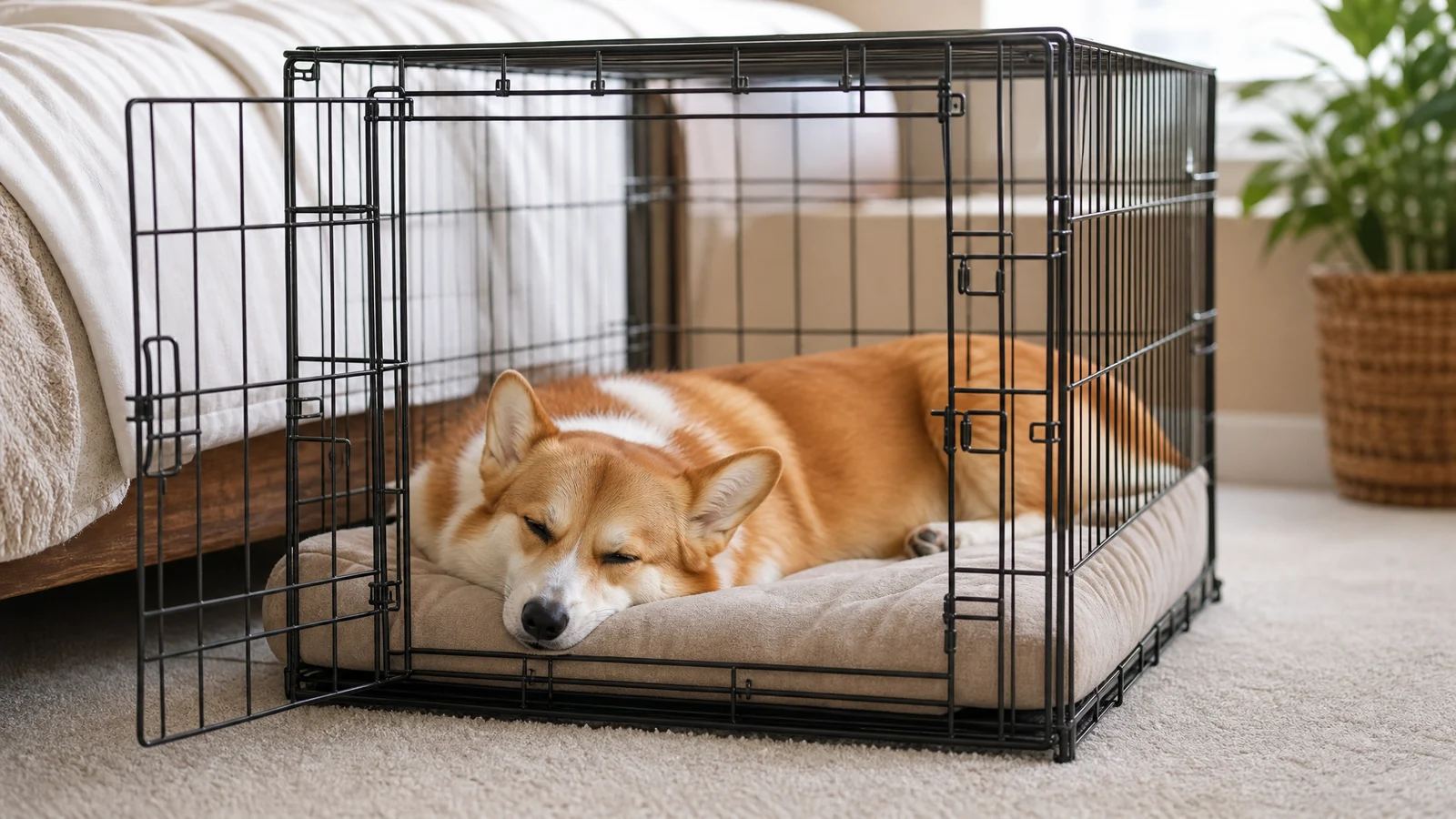
Most owners ask about timing before anything else: when to start, how many weeks until the crate feels like home, and how long a puppy can stay inside. The honest answers are the day the puppy arrives, a few weeks of steady, happy practice, and far less time than you would like at first. Your vet can tell you what your puppy's age allows, and regular checkups are the place to keep asking as they grow.
Timing matters for a Corgi because this is a bright, bossy, people-minded dog, and a crate introduced too fast can teach worry instead of rest. Done gradually, with special food and structured naps, owners report a calmer puppy and a calmer house. Read on for the history behind the breed's need for company, how to size a crate for a long, low body, a reward-based introduction, a slow plan for alone time, and what to do if distress lingers.
Herding Roots Behind the Corgi's Need for Company
The Corgi began as a working farm dog who helped drive cattle to pasture, and that job kept them beside people all day. A dog shaped by shared work does not naturally expect long hours alone in a quiet room, so an empty house can be a real adjustment. Pembrokes are described as sensitive as well as intelligent, which is a good reason to move slowly and keep every lesson pleasant.
That heritage shows in daily life. The Pembroke is often called bright and bossy, tends to herd children and other dogs, and is easier to guide away from heel nipping in early puppyhood than later. The Cardigan is a separate breed, loyal and affectionate, and some Cardigans stay reserved with strangers until they know them. In both, a dog who watches the household closely will notice the moment the household leaves.
For crating, this means the crate belongs where the family is, not in a spare room at the end of the hall. Many owners credit crate training, special food kept for the crate and structured nap times with getting them through a demanding puppy stage. Structure helps a clever dog settle because they learn when the day is busy and when it is time to rest. Plan the months, not the afternoon.
What Crate Size Fits a Long, Low Corgi?
Height is rarely the problem for a dog this low, so size the crate by length. The breed standard calls the Pembroke moderately long and low, and gives the Cardigan an ideal length to height ratio of 1.8:1. That means a body noticeably longer than it is tall, so choose by body length and expected adult size, not by how short the legs look.
Adult figures from the breed standards show how much dog you are planning for, though individual dogs vary. This table sums them up.
| Dog | Height at Withers | Weight |
|---|---|---|
| Pembroke males | 10–12 inches | Not exceeding 30 pounds |
| Pembroke females | 10–12 inches | Not exceeding 28 pounds |
| Cardigan males | 10½–12½ inches | Ideally 30–38 pounds |
| Cardigan females | 10½–12½ inches | Ideally 25–34 pounds |
Sizing a Crate for a Growing Puppy
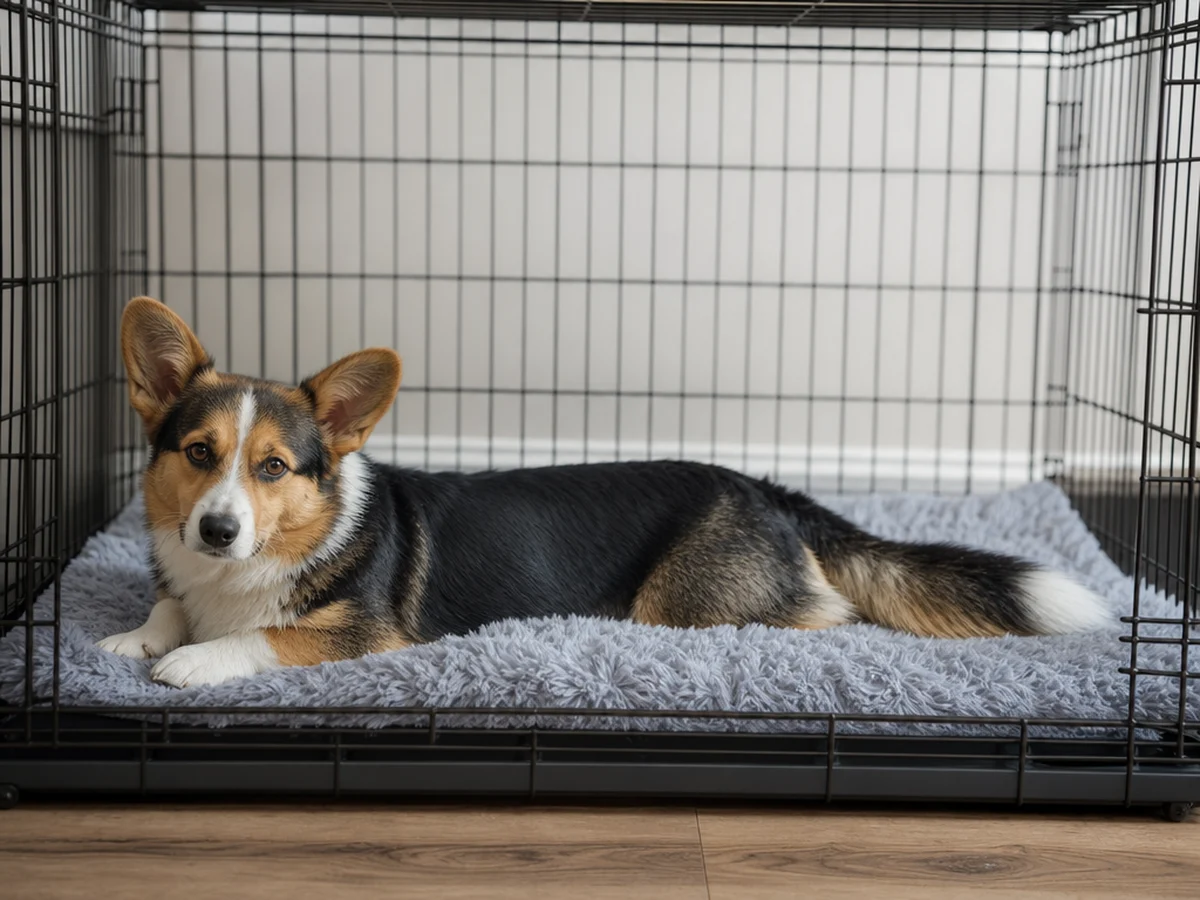
Common advice says to buy a roomy crate so a puppy is comfortable. For a growing Corgi, buy for the adult and shrink the space instead. Choose a crate with a divider panel, set it so your puppy can stand, turn around and stretch out lying down, and move the panel back as they grow. Extra room beyond that is no bonus for a young puppy, and it makes the crate feel less like a snug resting place.
Young puppies cannot wait long between trips outside, so build your day around frequent outings and ask your vet how long your puppy's age allows in the crate.
Sizing a Crate for an Adult Corgi
An adult Corgi should stand without ducking, turn around easily and stretch out fully. Crate makers label sizes differently, so compare the brand's sizing chart with your dog's weight and body length instead of trusting a name like medium. A heavier Cardigan may need a larger size than a petite Pembroke. Wire and plastic both work. Add a washable mat, and keep a long-backed dog from leaping up into the crate from furniture.
Rewards That Make the Crate Welcome
Teach the crate as a game your Corgi wins. Sensitive, food-motivated dogs respond well to this approach, and you can reward each small step toward the crate, even a nose inside, building to the whole body before you add a cue such as "crate." Keep treats tiny, count them toward the day's food, and keep your praise calm so the crate stays restful.
- Prop the door open with a soft mat inside, then toss treats near the door, just inside, and finally at the back.
- Feed meals near the crate, then inside it, and save a special food for the crate alone so it becomes the best spot in the house.
- Once your dog walks in on their own, say the cue as they enter, mark with a happy "yes" and treat.
- Shut the door for just a few seconds and pass a treat between the bars, then open up before your dog feels any worry. Lengthen the closures slowly from there.
- Sit nearby while your dog chews a stuffed toy, and open the door quietly with no fuss.
If your dog whines, the step was too big, so shorten the time and make it easier again. Use the crate for naps after play or a walk, because structured rest is what most Corgi puppies lack. An overstimulated Corgi settles poorly, which is why modest walks plus play and short training sessions often work better than chasing ever more exercise.
Building Alone Time Outside the Crate in Small Steps
According to the RSPCA on separation problems, being left alone is what triggers this kind of behavior, and signs can appear anywhere from a few minutes to 30 minutes after you leave. Crate comfort and alone-time comfort are separate skills, so teach them separately and combine them later. Plan in weeks and months rather than days. Each stage costs little time now and saves a great deal of backtracking later.
Start with your dog calm and busy with a chew, walk out of view for a few seconds and return before any fussing. Then lengthen the gaps unevenly, so it is not always longer each time, and move to short outings such as a quick trip to the mailbox. Pick up your keys and coat many times without leaving, so those cues lose their drama, and keep hellos and goodbyes quiet. Stretch toward hours only when shorter absences are boringly easy.
Prepare your dog before you go. Owners find that walks alone often do not tire a Corgi, while sniff walks, Kongs, snuffle mats, puzzle toys and short training sessions settle them better. We have trained this breed for many years, and the dogs who cope best are the ones whose plans never rushed.
Know the signs that the pace is too quick. A pet camera shows what happens after you leave, so you are not guessing:
- Barking, howling or whining that keeps going long after you leave.
- Pacing, drooling or heavy panting that begins as you get ready to go.
- Frantic scratching at the crate door, or refusing treats and chews.
- Accidents indoors from a dog who is otherwise reliably house trained.
If you see these, return to the last length your dog handled calmly and rebuild from there.
When Does Alone Time Stop Feeling Scary for a Corgi?
Every Corgi learns at their own pace, and comfort with alone time builds gradually rather than on a set schedule. Progress is rarely a straight line. Moves, schedule changes and adolescence can bring setbacks, and some owners find that easing off training makes them worse, so keep short sessions going. A setback usually means returning one step, not starting over.
When Distress Needs Professional Help
Persistent distress is different from a setback. If the signs above continue despite slow practice, or your dog hurts themself or soils the crate, ask your veterinarian for a checkup and a referral. Shutting a truly anxious dog in a crate does not calm them, because they remain anxious inside a crate and may howl, soil it or get hurt trying to escape. A safe room is kinder, and crates should not be used for this problem without professional guidance first.
While you work with a professional, arrange company so training sessions are the only time alone. Most dogs with this problem do fine as long as someone stays with them, and that someone does not have to be you. A friend, sitter or family member can cover your absences.
Corgi Crate Questions Owners Ask Next
A Corgi was bred to work beside people, so the goal is a crate that feels like comfortable rest and alone time that is earned in small, calm steps. Size the space for the dog's long body, reward every approach, and let confidence set the pace rather than the calendar. These are the questions that usually come next.
- How does crating fit with house training? The crate supports a frequent-outing schedule, and the full routine is in potty training a Corgi puppy.
- What should the first months cover besides the crate? Crate work is one piece of a larger plan, laid out in the complete training guide.
- Will this go differently with a Cardigan? Sizes and temperament differ a little, as explained in Pembroke versus Cardigan.
- Is a smart breed really this easy to teach? Often yes with rewards, and the details are in are Corgis easy to train.
Keep the crate happy, keep the steps small, and your Corgi will learn that rest and your return are both reliable.
 Training basicsHow to Potty Train a Corgi Puppy
 Training basicsLeash Training a Corgi: Pulling, Lunging and Loose-Leash Walking
 Training basicsPembroke vs Cardigan Corgi: Which Is Easier to Live With and Train?