 Corgi
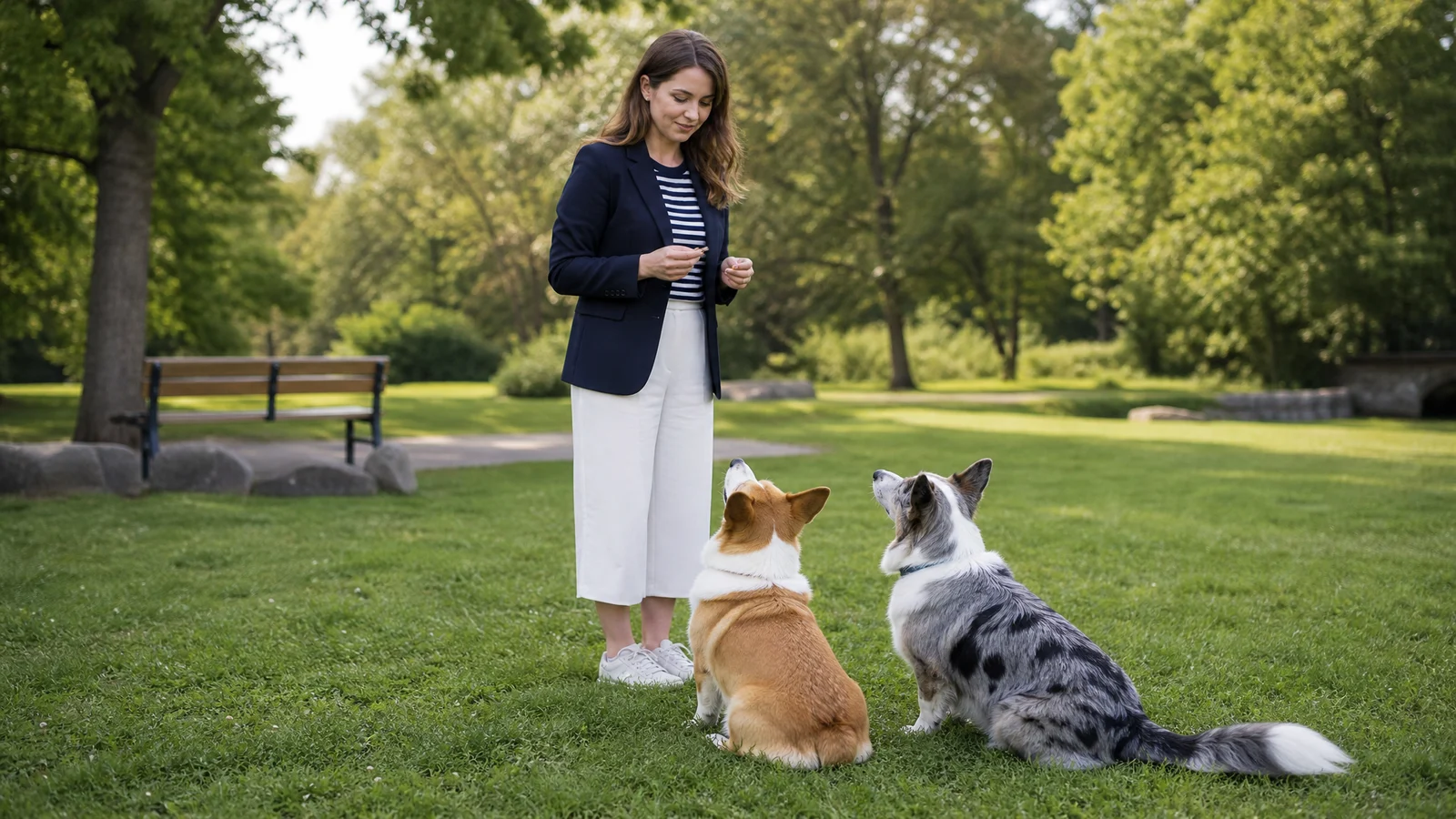
On paper, the two Corgis are close cousins. Both standards describe a low, sturdy, intelligent herding dog, and the usual advice is to pick whichever tail and ear style you like best. Owners tell a more useful story. The two types differ in size, voice, watchfulness and the way they treat children and other dogs, and those differences show up in daily training.
This article looks at seven factors, from build and tails to barking, kids, other dogs and shedding, so you can see which differences really change your training plan and choose the Corgi whose habits suit your home. Each section ends with a verdict.
Size and Build Differences in Each Pembroke and Cardigan Corgi
Pick up a Cardigan and a Pembroke one after the other and the Cardigan feels like more dog: longer through the body, taller at the shoulder and heavier in your arms. Cardigan owners report fast puppy growth, with pups around 25 pounds at 5 months and just over 30 pounds by 6 months.
The numbers back this up. In the breed standard, Cardigan dogs ideally weigh 30 to 38 pounds and bitches 25 to 34 pounds, standing 10½ to 12½ inches at the withers. Pembroke dogs should not exceed 30 pounds and bitches 28 pounds, at 10 to 12 inches. The Cardigan's ideal length to height ratio is 1.8:1, while the Pembroke is described as moderately long and low.
Food drive adds a twist for reward-based training. Several young Corgis go through a picky phase in the early months to the first year, and drive varies widely even between littermates. Stale kibble can also cause refusal. Keep fresh food and a few higher-value treats on hand, and keep sessions short.
Verdict: The Pembroke is easier to carry, lift and manage on a leash. The Cardigan needs good manners earlier because a 30-pound dog pulls harder, so start loose-leash walking on day one.
Pembroke Tails Versus Cardigan Tails
The quickest way to tell the two apart across a park is from behind. A Cardigan carries a full tail, while the classic Pembroke has a short stub. The breed club's FAQ calls this the obvious difference, noting that the Cardigan has a tail and the Pembroke is docked.
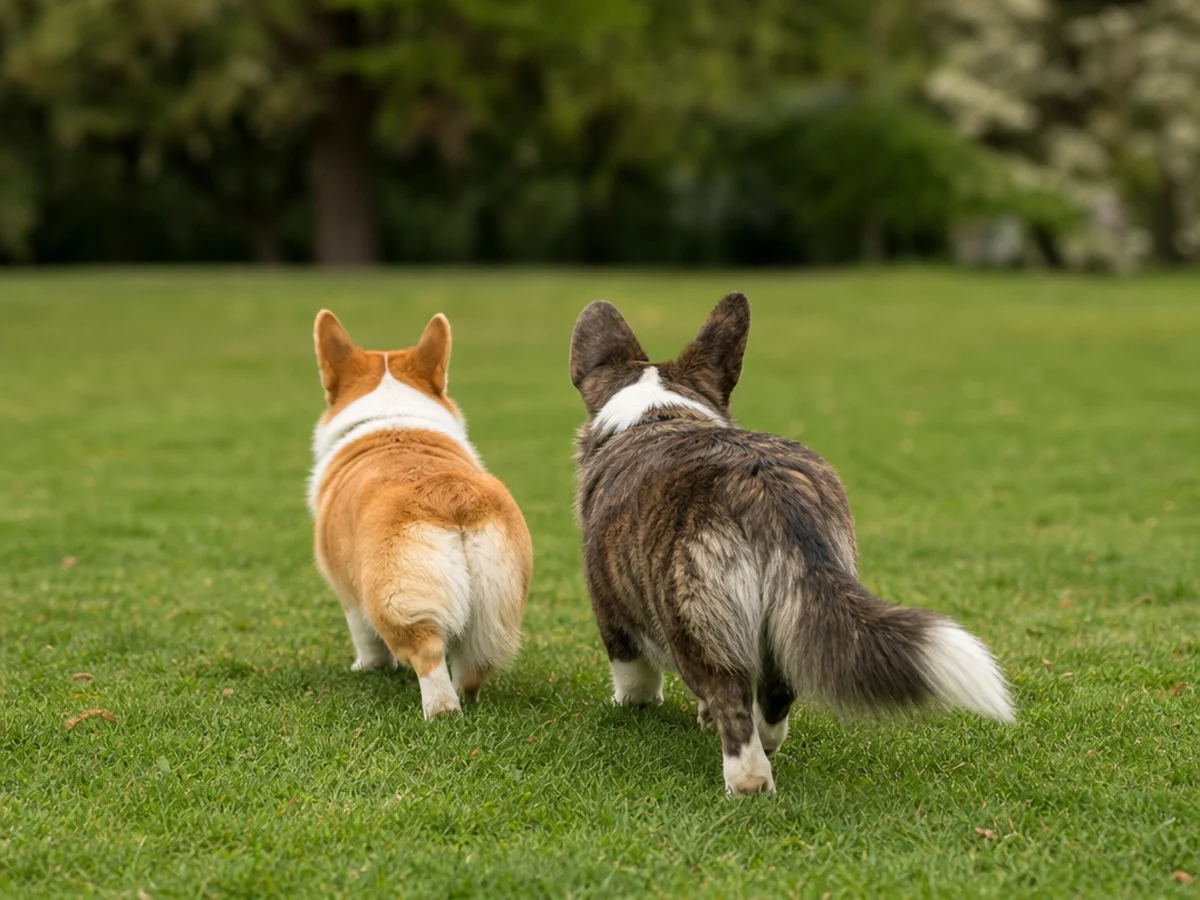
It is not that tidy anymore. The Pembroke standard allows a tail that is a natural bob or docked, and owners point out that not every Pembroke has a docked tail. Docking is not required to enjoy or train either type, and the tail tells you nothing about trainability.
What it changes is how you read your dog. A Cardigan gives you a long flag of information, so you can see excitement or worry at a glance. With a stubby Pembroke, watch the whole rear end, the ears and the mouth together.
Verdict: Tail style is a looks decision, not a training one. Learn your own dog's full-body signals whichever you choose.
Ear Shape on a Pembroke or Cardigan Corgi
Many people choose a breed from the ears alone, and owners say that is where the trouble starts. In theory, Cardigan ears are bigger and more rounded, and Pembroke ears are small and more triangular. In real life, owners report Cardigans with huge ears, Pembrokes with round ones, and Cardigan puppies who look just like Pembrokes.
Better clues exist, though none is perfect on its own.
- A Cardigan's body is longer and the shoulders are taller than a Pembroke's.
- A chest ruff growing in on a young puppy is one cue owners point to for a Cardigan.
- Some owners point to mottled blue and brown eyes as a Cardigan hint, though it is not a dependable marker.
- Blue merle and brindle have never occurred in purebred Pembrokes.
- Mixes happen, and a DNA test can show a mostly Pembroke dog with some Cardigan.
Verdict: Ears are for reading mood, not for naming the breed. Confirm which Corgi you have before choosing a training plan, because the barking and social differences below depend on it.
Alarm Barking and Guarding Compared in Pembroke and Cardigan Corgis
You would expect the more watchful dog to be the louder one, but the ratings split the two. Cardigans score 5 of 5 for barking, while Pembrokes score 4. For watchdog nature it flips: Pembrokes score 5 of 5 and Cardigans 3. So the Cardigan talks more, and the Pembroke keeps a closer eye on the door.
Owners across both types call barking a recurring issue. Some accept it as the dog's alert job, and the dog often insists on the last woof. Others made real progress with a calm response and a quiet cue. Since barking has many causes, work out what your dog is saying first. Then try this:
- Thank the dog calmly for the alert and walk toward the spot.
- Wait for even a one-second pause.
- Mark the quiet and deliver a treat.
- Once pauses are reliable, say Hush just before the quiet and reward it.
- Stretch the silence a little longer before each reward.
Verdict: Pick the Pembroke if you want an attentive doorbell with less chatter, and expect constant quiet-cue practice with a Cardigan.
Pembroke and Cardigan Temperament With Children and Other Dogs
Running kids bring out the herder in a Pembroke. The breed club says Pembrokes are happy to herd up errant children, especially running ones, and that heel nipping needs attention from the start. Begin in early puppyhood by rewarding calm feet and redirecting to a toy. Ratings reflect this: Pembrokes score 3 of 5 for young children and Cardigans 4, and well-socialized Cardigans are described as especially fond of kids.
With other dogs the numbers reverse. Pembrokes score 4 of 5 and Cardigans 3, yet Pembrokes in a multi-dog home generally become the boss and herd the others around. Many owners report bossiness, barking or herding toward other dogs, whatever the socialization history. Improvement came from ongoing work, repeated calm meetings and steady routines, and some owners say easing off training backfired.
Personalities also vary within each type. Some Cardigans hold back from strangers until they know them, and individual Cardigans, even in the same home, can differ widely in how they treat visitors. The Pembroke is the sensitive one of the pair, so gentle, reward-based handling matters most with them.
Verdict: For a home with small children, the Cardigan is the easier fit. For a home with a resident dog, plan structured introductions with either type, and expect more bossing from a Pembroke.
Shedding and Grooming for the Pembroke and Cardigan
Run a hand down either dog after a week of ignoring the brush and you will come away with a fistful of undercoat. Both types score 2 of 5 for grooming frequency, so neither needs more than regular brushing. Both also score 1 of 5 for drooling, so there is no towel by the sofa.
Shedding is where they part ways. Pembrokes score 4 of 5 and Cardigans 3, which means the Pembroke leaves more hair on your clothes and floors. Cardigans also come in more colors, but color does not change upkeep in any ratings we have.
Turn brushing into practice. Reward your dog for standing still, then for each stroke, and the grooming routine doubles as handling training that helps at the vet.
Verdict: Upkeep is nearly equal. If hair bothers you, the Cardigan has a slight edge.
Choosing Your Corgi for the Long Haul
The ratings in one place show how close these dogs are and where they diverge. Both score 4 of 5 for trainability, energy and mental stimulation needs, so either needs daily exercise and a job. The table below lays out the traits where they differ.
| Trait | Pembroke | Cardigan |
|---|---|---|
| Barking | 4 of 5 | 5 of 5 |
| Watchdog nature | 5 of 5 | 3 of 5 |
| Young children | 3 of 5 | 4 of 5 |
| Other dogs | 4 of 5 | 3 of 5 |
| Shedding | 4 of 5 | 3 of 5 |
Over the years, a Cardigan is the bigger, chattier dog. House-training any young Corgi takes patience and consistency, so read about potty training a Corgi puppy early. A Pembroke is bright, bossy and watchful, sensitive to harsh handling, and sheds more. Positive, reward-based work suits both.
Many owners find their Corgi stays well-behaved and keeps their personality when training continues past puppyhood, so plan on ongoing classes and practice, not a quick course. The full picture is in our complete training guide. Keep regular vet visits on your calendar too, since appetite changes or sore backs deserve a professional look.
So choose the Corgi whose quirks you can live with happily for a decade. Pick the Cardigan if you can enjoy the extra size and voice, and the Pembroke if you like a sharp-eyed shadow who shares the couch and the hair.
 BehaviorSocializing a Corgi With Kids, Dogs and Strangers
 BehaviorCorgi Herding Behavior: When They Herd Kids, Cats and You
 BehaviorQuiet Ways for a Demand-Barking Corgi to Ask for What They Want