 Corgi
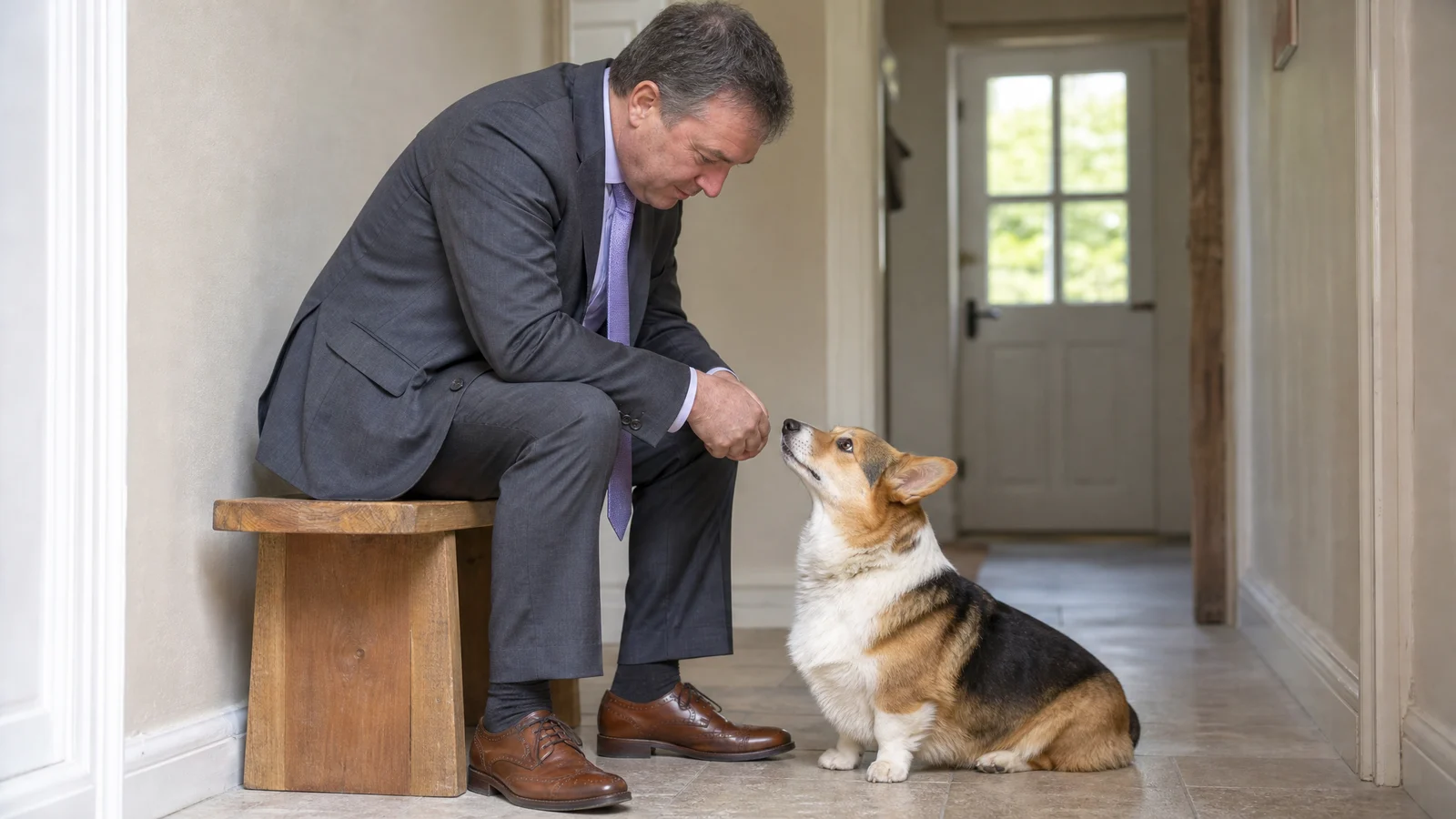
Your Corgi already looks at plenty of things. The trouble is that you usually come after the squirrel, the doorbell and the neighbor's dog.
Corgis were bred as herding dogs, so a habit of watching everything that moves comes with the package, and focus training is not meant to switch it off. It teaches one thing instead: when you ask, a quick look toward you pays better than whatever else is happening. That look gives you a moment to step in before a bark, a dash toward the street or a nip at a passing ankle gets going.
This page takes you through the first look in a quiet room and the cue that goes on top of it. After that come ways to keep it working when the world gets busier, plus answers on a few details that suit a low, quick dog.
Focus on You Begins as One Small Turn
The moment you are buying is tiny, and the lesson that buys it is tiny too. A focus look is a turn of the head or eyes toward your face, held just long enough for you to mark it and pay.
What Counts as a Good Look
Reward the turn, not the stare. A glance up at your face is the whole behavior, and a Corgi who looks at you and then goes back to the window has done it correctly. Long, locked eye contact is not needed, because all you require is a look you can use to ask for the next thing.
Training a Corgi to Look at You Gently
The Pembroke Welsh Corgi Club of America describes Pembrokes as sensitive and intelligent dogs who are easily trained as long as training is done with gentle handling. For this lesson that means a light, happy voice, a quick treat and no stern repeating of the word. A Corgi who finds the game pleasant will offer the look again.
Corgi Attention Training in a Quiet Room
A look this small is easiest to earn in the calmest room you have, where nothing is competing for it. Put a few small, soft treats in a pouch or pocket so both hands stay free. Here is the first lesson, one step at a time:
- Stand or sit still with your hands relaxed at your sides, and say nothing.
- The moment your Corgi's face turns toward yours, even for a second, say a bright "yes."
- Hand over a treat right away, down at nose level beside your knee or on the floor, so your dog never has to crane upward to collect it.
- Let your Corgi go back to whatever they were doing, then wait for the next look and mark and pay it the same way.
- When looks arrive smoothly several times in a row, hold your "yes" until the whole face turns to you rather than just an ear or a sideways flick.
Speed is what makes this work. The reward has to follow the look immediately, within seconds, or your Corgi may not connect the two.
If nothing happens, quiet the room further, try a smaller treat with a stronger smell, or rustle the pouch once. Resist calling the name over and over, since a look you had to demand is not the one you are building.
Adding the Watch Me Command Once Focus Comes Easily
When your Corgi is turning toward you on their own several times in a row, the look is ready for a word. Before that point the word would only be noise attached to something your dog already does.
Start by saying "watch me" once, in a friendly voice, just before you expect the look, then mark and pay when it comes. Doing this for a while joins the word to the turn.
Next, flip the order. Say the word first and then wait. If your Corgi turns, mark and pay. If not, stay quiet and still instead of saying it again, because a repeated word teaches a dog that the first one did not count. Keep the treats in a pouch rather than your hand, so the word, and not the food, is what brings the look.
Last, change where you are. Ask while standing, while sitting on the floor or the couch, from a step away, even with your body half turned. Each change is a new small question, so make only one at a time.
Bringing Focus Into a Busier World
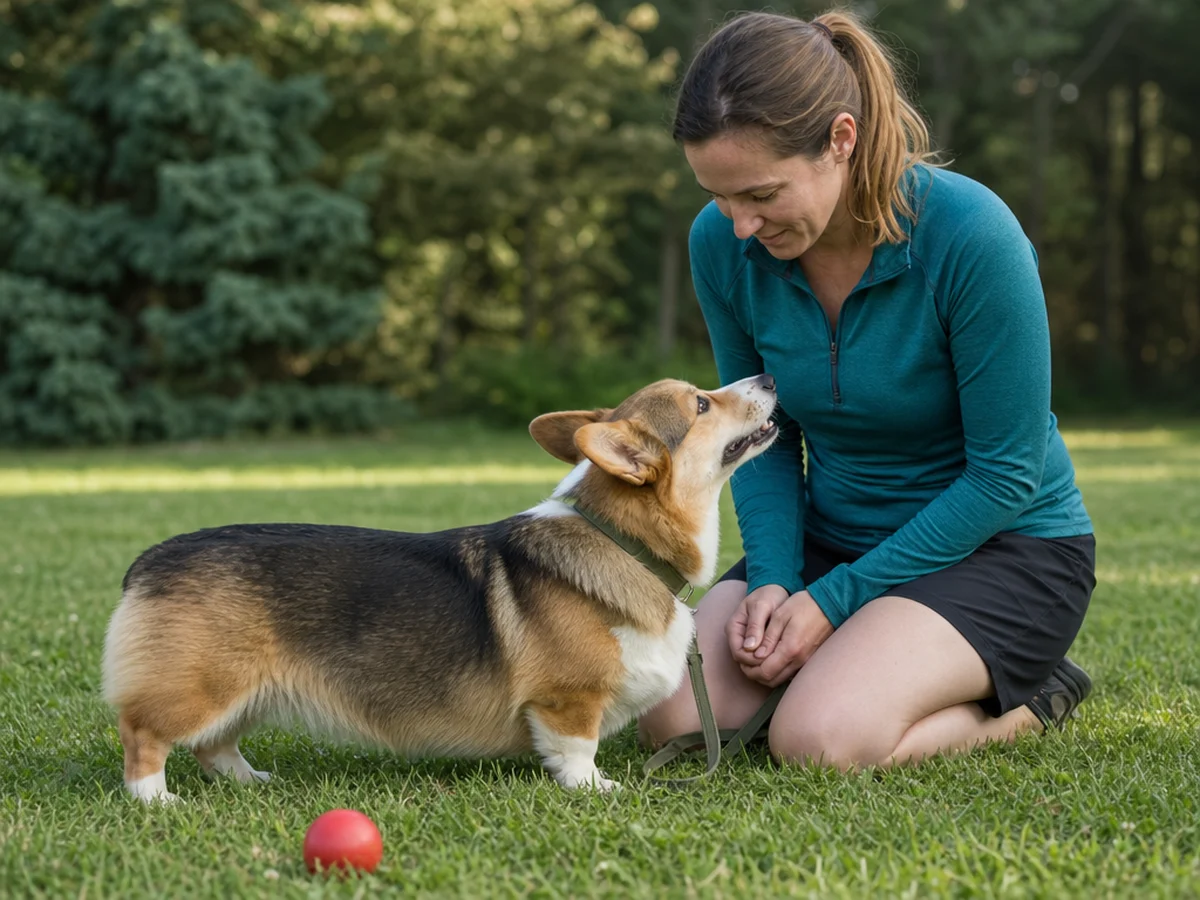
A look that works in the hallway may not survive the sidewalk, and a Corgi built to notice everything will test it. The sensible route is gradual: begin in a quiet, distraction-free space, and once the basics are mastered there, add small distractions such as toys, other pets and people. Yards and driveways come next, then public places like a park. Each rung gets a run of easy successes before the next, and the ladder looks like this for a Corgi:
- Toys on the Floor: ask for the look with a toy lying still a few feet away and pay generously.
- Another person in the room: have them sit quietly first, then move around while you ask.
- Take it outside. A fenced yard or a driveway brings smells and sounds from every direction at once.
- A park at a distance from other dogs and people lets you ask for the look well before anything gets close.
We see the look slip first when something starts to move, so give moving distractions extra room and your very best treat. If the look disappears, put more space between your Corgi and the distraction before you ask again.
On walks, our loose-leash walking plan shows where the look fits, and coming all the way back is its own skill, covered in our Corgi recall games. Regular vet visits are part of the picture too, so mention it if a Corgi who knew the cue well suddenly stops answering it.
Details Corgi Owners Ask About the Look
A short, quick herder changes a few small parts of this lesson. These three answers cover the ones that matter most.
Should I crouch to ask for the look?
Early on, yes. Sitting or crouching makes the look easier to give and the treat easier to deliver at nose level. Once the word works, practice standing as well, because most real requests happen while you are upright.
Can this help when my Corgi herds the kids?
It can, if you ask before the running starts, since a dog already mid-chase is past the point where a look is easy to earn. Pay it well, and give the herding itself a better outlet with the plan in our Corgi herding guide.
Can I use look instead of watch me?
Yes. Any short, clear word works if the whole household says the same one and your Corgi does not already hear it in another setting. Pick it before you start, because switching words halfway teaches the lesson twice.
A Young Focus Habit Still Needs the Leash
A look is a habit, and habits take time to harden. Until yours has held up across several rooms and places, treat it as a promise your Corgi is still learning to keep.
That is why the leash stays clipped on a walk, the gate stays latched in the yard and the front door stays shut when a delivery arrives, even if your Corgi looked at you perfectly an hour ago. The look works inside that safety net, and each time it pays off there, the habit gets a little more dependable and the net gets a little less busy.
Keep paying the look, and keep the net up. Both are small jobs, and together they let a watchful dog be watchful safely.
 Training basicsAre Corgis Easy to Train? Temperament and Trainability FAQ
 BehaviorCommon Corgi Behavior Problems and the Instinct Behind Each
 Puppy trainingCorgi Puppy Biting: Why It Happens and How to Stop It