 Corgi
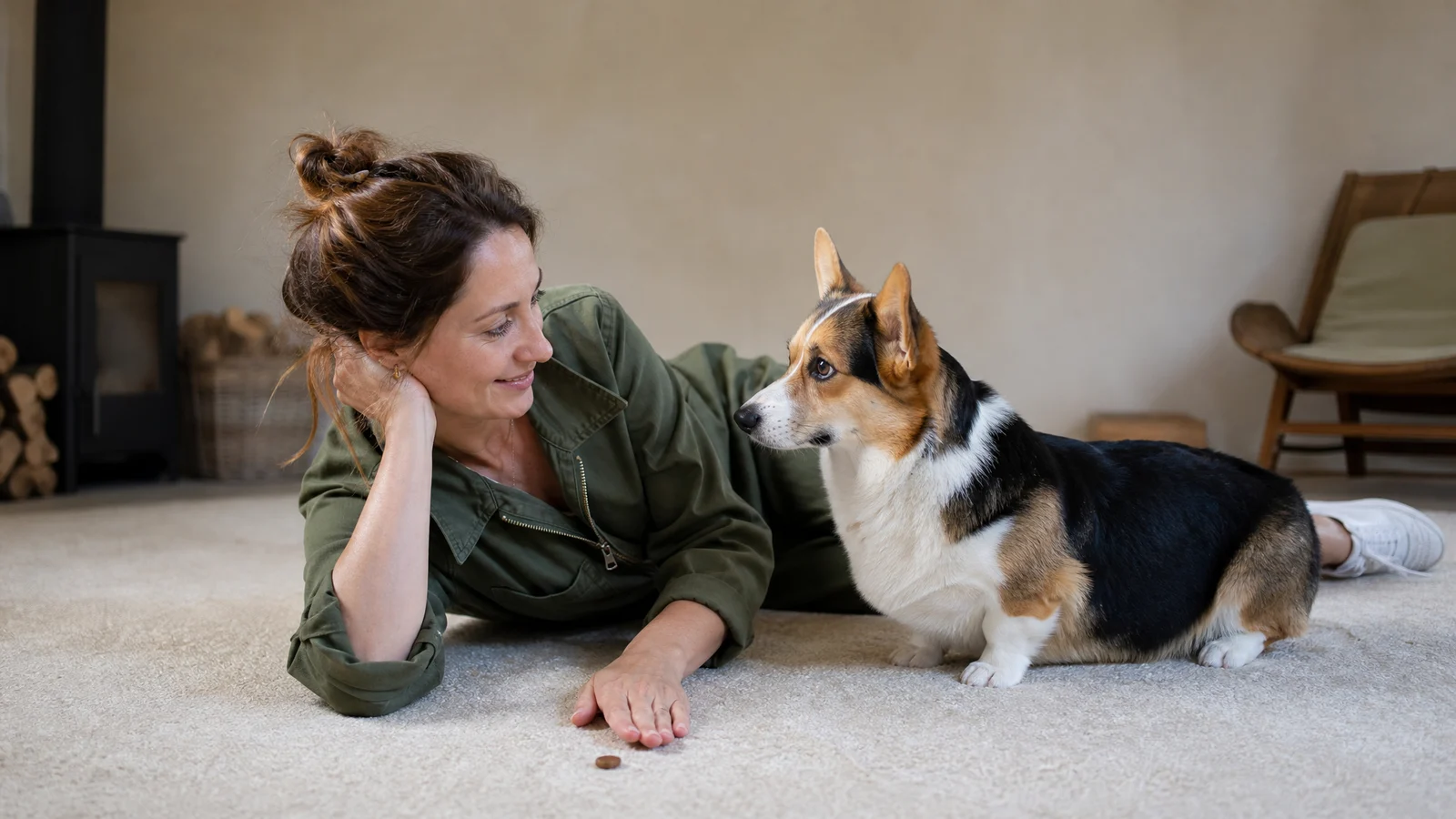
Your Corgi does not need a lecture about the dropped crust. They need a game where turning away from it wins something better.
That game is leave it, and a quick, clever Corgi tends to pick it up fast once the payoff is clear. Pembrokes often have a mind of their own, so the version that works rewards the choice to turn away instead of arguing about it. Positive, reward-based teaching also suits a dog this sensitive, because nothing in it asks them to brace for a bad reaction.
Below, you'll find the setup, three short stages that carry leave it from a closed hand to a walk past a row of treats, and the steps that make the cue hold up around a real home.
Setting Up Leave It for a Low, Clever Dog
Start in a quiet room with your Corgi on a leash you can hold or stand on. The whole lesson is built to make one trade obvious, which is that turning away from this thing brings something better from over there. That only works if the better thing is truly better, so you need two kinds of treat before you begin. Have these ready before the first sitting:
- A plain treat for the item side of the lesson, something your dog happily eats but would not stake a whole afternoon on.
- A noticeably better treat in a pocket or the hand farthest from the item, because that one is the pay.
- A marker, either a crisp "yes" or a clicker, so you can pay the exact second your dog turns away.
Keep each sitting short and stop when your Corgi's attention drifts, because a rested dog learns the next round faster than a tired one. A few clean turns away are worth more than a long session that ends in boredom.
Leave It Command for a Corgi, Stage by Stage
Every stage uses the same pattern: your dog turns away from something they want, you mark that moment, and the better treat arrives from your other hand. Move to the next stage only when the current one looks easy and smooth several times in a row.
Closed Hand First
Put the plain treat in your closed hand, hold it low and let your Corgi sniff and nose at the fist. Say nothing and do nothing while that happens. Some dogs sniff, lick or paw for a while, and the lesson is simply to wait until their nose comes away from the hand, even by an inch or two. Run the stage in this order:
- Hold the closed hand low and still while your dog investigates it.
- Wait for the nose to pull away from the hand, even briefly.
- Say "leave it" as the nose comes away, mark with "yes" and pay the better treat from your other hand.
- Repeat until your Corgi backs off the moment they hear the words.
That last line is your test for moving on. If your dog still pushes at the hand after the cue, go back to waiting, because they have not yet worked out that the fist never pays.
A Treat on the Floor
Now the same game moves to the floor, where a Corgi does most of their looking. Put the plain treat down, cover it with your hand and let your dog try for it. When they give up, mark and pay from your other hand, never from under your palm, since the whole point is that the item is not the prize. Ideally the reward is a treat of higher value than the floor treat, which shows that leaving something alone can lead to better things.
Once covering is easy, lift your hand away a little at a time, ready to cover the treat again if your dog lunges. When that is smooth, stand up with the leash in hand and cover the treat with your foot instead, so your hands are free to mark and pay. Your dog should never reach the item, because every successful grab teaches the opposite lesson.
Walking Past a Row of Treats
The last stage adds movement, which matters for a herding breed that notices everything that shifts. Scatter a few plain treats on the floor with space between them, bring your leashed Corgi in and walk by at a distance where they look at the treats without pulling toward them. When your dog looks, say "leave it", stop moving and wait for them to relax on the leash and look up at you before you mark and pay.
Stopping is the heart of this stage, because it shows your dog that the way past a tempting thing runs through you. Move closer to the treats only when several passes in a row go smoothly, and say the cue early, since a dog already fixed on an object has a much harder time turning away.
Impulse Control Training for a Corgi on Real Floors
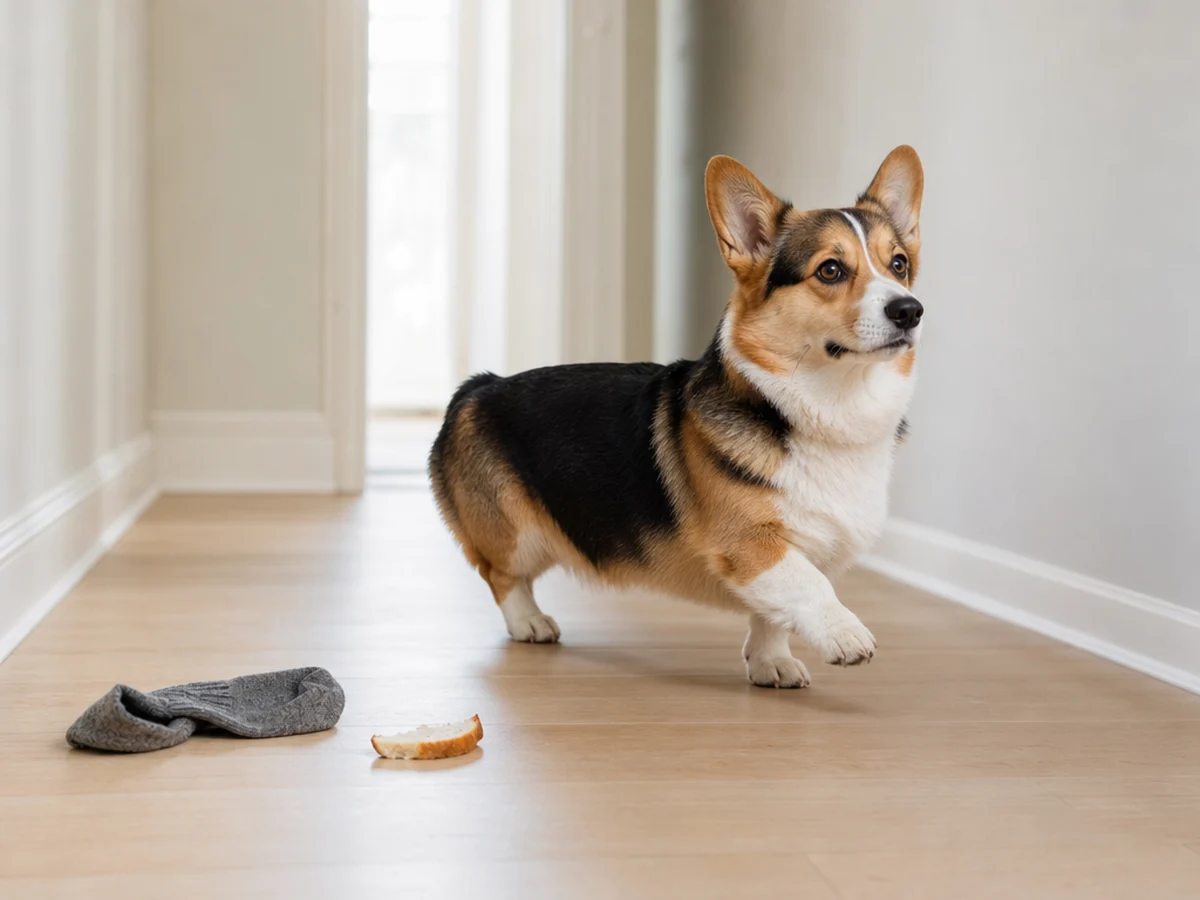
A Corgi who passes a row of treats has learned the game, but real floors hold socks, crusts and wrappers, and none of them look like your practice treat. So widen the game one object at a time, starting with five fairly boring items and working up to slightly more exciting ones. If a tissue or a bit of plastic would pull your dog in instantly, it belongs near the end of that ladder, because the cue should succeed on nearly every try.
Then change the setting without changing the rules, always with the leash on. Move through these places in order:
- Another room in the house.
- The yard.
- The sidewalk.
As Corgi people, we would rather you over-practice the dull things than rush to the thrilling ones. Pairing the walk-by stage with loose-leash walking helps, and an item your dog has already grabbed is a different skill, covered in our swap games for a Corgi.
Never practice on something your Corgi defends. If they stiffen or growl over a bowl or a prized object, food bowl trust comes first. Keep real hazards out of reach even once the cue works, keep regular vet visits on your calendar, and call the vet right away if your Corgi swallows something that could be harmful.
When Leave It Stalls Midway
Two snags show up once the stages begin to work, and neither is answered by the steps above. Both are easier to fix early, before a shortcut turns into a habit.
Can I practice with toys as well as food?
Yes, and you should once the food version runs smoothly. Swap in a chew toy or a ball your dog loves and run the stages again from the closed hand, so the cue comes to mean leave anything alone rather than leave treats alone.
What if my Corgi loses interest partway through?
Change the pay and shorten the sitting. A quick game with a favorite toy can reward a turn away as well as a treat does, and a short break beats a long, flat session. Leave it should feel like a game your Corgi wins, which keeps a sensitive dog keen to play again.
A Level Voice Behind Every Leave It
A sensitive dog listens to how a cue sounds as much as to what it says, so keep the word level and unhurried over the sidewalk crust just as you did over the closed hand.
Say it the same easy way on a busy day as on a drill day, and your Corgi will learn that the word means turn toward the better thing, never that something bad is coming. Over time that steadiness is what lets a quick, thinking dog trust the cue when it counts, and trust is what makes the turn happen in a second.
 Training basicsHow to Teach a Corgi to Heel
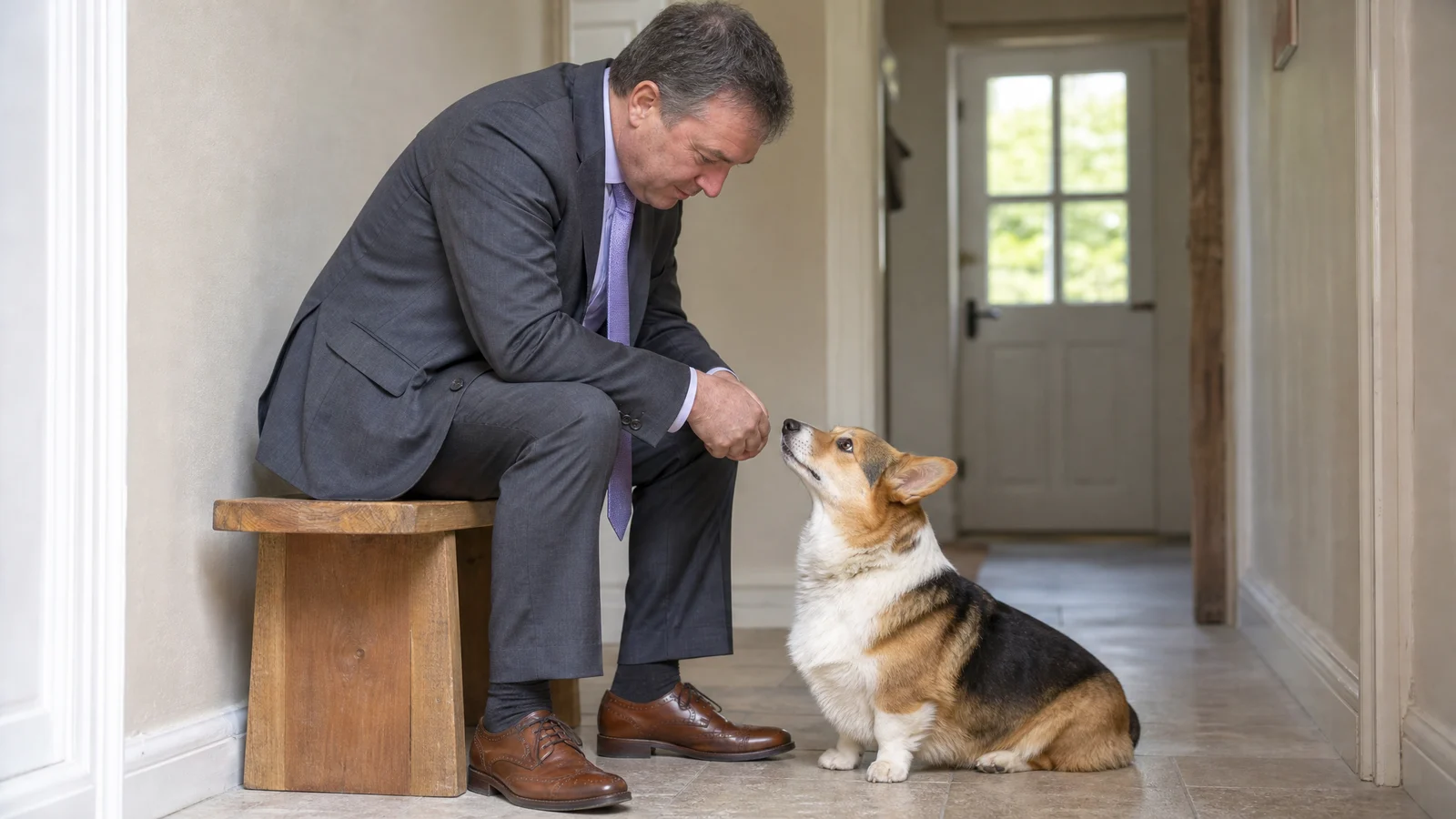 Training basicsHow to Teach a Corgi to Focus on You
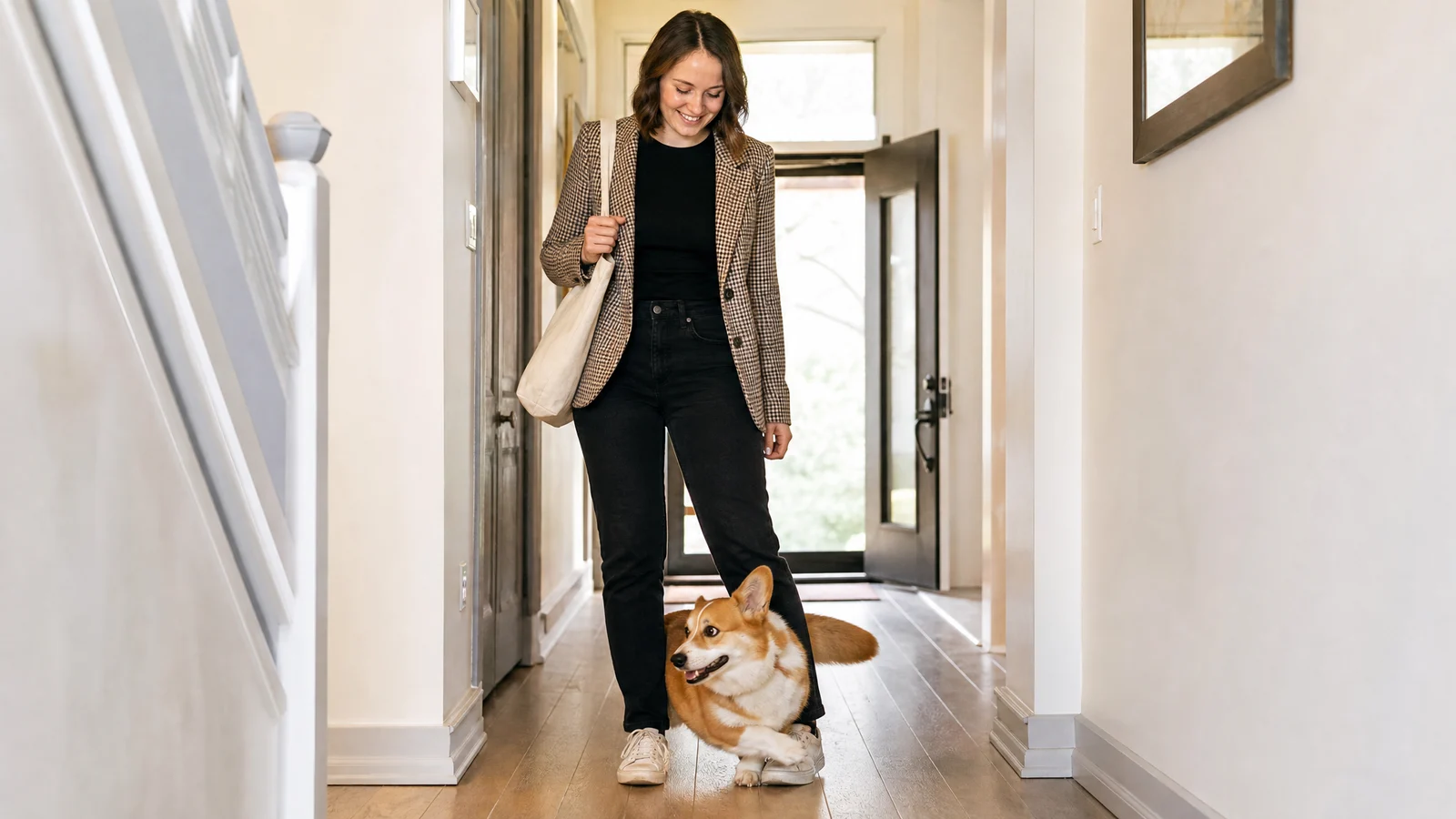 Training basicsAre Corgis Easy to Train? Temperament and Trainability FAQ