 Corgi
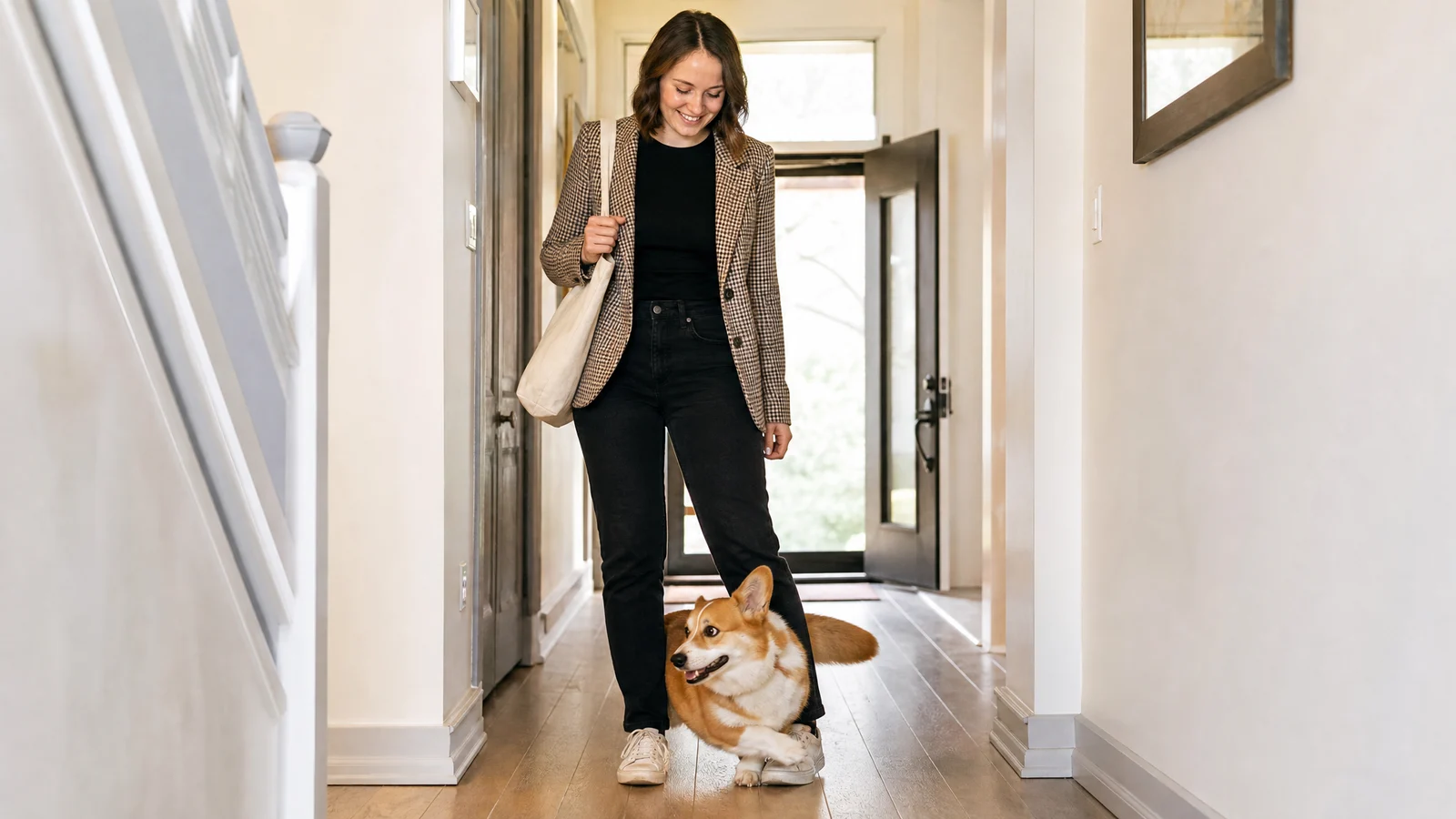
Guests step through the door and freeze in the hallway while the Corgi circles their ankles, low and fast, nipping at heels. Owners describe this scene often, and it is not rudeness. It is herding temperament doing the work the breed was built for.
We have trained this breed for many years, and the pattern holds. Corgi temperament is bright and opinionated, and many owners who raised other breeds say a Corgi puppy was far more work than they expected.
This guide covers Corgi temperament, from the split between the Pembroke and the Cardigan to barking, herding nips, shyness with visitors and selective listening. It closes with signs your training is working and signs to call a professional. Done well, that busy mind becomes a devoted partner. Done badly, it invents its own jobs.
Two Corgi Temperaments Compared
"Corgi" covers two breeds, and not every owner learns that before the puppy comes home. The Pembroke and the Cardigan share a body plan and a herding past, but their temperaments pull in different directions. Be skeptical of any claim that all Corgis behave alike. Owners also report large differences between individual dogs, sometimes an easy first Corgi followed by a much harder second.
Plan for a demanding dog. Many owners with other breeds behind them say a Corgi puppy was more exhausting than any puppy they had raised, and for some, training felt like a full-time job. A smaller group finds their Corgi easy, eager and quick to learn. Budget for the first and enjoy the second if it arrives.
AKC's breed ratings, scored from 1 to 5, show where the two breeds split and where they match.
| Rating | Pembroke | Cardigan |
|---|---|---|
| Watchdog/protective nature | 5 of 5 | 3 of 5 |
| Barking level | 4 of 5 | 5 of 5 |
| Good with other dogs | 4 of 5 | 3 of 5 |
| Good with young children | 3 of 5 | 4 of 5 |
| Openness to strangers | 4 of 5 | 4 of 5 |
| Trainability | 4 of 5 | 4 of 5 |
The Pembroke Is Bright and Bossy
The description fits: this breed is bright and bossy. Pembrokes living with other dogs, especially larger ones, generally become the boss and herd the others around, sometimes to the other dogs' annoyance. Owners describe the same thing at home, a dog who tries to run the household or seems to be training the people.
Bossy is not the same as unfriendly. Pembrokes score 5 of 5 for affection with family. They are energetic, willing and highly intelligent, with a mind of their own. Our verdict: the bossiness is a job description, not a defect. Meet it with predictable routines and rewards for the choices you like, and the same drive becomes enthusiasm.
The Cardigan Is Even-Tempered
The Cardigan's breed standard reads "Even-tempered, loyal, affectionate, and adaptable. Never shy nor vicious." Cardigans are also described as alert and watchful yet friendly, and the club says they excel in training thanks to a willing-to-please attitude. Well-socialized Cardigans are especially fond of kids and agreeable with other pets.
Standards describe ideals, though, not every dog. Some Cardigans hold back with strangers, and owners of both breeds report bossiness or reactivity toward other dogs. If you are choosing between the two, our Pembroke versus Cardigan comparison goes further on daily life.
Barking and Watchdog Temperament in Corgis
Those ratings explain a lot of the noise. The Pembroke scores 5 of 5 for watchdog nature and the Cardigan 3, yet the Cardigan scores 5 of 5 for barking and the Pembroke 4. So barking is not only guarding. Corgis of both breeds are vocal, and the useful question is what the bark is for. Sort it by what you see and hear, then fix the cause.
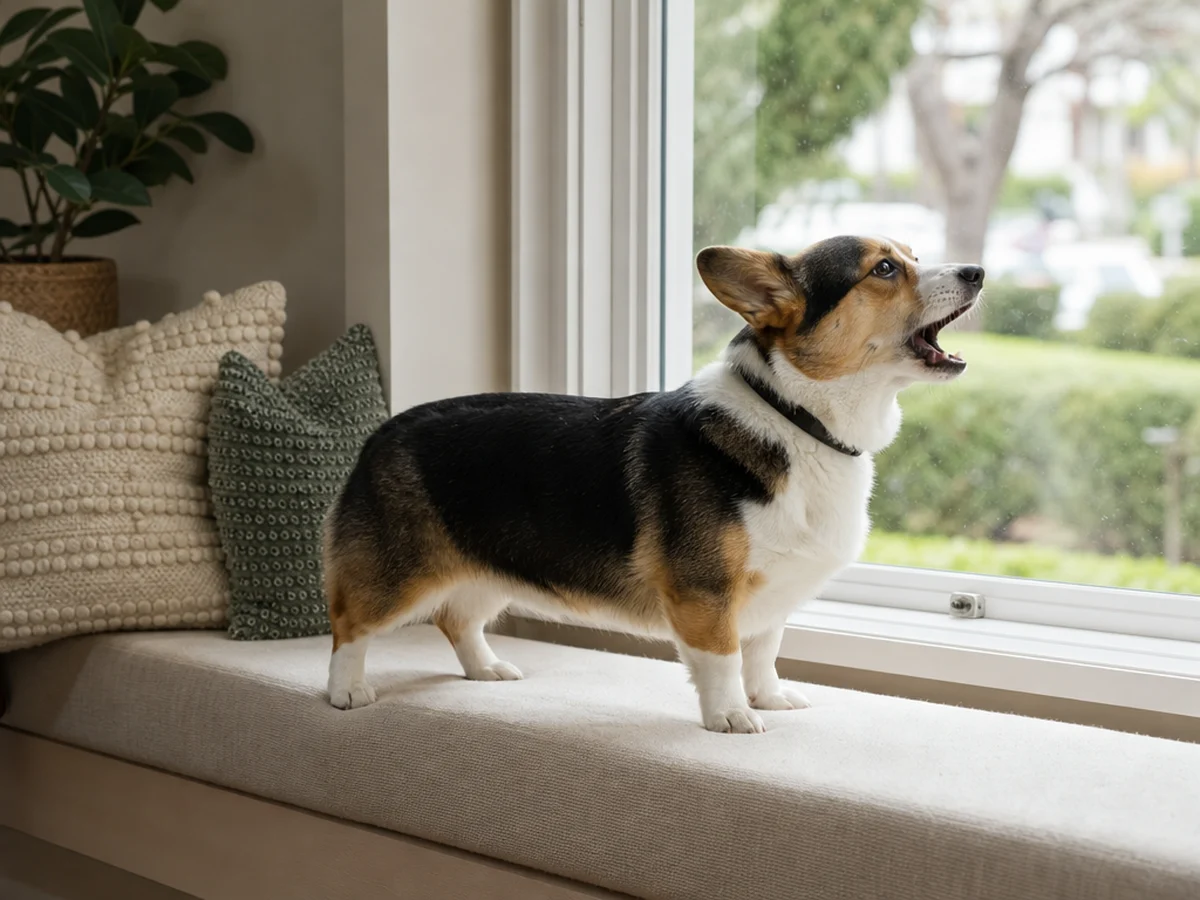
Alert Barking at Sounds and Sights
This is the bark at the window, the delivery truck or the footstep in the hall. The dog is reporting, and they believe the job matters. Common advice says to ignore it until it stops. For alert barking that rarely works, because the dog is paid by the thing they see leaving.
Instead, walk over, calmly acknowledge what they noticed, and call them away to a treat or a chew. Reward the moment they pause. Block the view with film on the lower window panes if the street keeps winning. Owners find calm answers beat raised voices, since shouting sounds like you are joining in.
Demand Barking for Attention
Sharp barks at you, at the treat cupboard or the ball are requests, and they work. Every time you hand over the thing, you teach the Corgi that noise is a lever. Stop the cycle by rewarding the quiet instead. Wait for a breath of silence, mark it with a word, and deliver the prize. If barking continues during play, end the game for a minute and resume when they settle.
Door and Doorbell Barking
The doorbell is the hardest test because it stacks excitement on watchdog instinct. Break it into pieces. Teach a mat as a place to go, then ring the bell yourself and reward arrivals on the mat. Use a baby gate to keep a gap between the dog and the door. Add a visitor only once the dog can stay settled with the bell alone. Barking at the door is something you manage and reward away. Never encourage it as protection.
Corgi Herding Nips and Chasing
Back to the hallway. A Corgi who nips heels, circles guests or chases anything that moves is not being aggressive. Herding dogs react to movement, and running children are the biggest trigger of all. Pembrokes are happy to herd up errant children, especially running ones, and consistency from the first day is what prevents a later heel-nipping habit. Hope that they will grow out of it is a poor plan.
The fix is to manage the trigger, then give the instinct somewhere to go. Work through these steps:
- Use a gate, leash or crate when guests arrive or children are racing around, so practice of the habit stops while you train.
- Teach a mat or place cue and reward calm feet there, with treats scattered on the floor as guests walk in.
- Make a calm interrupt your standard response to nipping: stop moving, say a cue, and reward the second the dog turns to you.
- Give children simple rules, like standing still and no running games indoors, and supervise every mixed session.
- Channel the drive into tug, ball games and short training bursts, which is where movement-obsessed dogs find a legitimate job.
Chasing on walks follows the same logic. Bikes, joggers and cars are moving targets, so work at a distance, reward looking at them calmly, and build the habit slowly. Our Corgi leash training guide covers lunging in detail.
Bossing other dogs, barking at them or herding them is just as common, and it shows up in dogs with all kinds of socialization histories. What helped was repeated, calm meetings, ongoing work and consistent structure. Many owners say that easing off training backfired.
Temperament and Shyness With Strangers
A Cardigan who backs away from visitors, goes stiff when someone leans in, or hides behind your legs is telling you something. Some of this is the breed. Some Cardigans withhold their favors from strangers until they get to know them better. That is reserve, not a flaw, and it fits a dog described as watchful yet friendly.
The line to watch is between reserved and fearful. A reserved dog warms up in minutes. A fearful dog freezes, trembles, hides or may even wet the floor. Some owners of both breeds report timid or poorly socialized Corgis, and a few see fear peeing at things like the vacuum. Either way, never force the greeting.
Gentle exposure is the cure:
- Let the dog choose the distance, and reward them for looking at the visitor from wherever they feel safe.
- Ask guests to ignore the dog completely, avoid reaching over their head and toss treats on the floor rather than offer them by hand.
- Keep early visits short and end while the dog is still relaxed, then repeat many times.
- Let the dog approach on their own and return to you whenever they want.
Strangers can also test your patience when they all want to greet your dog. You can politely say no, or ask people to let the dog come to them.
Selective Listening in Corgis
"Stubborn" is the most overused label for this breed. Both breeds score 4 of 5 for trainability, and the Pembroke is described as having a mind of their own yet being willing and highly intelligent. So when a Corgi ignores a cue, do not default to stubborn. Ask which of three things is actually going on.
Real Independence
Some of it is genuine. Pembrokes often have a mind of their own, so a Corgi may weigh up your request and decide something else is more interesting. Shaping their choices works better than demanding obedience. Reward the options you like, keep your cues short and make strict routines the background, so deciding the right thing becomes easy.
Boredom
Some owners find mental needs run higher than expected. Walks alone are often not enough, and mental work, agility or training tires these dogs out more than distance. The common advice to tire them out is only half right, though. Moderate walks plus play and short training sessions keep a Corgi settled better than piling on more miles. Our complete Corgi training guide gives session ideas.
A Weak Reward or a Wrong Tone
Pembrokes are sensitive and intelligent, and reward-based training with gentle handling suits them. If your treat is dull, upgrade it. If your voice is angry, expect the dog to shut down. A disappointed tone worked better than an angry one for some owners.
The same sensitivity explains accidents. Some owners read indoor peeing as spite, but many dogs look ashamed without being scolded, and some pee from fear. Treat it as a training gap, stay calm and reward the right spot. Our Corgi potty training guide shows how.
Corgi Temperament Progress and Warning Signs
The hardest stretch usually passes. Owners describe it lasting from several months to around a year and a half, and some say they only began to enjoy the dog after the first year. Others still find an adult a handful at two or three years. Many first-time owners call the puppy phase crazy hard, yet say they love the dog and would not trade them. Look for these changes to know your temperament work is paying off.
- Greetings are calmer, with four paws on the floor and a quicker move to the mat when guests arrive.
- The dog recovers faster after a bark, a scare or a flurry of excitement.
- Cues like come, settle and leave it land on the first ask more often, even with distractions.
- A reserved dog approaches visitors by choice and a bossy dog backs off other dogs more easily.
Book regular vet visits, and go sooner if behavior changes suddenly, since pain or illness can change temperament. Then call a qualified trainer or behaviorist if you see any of the following.
- Growling, snapping or biting people, especially children or visitors.
- Panic that does not fade, such as trembling, hiding for hours or fear peeing every time.
- Fights or intense reactivity toward other dogs, getting worse despite steady work.
- You feel close to giving up on the dog. Some owners nearly rehomed theirs and are glad they got help instead.
All of this points the same way. Corgis are bright, busy herding dogs with strong opinions, and they settle best when calm structure, daily mental work and rewards give that energy a job before they invent one.
 BehaviorCommon Corgi Behavior Problems and the Instinct Behind Each
 Puppy trainingCorgi Puppy Biting: Why It Happens and How to Stop It
 Puppy trainingCorgi Puppy Training Timeline: 8 Weeks to 2 Years