 Corgi
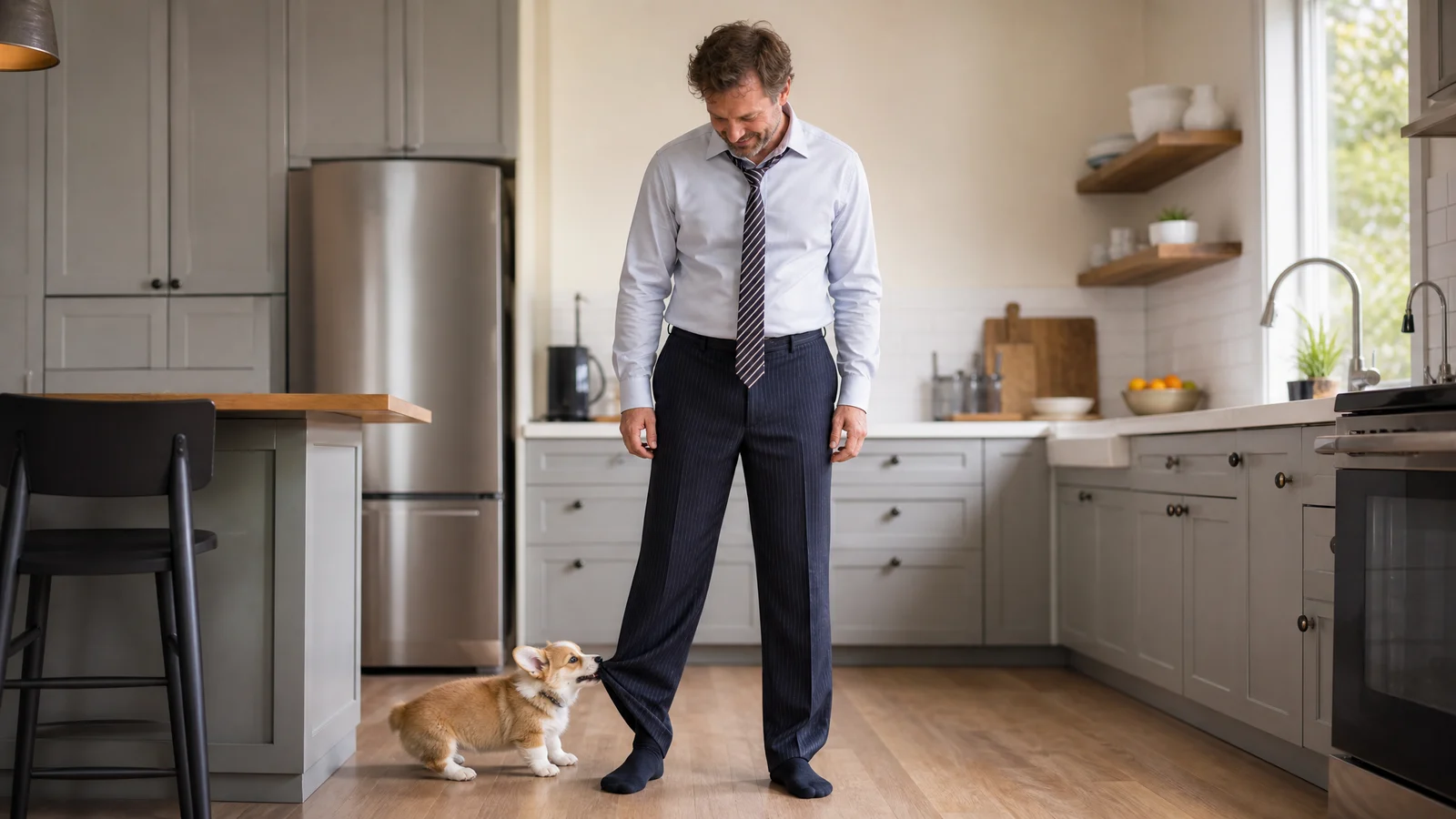
Most puppy-biting advice assumes a puppy who is teething or playing, so it tells you to ignore the mouth and wait it out. A Corgi changes that, because the breed was developed to nip cattle heels. The bite is aimed at moving ankles, and simply ignoring a puppy who is hanging off your sock mid-stride leaves the fun fully intact.
Handled badly, that early habit hardens into nips at running children and startled guests. Handled well, you get an adult who keeps a gentle mouth and aims their drive at games with you. Our focus is this breed's behavior and training, and the plan below leans on how Corgis think.
This guide covers Corgi puppy biting, from the instinct behind the heel-nip to the toys, timing and household rules that redirect it, testing each common belief along the way.
Is Corgi Puppy Biting Just Instinct?
A very common belief is that nipping is simply what a Corgi does, so nothing can be done until the puppy ages out of it. The first half is true. The second half is where owners get discouraged for no reason, so it helps to see exactly what the instinct is and what it is not.
Why Moving Feet Set It Off
Breed history explains the target. The Corgi's purpose was to nip the heels of cattle and drive them, clearing the owner's ground of neighboring herds before fences were used. A heel is low and it moves, and your ankles make a fair stand-in.
So a puppy who streaks across the kitchen to grab your slipper is not being spiteful. They are doing a miniature version of the work their ancestors did.
Triggers That Raise the Odds
Running is the big one. Pembrokes are happy to herd up errant children, especially running ones, and a Pembroke living with other dogs, particularly larger ones, will generally try to boss them around too. The same club calls the breed bright and bossy, which is a fair summary of a puppy with a plan for your feet.
Excitement, visitors arriving and the evening rush make it more likely. That is actually encouraging news. An instinct with predictable triggers is far easier to redirect than a habit that comes out of nowhere.
How a Grab-and-Nip Unfolds
Watch a few episodes and you will see the same order each time. Something moves, your puppy locks on, rushes in low, grabs the heel or hem and pinches. If you hurry away, the movement speeds up, and that is the reward they were after.
This is why plain ignoring tends to fall short with this breed. What works better is to stop moving, offer a toy as the rush begins, and pay your puppy when their mouth lands on it.
The verdict: instinct explains where the mouth goes, but it does not make the nip untouchable. For the wider picture, our look at the instinct behind each Corgi problem goes further.
Puppy Teething Versus Heel-Nipping
The second belief is that teething explains everything and you only need to survive it. Teething is real and it matters, but it covers only part of what a Corgi puppy does with their mouth. Telling the two apart tells you which fix to reach for.
Sore-Gum Chewing
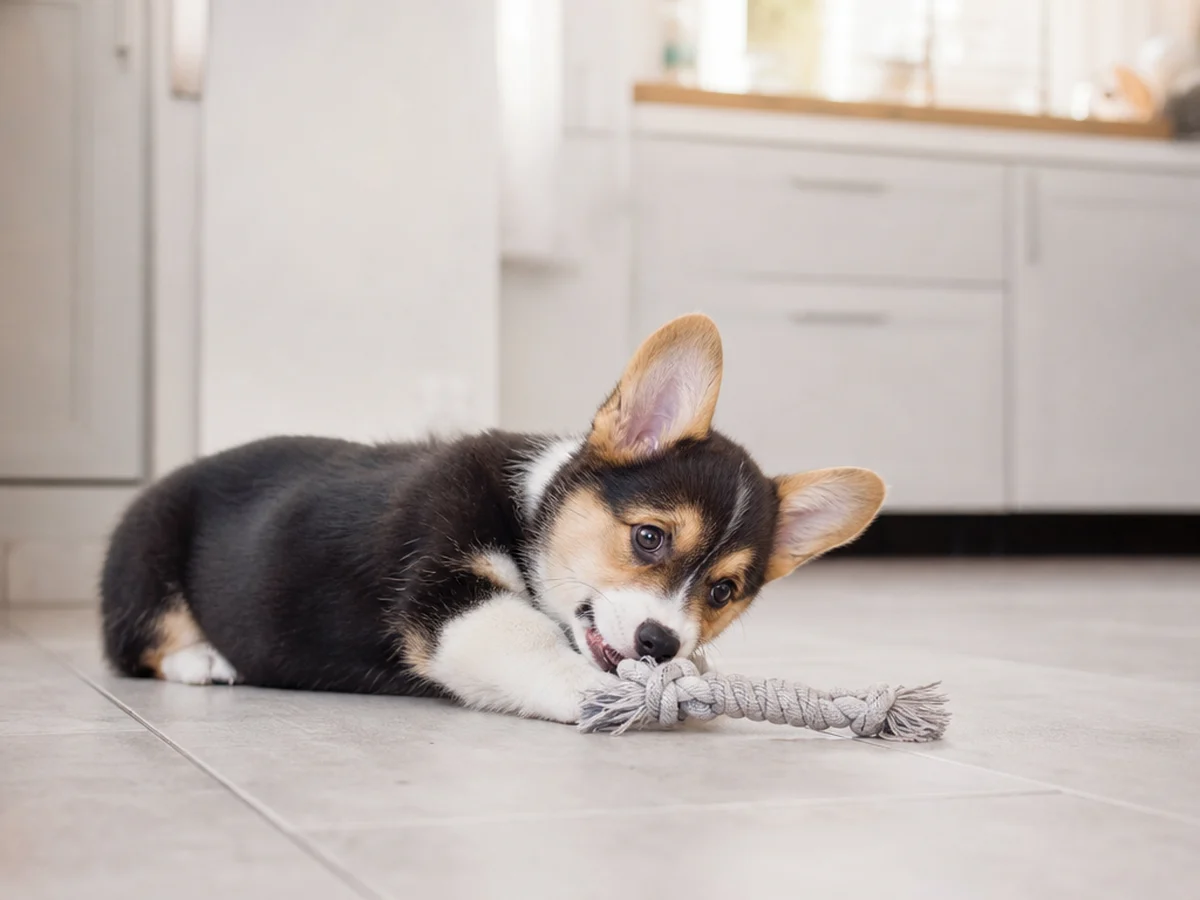
While adult teeth come in, gums are tender and a puppy chews whatever they can reach, from chair legs to your fingers. This chewing is steady and unfocused. Your puppy settles down with something and works at it, and the target is not fussy.
Cold helps. A frozen rubber toy can soothe sore gums, as long as you stay close enough to make sure no pieces get swallowed. It is a lifesaver in the evening, when many puppies get nippy and your patience is thin. Keep regular vet visits going through the first year, and mention the chewing so your vet can check that the mouth is developing as expected.
Excitement-Driven Herding Nips
The herding nip looks different. It is quick, it is aimed at something moving, and it arrives in bursts of excitement. A frozen chew does little for it, because the gums were never the problem.
Here is a rough way to sort them. If your puppy lies down and gnaws whatever is nearby, think teething. If they spring at your feet when you walk past, or chase a running child and grab at the legs, think herding. Many puppies show both in the same afternoon, which is why the fix has two parts: a good chew for sore gums and a better outlet for the nip.
The timing differs too. Mouthing generally starts easing around the middle of the first year, while the herding nip depends on what has been rewarded. We come back to that below.
Mouthing Is Not Aggression in Puppy Training
This is the worry that keeps new owners up at night. A tiny puppy with needle teeth latches onto a hand, and it is easy to wonder whether you have a dog with a temper problem. Please relax a little, because the answer is almost always no.
Playful mouthing is normal puppy behavior. It is how young dogs explore and play. The breed's own descriptions agree: the Cardigan standard calls the temperament even-tempered and adaptable, never shy nor vicious, and well-socialized Cardigans are described as especially fond of kids and agreeable with other pets.
The difference shows up in the body and the context. Play mouthing usually looks like this:
- A loose, wiggly body, often with bouncing or a play bow, and a soft, eager face.
- Bites that come in bursts at moving feet, sleeves or hands, and that stop when the game does.
- A quick return to cheerful behavior when you offer a toy or end the session calmly.
Real warning signals look different. A stiff, frozen body, a hard stare, a growl over a food bowl or toy, or a snap when your puppy is cornered or handled are requests for space, not games. If you see these, give the puppy room and talk to your vet, then ask a qualified reward-based trainer to help you read the situation.
For most Corgi puppies, though, the picture is simple. The mouth is busy, the teeth are sharp, and the herding drive has nowhere better to go yet.
Do Toys Help Corgi Puppy Training?
The fourth belief is that a toy is enough: wave one in front of the puppy and the nipping stops. In practice, a toy lying on the floor loses to a moving ankle every time. Toys redirect a Corgi only when you choose them well, time them well and pay for the swap.
Choosing the Toy
Because movement is what a herding puppy responds to, favor toys that move or that you can move. Keep several in rotation and scatter them where your puppy spends time, so a good target is always a step away. Swap them every few days so they stay interesting.
A tug toy is a good match, since it turns the chase-and-grab drive into a game you control. Choose one long enough that your hands stay well clear of the teeth.
Timing the Swap
Timing decides whether this works. The best moment is just before a nip, when your puppy has locked onto your feet but has not yet grabbed. Stop moving, present the toy, and say your marker word as their teeth close on it.
If you wait until the puppy has bitten your ankle and only then offer the toy, you risk paying for the nip itself. Practice the swap when your puppy is calm too, so it feels familiar when excitement runs high.
Paying for the Right Choice
Once the toy is in their mouth, reward it. Small soft treats work well, and so does the game itself, since a round of tug is exactly what the nip was reaching for. Pembrokes are described as sensitive, and positive, reward-based training suits them best, so keep your voice warm and steady.
A mild consequence fits in nicely. If teeth land on skin, the game stops, you freeze calmly and pause briefly, then you offer the toy again. An overtired puppy may need a short rest in a pen or gated corner with a chew, which often ends a nippy spell.
Outgrowing Corgi Puppy Biting
The fifth belief is that they will grow out of it. There is good news here and a catch. Most puppies grow out of mouthing around 5 to 6 months. Some dogs continue into the first year and occasionally to 18–24 months, but the mouthing should keep decreasing. If it is not easing at all, raise it with your vet at the next regular visit.
The catch is that mouthing and heel-nipping are not quite the same thing. Mouthing fades as the puppy matures. The herding nip comes from what the breed was built to do, so it can linger or return when the habit has been rewarded.
The Pembroke club's advice is worth taking to heart: parents must be consistent from the beginning to prevent a later problem with nipping heels. Here is what happens when the rules vary:
- One person laughs and runs when the puppy chases, while another redirects calmly, so the puppy learns that nipping sometimes works.
- Children squeal and sprint away, which hands the puppy the best chase game of the day.
- Rules relax when the household is busy or tired, and the nip returns at exactly those times.
Sometimes-rewarded habits are among the hardest to break, because your puppy keeps trying in case this is a sometimes-works moment. That is how a puppy habit becomes a heel-nipping adult.
The fix is agreeing on a plan. Everyone uses the same toy swap, the same calm pause and the same rewards. To see how this fits across the stages, our Corgi puppy training timeline maps out what changes and when.
Household Puppy Training Rules
Put the beliefs together and the picture is steadier than the worries. Instinct explains the heel-nip but does not make it untouchable. Teething explains the chewing but not the lunging. Mouthing is normal puppy behavior, not aggression. Toys work when paired with timing and a reward. And what ties it together is early, reward-based consistency from every person in the house, because that is what calms a Corgi's mouth.
Here is what to expect over time. The early weeks bring frequent mouthing and lots of swaps, so treat each one as practice rather than failure. As the months pass, the grabs get softer and rarer, and your puppy starts turning toward a toy on their own when excitement hits. Keep the pen, gates and chews for tired moments, since they stay useful through adolescence, when old habits sometimes test the rules.
Over the long term, nipping fades gradually with consistent redirection. Do not be surprised if a grown Corgi still gives the occasional herding nudge at your heels when they are excited. That is the breed's old job showing through, and a quick toy or a calm pause is usually all it takes. For the bigger path ahead, our complete guide to Corgi training picks up where this one leaves off.
 Puppy trainingCorgi Puppy Training Timeline: 8 Weeks to 2 Years
 Training basicsCorgi Training: The Complete Guide for Owners
 Training basicsCrate Training a Corgi and Preventing Separation Anxiety