 Corgi
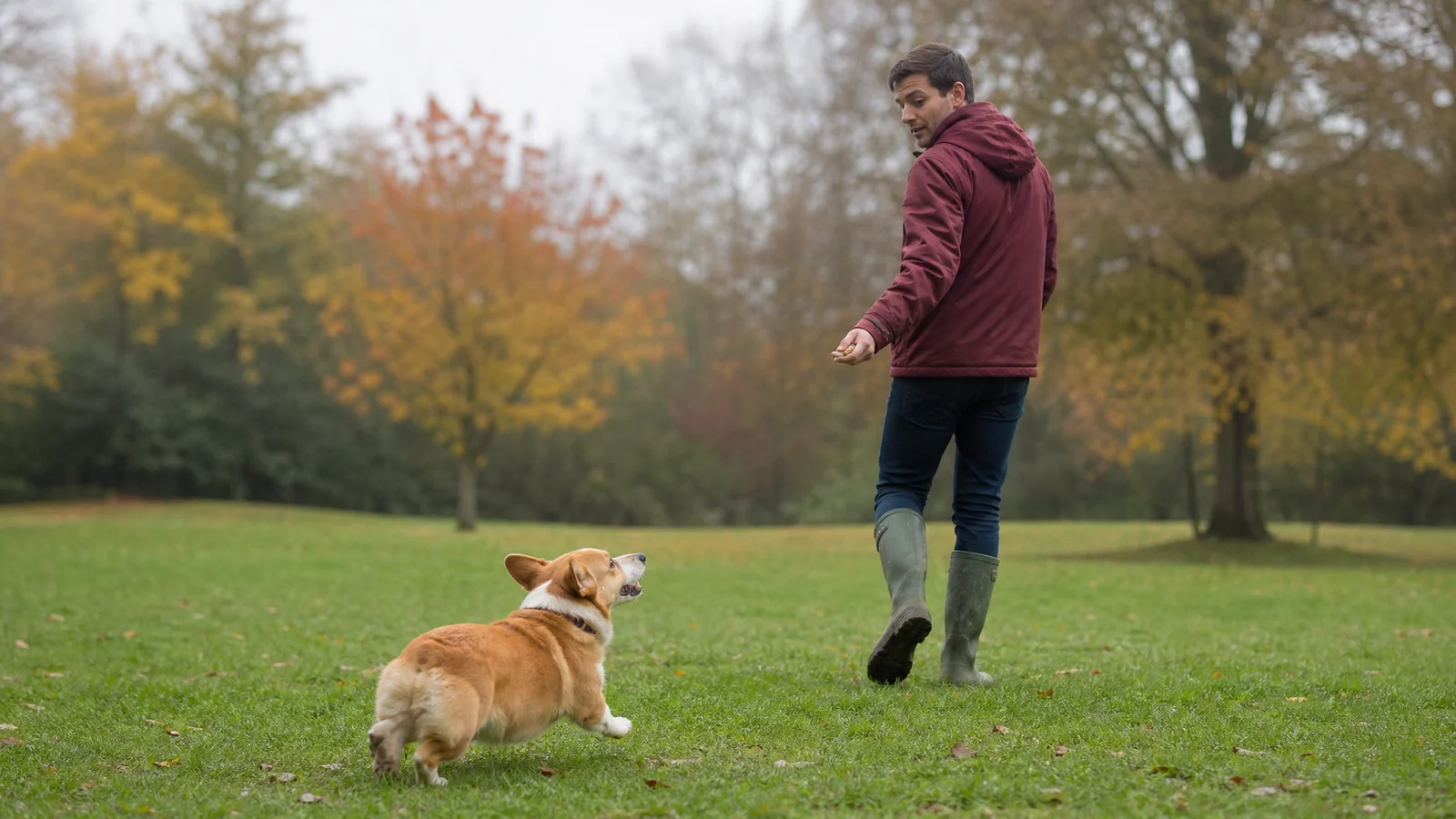
Coming back involves more than hearing a word. A Corgi has to leave the current activity, turn toward a person, travel to them and remain close enough for the return to be useful. Games let you practice those parts separately before asking for them together around something that moves.
Pembrokes and Cardigans have herding histories, so motion deserves thoughtful management. Children and other dogs should not become the first recall test, even after good practice at home. In this guide, we choose safe game conditions, reward close arrivals, alternate between adults and change the person's position. Manageable movement enters later, with observations helping you choose the next exercise instead of simply increasing distance after every success.
Safe Conditions for Corgi Recall Games
Choose a secure area where the dog can approach without crossing traffic, tangled equipment or another animal's path. Use a suitable safety connection wherever needed. The game's purpose is a willing response, so the surroundings should prevent an unsuccessful attempt from becoming an opportunity to continue a chase.
Space and Equipment
Keep initial movement close and uncomplicated. Outdoors, manage a long line attached to a suitable harness so it does not wrap around people, the dog or obstacles. Prevent sudden stops against a taut line, and learn safe handling before extending the practice area.
Advice on walks with uncertain recall supports keeping a dog on leash when distractions may exceed their response. Games build skills within that protection. They do not make an open area secure merely because the dog has returned successfully before.
A Reward Ready to Deliver
Prepare something your Corgi values in the current setting. Food, suitable toy play or another enjoyable outcome may work differently depending on what the dog was doing. Have the reward available before the invitation, and choose a comfortable delivery position that does not require jumping toward your hands. Let the dog finish eating or playing before you prepare a fresh invitation, keeping the outcome separate from the next request.
Begin while the dog can notice you easily. An exciting game is not automatically a clearer lesson for a dog already focused elsewhere.
The Close-Arrival Recall Game
This game teaches where coming back finishes. Stand nearby in a quiet space and invite your Corgi with the household's chosen recall cue. Reward reaching you, keeping the delivery position consistent enough that the dog can find it without circling around your legs or moving away again to collect the food.
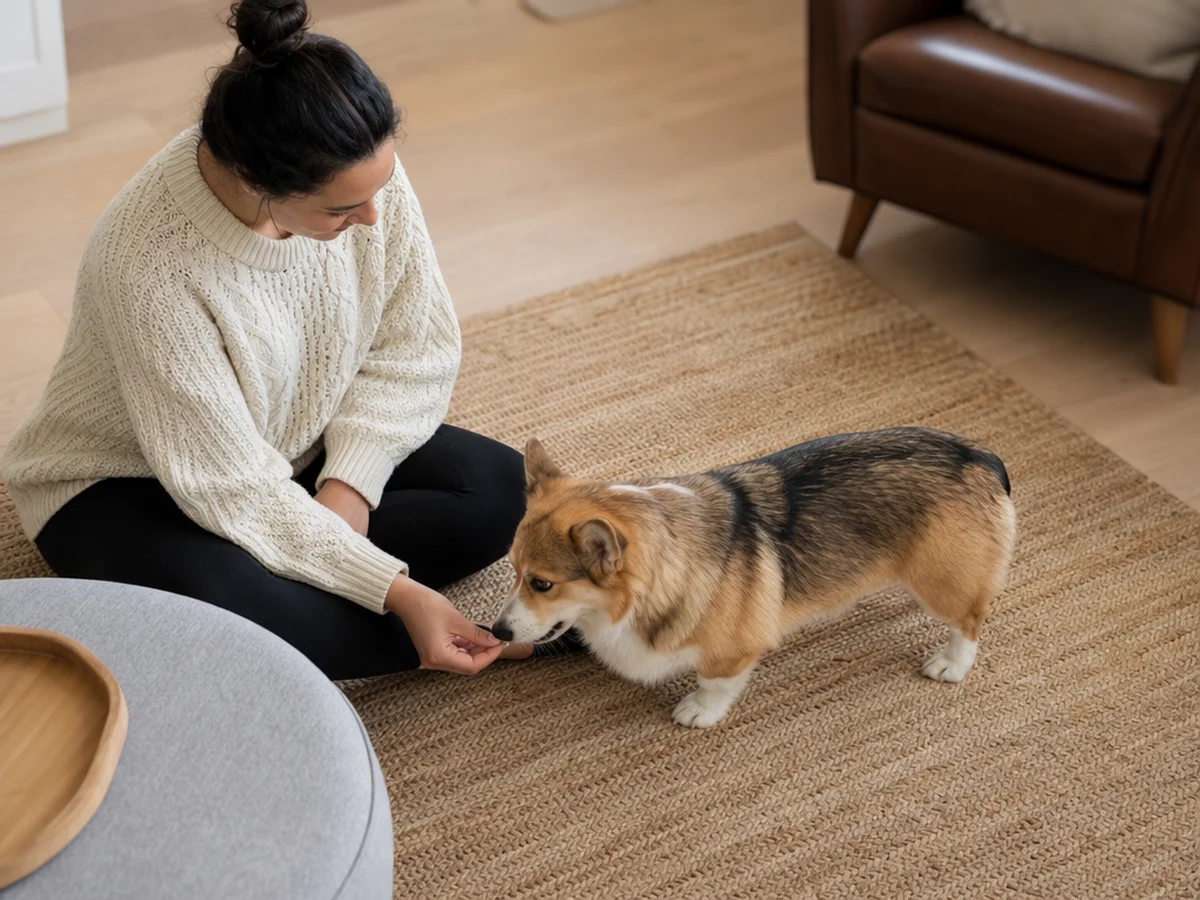
The foundation recall exercise connects approaching a person with a rewarding outcome. Start with that simple relationship before adding a long journey or a difficult distraction. A complete close arrival gives later games a clear destination.
- Wait for an easy opportunity when your dog is nearby and available to engage.
- Give the familiar invitation once, then acknowledge and reward the arrival at the chosen position.
- Use a release and allow a comfortable break before setting up another approach.
Check your posture if the dog stops outside reach. Leaning over a low Corgi or suddenly moving a hand toward their harness can change the encounter. Teach comfortable handling separately, then include a familiar gentle contact only when the dog willingly accepts it.
Reward the arrival even if it took longer than you hoped. An eventual return still needs a welcoming outcome. Use the delay to choose an easier next opportunity rather than making coming close the moment when the interaction becomes unpleasant.
Corgi Recall Between Two Adults
Alternating between adults adds a useful turn without requiring a large space. Each person needs the same cue, a suitable reward and an understanding of when their turn begins. Start close enough that the dog can travel comfortably between them without becoming a fast, frantic shuttle.
Guidance on recall with another person includes taking turns calling and rewarding. Keep the adults coordinated so the Corgi hears one invitation at a time, rather than competing voices offering different destinations.
- Let the dog finish collecting the reward from the first adult before the other person calls.
- Have the first adult become neutral, allowing the new invitation to identify the next destination.
- Reward the complete approach and pause before deciding whether another turn remains useful.
Change positions gradually if the dog begins running between locations without listening. A brief ordinary break can restore the distinction between following a cue and repeating a route from habit. Keep the activity easy enough that you can see the response to the invitation itself. Ask the waiting adult to keep their reward still, so their hand does not accidentally announce a turn before they speak.
Children should not run this game or encourage the dog to chase them. Adult cooperation gives you control over movement, timing and the end of practice.
If toy play rewards the arrival, our Corgi swap games guide can help with comfortable release between turns. If one adult is less familiar to the dog, begin with close individual approaches to that person before asking the Corgi to alternate between both.
A Recall Game With a New Position
Move to a different, still visible place in a quiet room and invite the dog to find you there. This adds a small navigation problem without relying on speed. Choose an open route with secure footing, leaving the Corgi able to see where the invitation came from and approach comfortably.
Begin with a modest change beside familiar furniture. A position behind a closed door or beyond a difficult obstacle asks a different question and may create uncertainty you do not need.
Reward the dog at the new destination, then allow them to explore or rest before another invitation. The exercise helps separate the cue from one fixed spot beside the couch. That becomes useful when everyday recall needs to work from different parts of the home rather than only where formal practice usually happens. Let another adult use the familiar position later, keeping the route easy while the person changes.
Observe the route the dog chooses. If they hesitate at a slippery surface or tight gap, change the location before interpreting the hesitation as selective hearing. A short, comfortable path can teach the intended response more clearly than an elaborate hiding game.
Keep this exercise predictable for a dog who becomes worried when people disappear. You can vary your position while remaining in view, and you can finish without making the Corgi search through the home. Difficulty should come from a manageable new destination, not from concern about finding their person.
Recall Beside Manageable Movement
Introduce motion only after the easier games are comfortable. Use an adult helper at a distance where your Corgi can notice movement and still reconnect with you. The helper begins with an ordinary, limited action, keeping the dog well away from their path and leaving room to reduce the challenge immediately.
The Cardigan's cattle-moving background provides context for interest in motion. It does not make a full chase necessary practice. Work at the earlier moment when the dog can observe movement without becoming committed to following it.
- Arrange the dog and helper with enough separation for a calm response before any movement begins.
- Allow a small controlled movement, then invite the familiar return while the dog remains available.
- Reward the complete arrival and have the helper pause while you assess whether another repetition is suitable.
If the dog fixes attention on the helper, increase distance or reduce movement before trying again. Repeatedly calling while the Corgi pursues teaches little about the easier response you want. Preserve the safety connection and leave the situation calmly when the setup is no longer manageable.
Our Corgi household herding guide covers protected movement routes and alternatives around family life. Keep those arrangements in place while recall develops. Children and pets should be able to move safely without depending on an unfinished skill.
Choosing the Next Corgi Recall Game
Select practice from the part of the response that needs help. More distance is useful only when distance is the relevant challenge. A dog who approaches but avoids your hand may need comfortable contact practice, while a dog who follows one adult readily may need a clearer introduction to another.
The comparison below keeps each change tied to an observation. Return to the easier game without treating that choice as lost progress.
| What You Observe | Practice to Revisit |
|---|---|
| The dog turns but passes the person | Close arrivals with a clear reward position |
| The dog runs between people before a cue | Slower adult turns with ordinary breaks |
| A different location causes hesitation | Visible position changes along a comfortable route |
| Motion prevents a turn toward you | More distance and less helper movement |
Make brief notes about the setting and outcome. A useful record distinguishes an eager arrival from a response that needed repeated calling, rather than counting every eventual return as the same success.
Taking Corgi Recall Games Into Walks
Use short opportunities within an otherwise enjoyable outing. Allow exploration, choose an easy moment to call and reward the return, then sometimes release the dog to continue a permitted activity. If every invitation ends the outing, coming back may predict the loss of whatever made the walk interesting.
Keep the line and location appropriate to the current response. A dog who succeeds beside a quiet path has not demonstrated readiness around running dogs, bicycles or unfamiliar crowds. Start again with easier versions when the place changes, keeping distractions and distance within what you can safely manage.
Offer breaks between requests. A walk made entirely of repeated calls gives the Corgi little opportunity to enjoy the surroundings and gives you a poor picture of comfortable reliability.
Maintain regular veterinary checkups and discuss a sudden change in responsiveness or movement. If familiar easy returns become difficult, consider the whole pattern rather than simply upgrading the reward. A reward-based trainer can assess how the invitation, travel route and reward delivery interact with nearby distractions.
Include the end of the walk in your planning. Arrange the final return where you can reward comfortably, attach the usual walking leash when needed and leave without a hurried reach. That ending is part of what the next invitation will predict.
A Corgi Recall Worth Repeating
Keep the games attached to their purpose: a willing turn, a comfortable journey and an arrival that pays. Preserve safe limits while those parts become dependable in varied settings. Your Corgi can enjoy movement and exploration while learning that returning to a person reliably leads to something worthwhile.
 BehaviorSafe Chews and Swap Games for a Corgi Who Steals Everything
 Training basicsHow to Teach a Corgi to Leave It
 Training basicsHow to Teach a Corgi to Heel