 Corgi
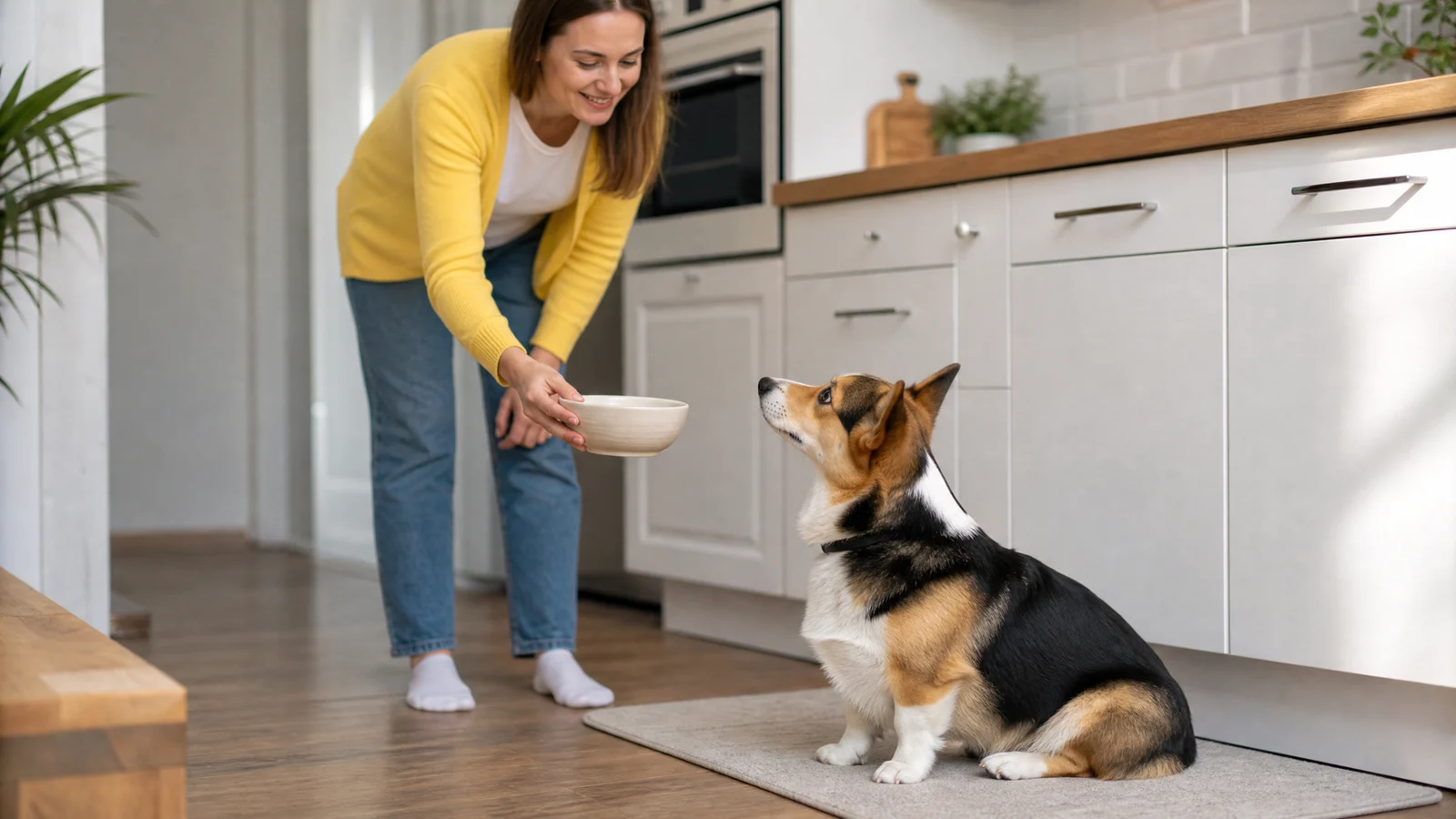
Food, a moving ball and a person's company are different rewards. A Corgi asking for dinner may gain little from the praise that satisfies a request for contact. Teaching a quieter way to ask works better when the response answers the particular request, rather than offering the same substitute for every noisy moment.
The label bossy can obscure that practical question. Barking may have become an effective way to obtain something, but the dog may also need care, feel uncertain or be responding to an event outside. Check the setting before deciding that withholding attention is the relevant lesson.
In this guide, we build a menu of quiet requests around meals, toys and company. Each can use a simple action with an understandable outcome. The final step is making those arrangements work across caregivers, including times when the requested interaction cannot begin immediately.
What a Corgi's Quiet Requests Can Obtain
Choose the outcome before selecting the action. A comfortable stand near the meal area, an approach with a permitted toy and a brief nose touch can communicate different requests. You need not teach every option. Begin with the noisy situation you can prepare for most reliably and choose one response the dog can perform easily. The adults should be able to agree that they saw the same action.
Advice on attention and barking explains how a person's reaction can keep noise useful. The alternative needs opportunities before barking starts, with enough consistency for your Corgi to discover a clearer route to the desired outcome.
Use this menu as a starting point. Adapt the action to the dog's comfort and the household's ability to recognize it promptly.
| Wanted Outcome | Possible Quiet Request |
|---|---|
| A prepared meal | A comfortable pause at the agreed feeding location |
| Shared toy play | Approaching with an appropriate toy while keeping paws down |
| Contact with a person | A quiet approach or a familiar gentle target touch |
Pembrokes and Cardigans can both learn useful household signals, but the breed name does not choose the reward for you. Watch what your dog actually seeks. If receiving the presumed reward does not resolve the request, reconsider your interpretation before making the quiet action harder.
Quiet Meal Requests for Your Corgi
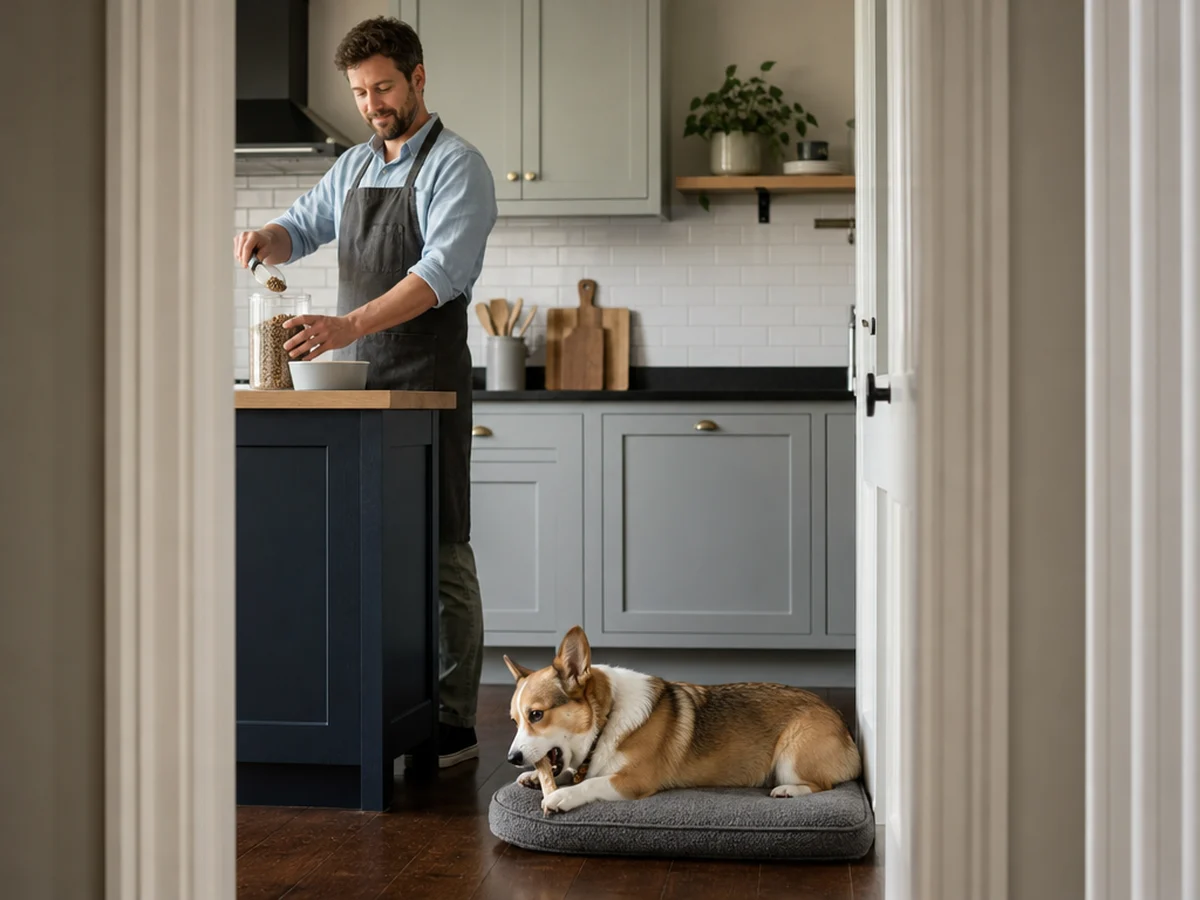
Meal preparation can announce an exciting outcome long before the bowl reaches the floor. Packaging, cupboard doors and a person's usual route may all become signals. Prepare the human part of the routine so your dog does not spend an extended period watching food appear and disappear while waiting for instructions they have not learned.
The Bowl Is Ready First
Complete preparation while your Corgi is comfortably occupied elsewhere when possible. Bring the ready meal into a simple routine rather than using the entire preparation period as a waiting test. This leaves you able to notice and reward the quiet action without juggling several kitchen tasks at once. Put your own phone and other distractions aside for the brief delivery, so the dog is not left waiting while an unrelated task intervenes.
Meet feeding needs reliably. A manners lesson should not become a prolonged contest over access to a necessary meal.
Choose a feeding position outside a crowded route. The dog should not have to hold a sit while people step over them or another pet approaches the bowl. If possession itself brings tension, arrange safe separate feeding and obtain qualified help. That is a different concern from a learned noisy request.
A Pause the Dog Understands
Teach the chosen stand or sit during an easy moment before adding the ready bowl. Reward the familiar response promptly, then make the meal the outcome when the dog can participate comfortably. A brief successful pause provides clearer information than repeated cueing through an increasingly noisy wait.
- Use the same comfortable position and familiar cue at first, keeping the person and feeding location predictable.
- Deliver the ready meal after the quiet response without adding an unexpected extra delay.
- If the routine repeatedly starts with barking, simplify the preparation and create earlier opportunities for quiet success.
When the Kitchen Becomes Too Busy
During a crowded meal period, management may be more useful than another lesson. Have an adult arrange a calm feeding opportunity elsewhere and return to practice when the household can follow the plan. A visitor preparing food need not become an unplanned test of your Corgi's newest skill.
Keep a brief note of the point where noise begins. A bark at cupboard opening and a bark when the bowl pauses halfway down suggest different parts of the human routine need changing.
Play Requests Without Corgi Barking
A dog who wants a game needs a permitted way to start one. Choose an appropriate toy and reward a calm approach with a little shared play when you are available. Keep belongings stored away so the new invitation does not become a search for whatever object makes a person react fastest.
The Toy Can Carry the Message
Invite the dog to approach with their own toy before the usual barking period. Acknowledge the arrival without immediately grabbing the object, then begin a suitable game. The invitation should feel cooperative, with enough room for your Corgi to come close willingly and enough supervision to keep the toy suitable.
A dog need not hold a toy to ask politely. If carrying does not suit them, use an easy quiet approach instead.
The general Corgi training guide covers markers and rewards. Keep that familiar language here, while making the game itself part of the payoff. Food may help teach an approach, but a dog seeking play may still be waiting for interaction after eating a treat.
A Finish That Stays Finished
Teach a brief ending signal during manageable play and follow it with an appropriate quieter activity. Put the toy away when necessary without repeatedly displaying it. If another adult restarts the game whenever your Corgi barks, the ending becomes uncertain regardless of how consistently you say the finish word.
Consider what happens after the toy disappears. Suitable rest, company or another calm activity gives the dog somewhere to put their attention. An empty room immediately after exciting play may be a much harder transition than the familiar quiet routine they have practiced.
Keep games away from moving feet when heel pursuit is a concern. Our Corgi household herding guide explains movement practice separately. The request lesson should not require someone to run through the home while the dog tries to organize their ankles.
Quiet Requests for a Person's Company
Contact requests depend on what the dog enjoys, not merely what a person intends as affection. Some Corgis may seek gentle touch, while another approach may ask for shared activity or proximity. Notice whether the dog stays comfortably involved when you respond and allow them to leave when they have had enough.
A Recognizable Approach
Reward a quiet approach before the dog needs to become louder. You might briefly turn toward them, offer suitable contact or invite a calm activity. This makes ordinary moments part of the teaching, reducing dependence on formal sessions where the person is already watching closely. Keep the response gentle enough that a request for a little company does not automatically launch a much more exciting game.
A gentle hand target can be useful if your dog knows it and finds it comfortable. Present the target in an easy position and reward a light touch, then provide the promised interaction. Avoid making the signal a repeated demand for the dog to stretch, jump or push harder.
Company While You Work
Arrange the dog's needs before beginning a predictable occupied period. Offer a potty opportunity, appropriate activity and a usable resting area according to your Corgi's routine. A quiet request cannot compensate for a day in which nobody is available to meet ordinary needs.
Begin with manageable stretches of being occupied nearby. A long call is a difficult first lesson, especially when the dog has only practiced a brief pause.
Guidance on humane structure and rewards supports clear routines alongside positive teaching. Make the occupied period understandable through familiar arrangements and realistic opportunities for later interaction, without expecting the dog to understand a human calendar.
When the Request Means Something Else
Check new or unusual persistence rather than automatically applying the usual routine. A need to go out, worry about a sound or difficulty settling may look like another request for contact. Regular veterinary checkups support that wider care, and a sudden change deserves discussion with your veterinarian.
Observe where the dog looks and what happens after you respond. Continuing distress despite contact suggests that attention alone may not answer the problem.
A familiar request can also change with location. A quiet approach beside the couch may be harder to notice at a desk, where your eyes and hands are occupied. Choose a comfortable place within view or arrange planned contact before work, rather than making louder behavior the only signal that reaches you.
Shared Answers to Corgi Requests
Tell other caregivers which quiet action you are rewarding and what follows it. A vague instruction to wait for good behavior leaves too much open to interpretation. A practical agreement says that a quiet approach can start an available game, while the familiar finish is followed by a prepared resting opportunity.
Reward-based teaching of useful actions relies on outcomes the dog can recognize. Consistency includes timing and the kind of interaction, not just agreement on a cue word.
- Notice the selected quiet request early, before barking becomes the usual opening to every exchange.
- Check needs when the pattern changes, and prepare for busy periods instead of improvising only after noise starts.
- Have adults supervise children's play and explain the dog's request and finish signals before the interaction begins.
Do not repeatedly arrange a frustrating wait to practice recovery from barking. If the dog cannot manage the moment, simplify the situation and seek reward-based professional help for a persistent pattern. The lesson should produce a usable signal, not a longer argument around the same reward.
Quiet Requests That Work for Your Corgi
Keep the menu small enough for everyone to remember. A clear meal pause, a permitted play invitation and a comfortable approach for company can cover different needs without requiring one rigid response everywhere. Build from the situations in which your dog can already succeed.
Look for requests appearing before noise and for easier transitions when interaction ends. Continue meeting needs and answering consistently as household routines change. A quiet Corgi still has something to communicate, and the useful result is a family who can recognize and respond to it.
 BehaviorWhy Corgis Bark So Much, and How to Teach Quiet
 BehaviorHelping a Corgi Who Growls Over the Food Bowl Feel Safe
 Training basicsRewards and Games That Bring Corgis Back From the Chase