 Corgi
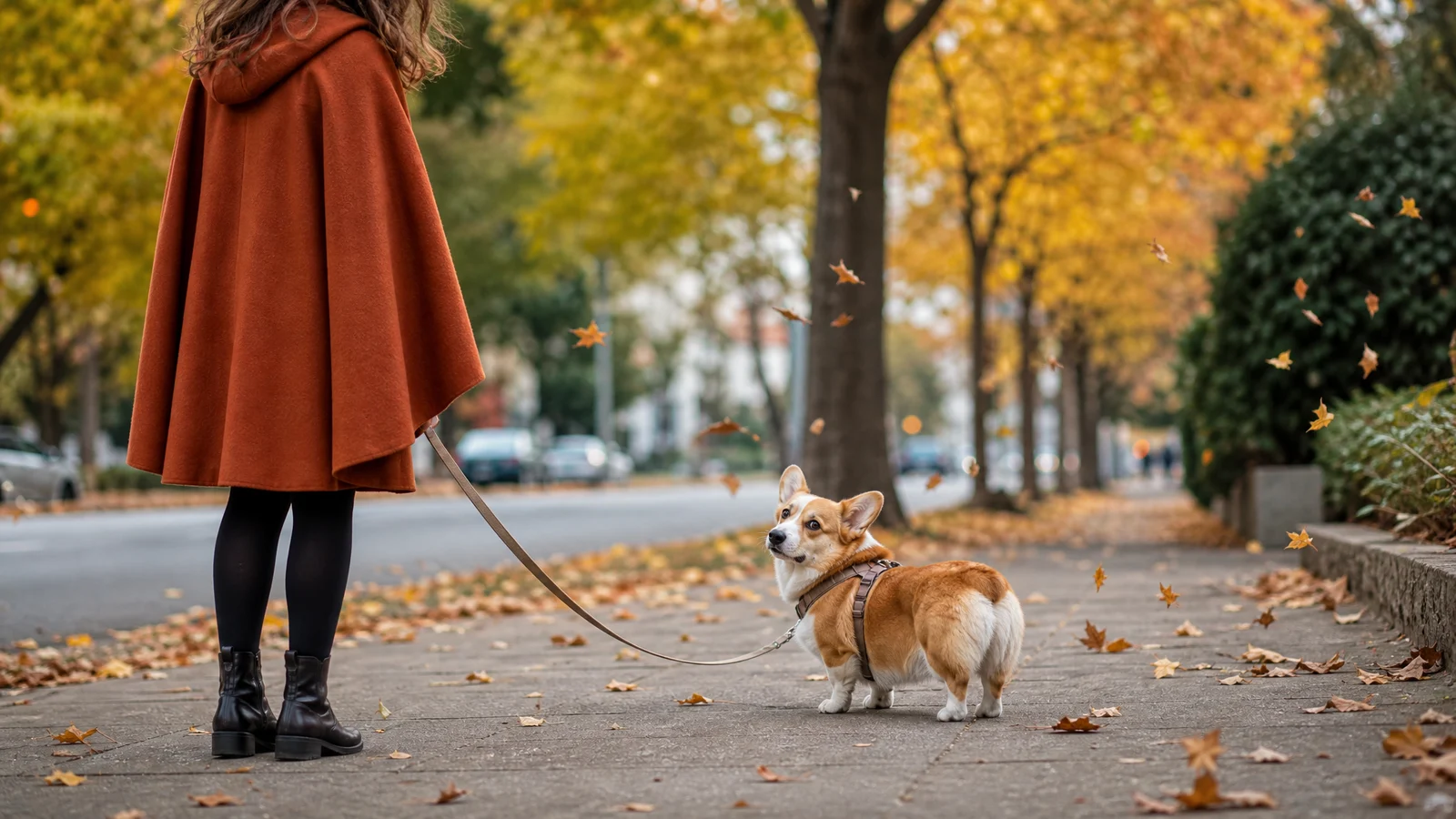
The most common leash mistake with a Corgi is following the pull. The dog leans into the harness, you step forward to ease the strain, and the dog learns that a tight leash is how the walk moves along. The fix is easy to say and takes practice to do: stop moving, wait for slack, and reward the slack.
This matters more for Corgis than for many breeds. They are strong, low and quick, and they were built as herding dogs, so a Corgi who learns that pulling pays can haul and lunge with surprising force for their size. Done well, leash training gives that same drive a better outlet, and you get a dog who stays with you.
Read on for how to end the tug-of-war, choose a harness for a long, low body, handle scent-driven pulling, work through lunging at bikes and joggers, keep sessions short, and follow a two-week plan.
Stopping Pulling in Corgi Leash Training
Start with what the pull teaches. Each time tension gets the dog to a scent, a squirrel or the next driveway, the pull is paid. Pembrokes are described as highly intelligent and willing, with a mind of their own, so they repeat whatever works and drop whatever doesn't. We have trained this breed for many years, and the cleanest fix has stayed the same: make a tight leash pay nothing.
The rule is to stop walking the moment the leash tightens and to wait rather than haul the dog back. Stand still, keep your hand quiet and let the dog work it out. When the leash sags, even slightly, mark it with yes and step forward. The reward is movement, which is exactly what the dog wanted, and the marker tells them which moment earned it.
Corgis are strong for their size and the pull builds fast, so stop at the first hint of tension, not when the leash is fully taut. If waiting alone is slow, reverse course and head off in the opposite direction, then pay the dog for catching up and arriving at your side. For more on how the breed learns, see how trainable Corgis are. A few habits speed this up:
- Feed at your leg, low and on the side you have chosen, so the dog learns that beside you is where food appears and you are not bending over every few steps.
- Start indoors or in a quiet yard, where the leash is easy to keep loose and nothing competes with you.
- Have everyone in the household use the same rule, because a walk where tension sometimes works is a powerful way to keep the habit alive.
Harness Fit for Leash Training a Long, Low Corgi
Gear complaints usually come down to leverage. A Corgi is low-set, strong and sturdily built, which means a lot of pulling power in a small frame, and a leash clipped to a collar sends all of that force through the neck. A well-fitted harness spreads it across the chest, so we suggest a harness for training walks and a flat collar for identification tags.
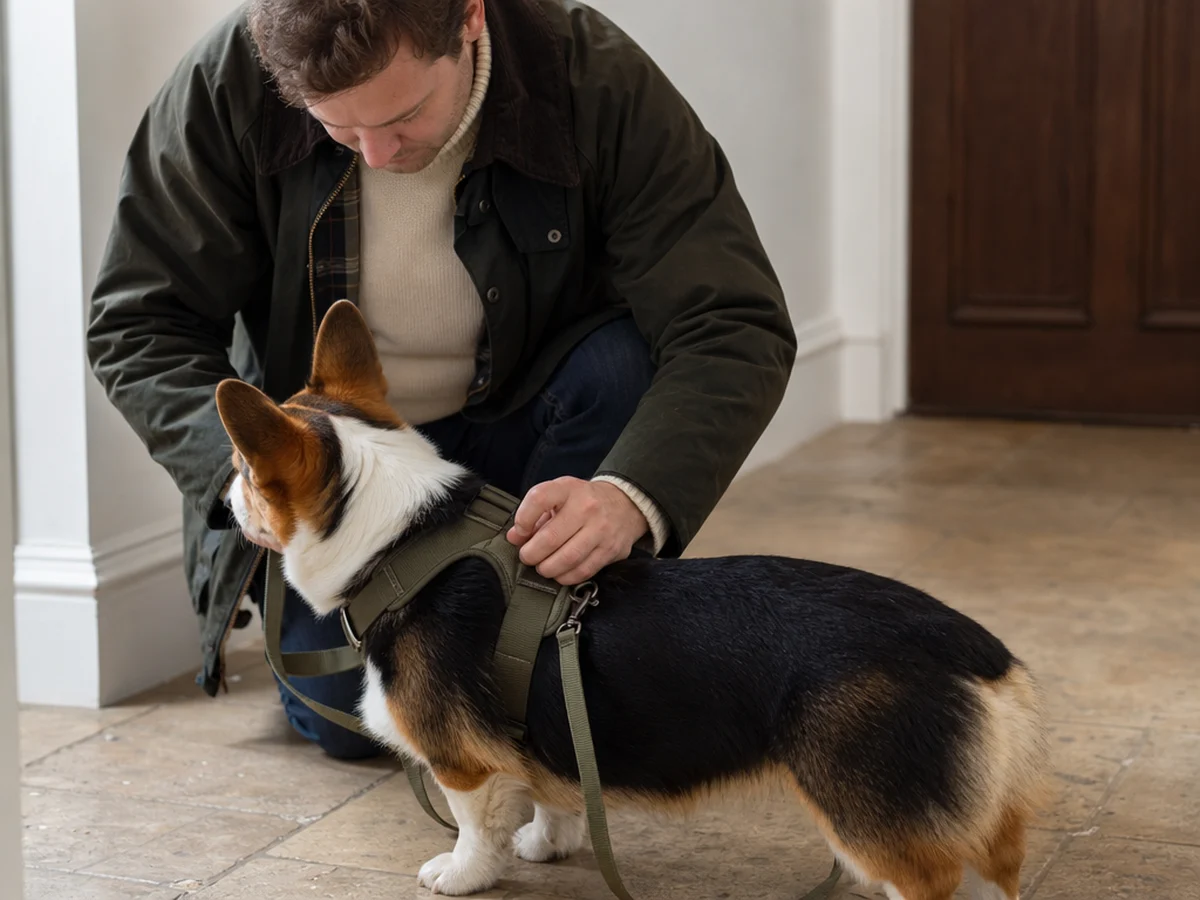
Where the leash clips on also matters. A front-clip harness, with the ring at the chest, turns the dog's body back toward you when they surge instead of letting them lean in and pull straight ahead. A back-clip harness is comfortable, but a strong dog can lean into it and keep hauling forward.
Fit decides whether any harness helps. Because the breed standard describes a herding dog with agility, freedom of movement and endurance, choose a design that leaves the shoulders and front legs free. Check these points before every walk:
- Your fingers should slide flat beneath each strap, but the harness stays put and does not twist or shift when the dog pulls.
- Nothing rubs behind the front legs or presses on the throat when the dog stretches forward.
- The dog can sit, lie down and trot without the straps riding up or sliding back.
- The leash hangs from the ring without catching around the front legs.
Corgis have a long back, so ask your veterinarian at regular checkups which gear and which walking habits suit your particular dog. Keep your hand near your belly as well. A leash held high on a low dog pulls the harness upward and sends confusing signals about tension.
Why Does My Corgi Pull at Every Scent?
Scent pulls are a different problem from the pull toward the next block. A Corgi's nose sits close to the ground, so every bush, hydrant and fallen leaf is right at nose level. Pembrokes are also described as bright and bossy, so a lunge toward a smell is partly the dog making their own plan for the walk. We cannot say how much is instinct and how much is habit, but the cure is the same.
Sniffing is self-rewarding, which means the scent itself pays the dog, not you. If tension also gets them there, the pull is paid twice. You cannot remove sniffing from a walk, and you should not try, because exploring is a real need. What you can do is turn it from something the dog takes into something you give.
Turning Sniffing Into a Reward
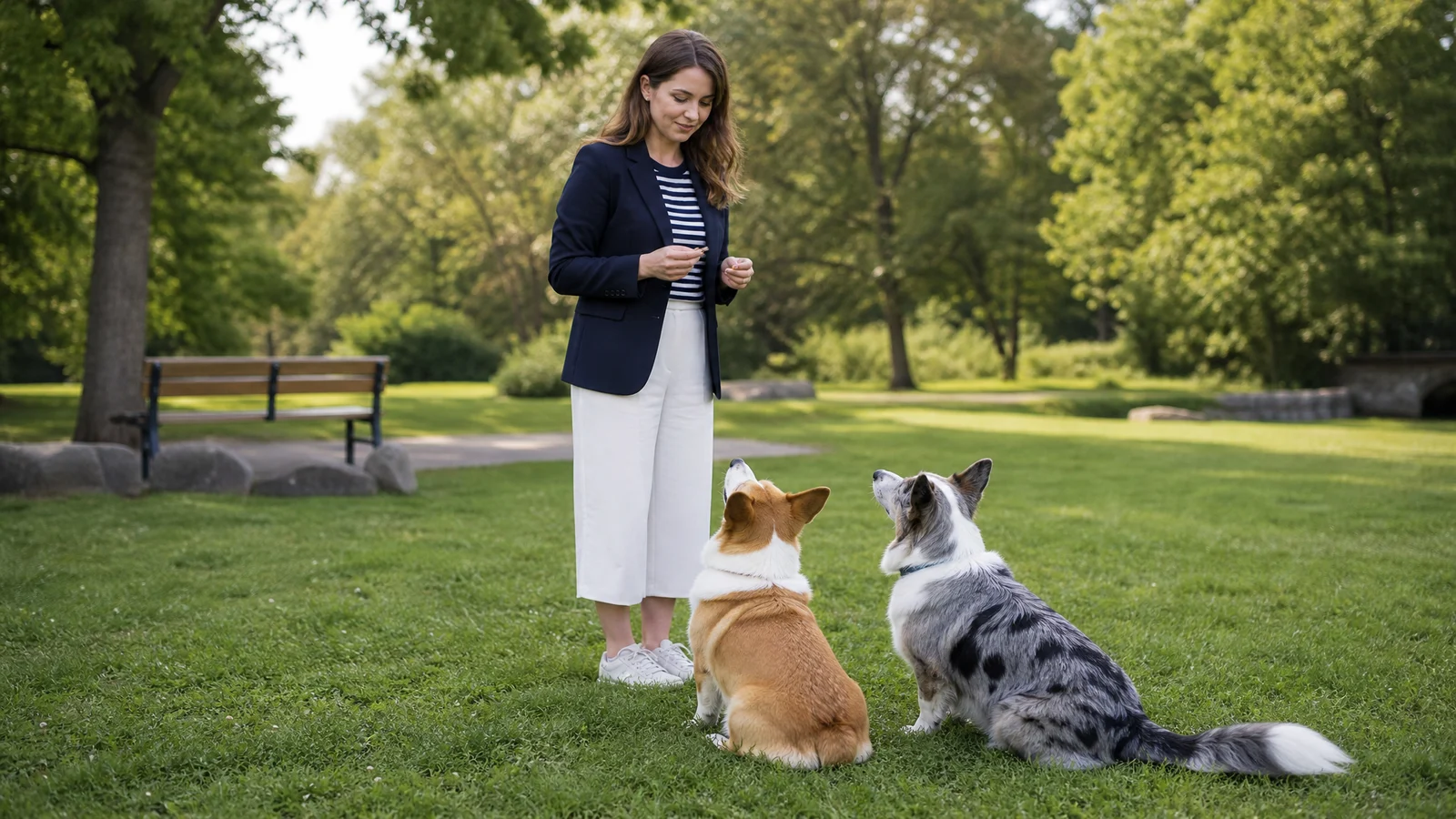
Pick a cue such as go sniff. After a stretch of slack leash, say it, walk to a good spot and let your Corgi explore on a loose leash. Then call them back, mark the return and walk on. Over time the dog learns that slack is the way to reach the best smells, which makes the sniff break a reward you can use again and again.
If your dog locks onto a scent before you can cue, stop and wait for even a brief look up at you. Pay that look, then release them to sniff. Some Corgis value a scent more than any treat at first, so treat the sniff as the high-value reward and keep food for the stretches where nothing interesting is happening.
Corgi Leash Lunging at Bikes and Joggers
Lunging is a sudden burst toward something, and for a Corgi the targets are usually fast and moving: bikes, scooters, skateboards, joggers and running children. This follows from the breed's job. Corgis are herding dogs capable of speed and endurance, and motion is what herding dogs are wired to notice. The lunge is often the start of a chase or a herding move, not necessarily aggression.
The parent club's FAQ says Pembrokes are happy to herd up errant children, especially running ones, and warns that heel nipping can follow if the behavior is not handled consistently from the beginning. The same drive shows up on the leash, so begin in puppyhood rather than waiting for the habit to set.
Telling Herding From Frustration
Not every lunge is herding, though. Leash frustration is when a dog becomes agitated because they feel restricted, and it can look much the same. A dog who stiffens and stares may be tracking motion, while a dog who barks and spins may be frustrated or worried. The training overlaps, so you do not have to settle the label first, but watching your own dog's body tells you more.
Breed type plays a part. Pembrokes often take charge of other dogs and herd them around, while the Cardigan standard calls the breed alert and watchful yet friendly. Our Pembroke versus Cardigan comparison covers these differences. If lunging is sudden and new, or comes with growling or snapping, ask your veterinarian to rule out pain and consider a qualified reward-based trainer.
Can a Corgi Learn to Pass Bikes Calmly?
In most cases, yes, though the instinct does not vanish and results depend on the dog's history and your consistency. The tool is distance. Every trigger has a threshold, meaning the point at which your dog spots it yet can still take a treat and think. Working at that range teaches your Corgi that a passing bike predicts good things, and over many repetitions the lunge loses its purpose. The same steps work for every trigger:
- Stand at a distance where your dog sees the trigger but stays loose.
- Mark the first calm look with yes, then deliver a steady stream of treats for as long as the trigger stays in view.
- Stop feeding when the trigger is gone, so its appearance becomes the cue for treats.
- If the dog stiffens or stares, turn and walk away before the lunge, and reward as they move with you.
- Move closer only after many calm repeats, and step back to an easier distance whenever the dog struggles.
Bikes and Skateboards
Bikes arrive quickly and often silently, so choose a spot with room, such as the far side of a wide path or a driveway set back from the street. Start with a bike that is parked or far away, then work toward slow, distant riders. Skateboards and scooters follow the same ladder. Keep the leash loose with your hand near your belly, so you have control without adding tension.
Joggers and Running Children
Joggers often come from behind or from the side, so step off the path, turn your dog to face you and feed as they pass. Running children set off the herding response in particular. Keep a generous distance, skip greetings while your dog is wound up, and ask children to walk rather than run near your dog while you reward calm. That gives the instinct a quieter job to do.
Short Leash Training Walks Beat Long Struggles
Many walks go wrong at the tail end. Corgis are energetic and highly intelligent, so a long session full of tight leashes and repeated cues tends to leave a dog both tired and wound up, and the pulling you had solved returns. Sessions of a few focused minutes, ended while the dog still wants more, build better habits than a long walk spent in a struggle.
Split the jobs. Use a short training walk with a harness, treats and a clear goal, such as slack to the corner and back. Then offer a separate relaxed outing with plenty of sniff time, which meets the need to explore without asking for strict manners. The two stop competing once each has its own place in the day.
Pembrokes are described as sensitive, and positive, reward-based training works best with them. Your frustration travels down the leash, so when you notice your grip tightening, turn for home with a few easy slack steps and end on a win. End the session when any of these appear:
- The dog turns down treats they normally love.
- They get faster, stiffer or start reacting to things they usually pass.
- You catch yourself repeating cues louder, or feel your own frustration rising.
Adolescence can bring setbacks, and skills that seemed solid may slip. Return to easier places, shorten sessions and keep rewarding. Keep up regular veterinary visits as well, because a dog in discomfort may pull or react more than usual.
A Two-Week Leash Training Plan for Corgis
In week one, stay where success is easy. Practice indoors and in the yard, with a well-fitted harness and soft treats, in brief sessions spread through the day. Reward your dog for looking at you when you say their name and for standing or walking at your side. Stop the instant the leash goes tight, then step on when it slackens.
Toward the end of week one, add turns and the sniff cue. After a few slack steps, say go sniff and let the dog explore on a loose leash. If your dog struggles, shrink the step.
In week two, move to the driveway, then a quiet street. Pick one trigger, like a bike, and start far away. Feed as it passes and turn away early if your dog stiffens.
Keep the rest of your walks relaxed, and thin out the treats to every few steps, then at random. Keep sniffing and forward motion in play as rewards. If lunging is new, severe or paired with growling, book a veterinary visit before pushing further.
A Corgi is bright, strong and built to notice anything that moves, so they will keep repeating whatever pays. These two weeks rest on one idea: make the slack leash the thing that pays, whether with a treat, a sniff or the next step forward, and give the urge to chase something calmer to do. Keep sessions short and distance generous, and the dog who once hauled you down the block learns to walk beside you.
 Training basicsPembroke vs Cardigan Corgi: Which Is Easier to Live With and Train?
 BehaviorSocializing a Corgi With Kids, Dogs and Strangers
 BehaviorCorgi Herding Behavior: When They Herd Kids, Cats and You