 Corgi
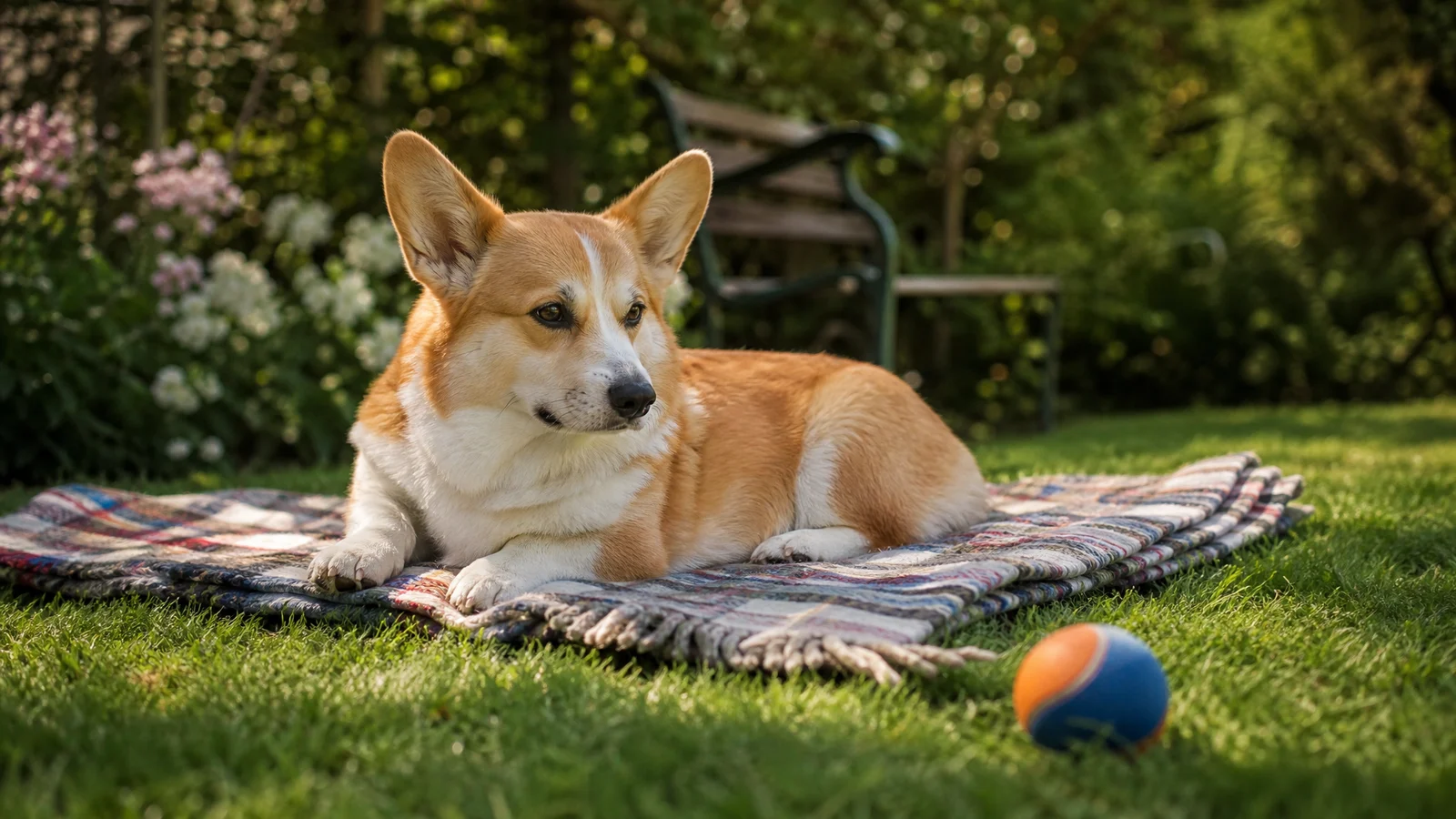
A Corgi darts after a running toddler, circling low and nipping at the heels, and the adults laugh at first and then wince when the squeal turns into a wail. Nobody meant harm, least of all the dog, who was doing exactly what the breed was built to do, which is to move anything that runs by getting behind it.
Both varieties carry that drive, though they carry it differently. Pembrokes lean bright and bossy, while Cardigans are even tempered and sometimes a little reserved with people they don't know. In either case the habit hardens early when no one shapes it.
We'll start with the ground rules every home shares, then move through four households in turn: an apartment, a house with small children, a home with a resident dog and a cat, and a long workday away. Handled well, socializing leaves you with a dog who is welcome almost anywhere. Handled badly, it leaves a dog who nips, barks at the door and manages everyone in reach.
Corgi Socializing Basics
Socializing a Corgi means teaching a clever herder that people, children, dogs and cats are safe and interesting, and not theirs to organize. You are not trying to dull a confident breed. You are giving a naturally bold dog good habits before the wrong ones settle in, and the same few rules apply in every home, so we set them out once here and then adjust them case by case below.
Pembroke and Cardigan Leanings
Well-socialized Cardigans are described as especially fond of kids and agreeable with other pets, and the breed ratings agree, giving Cardigans 4 of 5 for young children against 3 of 5 for Pembrokes. With other dogs the order flips, with Pembrokes at 4 of 5 and Cardigans at 3, a score the scale labels as good "with supervision." Both varieties land at 4 of 5 for openness to strangers.
The PWCCA adds that Pembrokes are happy to herd up errant children, running ones especially, and that parents need to be consistent from the start to prevent heel nipping later. Consistent means every adult answers the behavior the same way every time, so the dog never learns that nipping pays off with one person and not another.
Rules for Any First Meeting
Whether the newcomer is a child, a visitor or another dog, a good introduction has the same shape: your Corgi sets the pace, the contact stays brief, and calm is what gets paid. Follow these steps in order:
- Start far enough away that your Corgi can see the newcomer and still take a treat happily.
- Reward quiet looking, then let your dog choose whether to come closer.
- Finish while your dog is still relaxed, even when it feels too early to stop.
- Repeat over several days and shrink the distance only while your dog stays loose and wiggly.
Pembrokes are sensitive as well as bossy, and they respond best to gentle, reward-based handling, so let treats, praise and a quick game do the persuading. A dog who is pushed toward a stranger learns that strangers are something to avoid, and that is the opposite of what you want.
Apartment Living With a Corgi
An apartment puts a Corgi among strangers every day, in hallways, elevators and stairwells where nobody can step aside and a dog on a leash has nowhere to go.

Both varieties rate high for barking, and Pembrokes score at the very top for watchdog nature, so a set of footsteps outside the door can grow into a full performance before you've found your keys. The cure is to make those shared spaces predictable and a little dull, so that the sound of a neighbor stops meaning anything.
Neighbors in the Hallway
On shared stairs and in the elevator, pause at each landing, ask for a sit, and pay for calm as people pass, until the stairwell becomes a place where footsteps predict treats instead of barking. Keep the leash short enough to steer and loose enough to sniff, since a tight leash can tell a dog that the person approaching is something to worry about.
Neighbors make the best practice partners because they show up at predictable times in predictable places. Ask a few of them to walk past without greeting your dog, reward each calm look, and once your Corgi is relaxed, let a friendly neighbor offer a treat. Over a few weeks the familiar faces turn into scenery, and a dog who knows who belongs in the building has fewer reasons to bark.
Visitors Ringing the Bell
Some Cardigans withhold their favors from strangers until they know them better, which can look like aloofness but is better read as caution. Pembrokes, with their top watchdog score and bossy streak, may announce a visitor loudly and then try to run the show. The routine at the door is the same for both: send your dog to a mat or a gated spot with a chew, let your guest settle on the couch, and bring the dog out only once the excitement has drained away.
Keep the greeting brief. A few seconds of friendly attention, with a treat from the visitor's hand if your dog wants one, and then back to the mat, ends things before excitement builds. Let your dog walk up on their own and never pull them toward a guest. A good apartment Corgi learns that the doorbell starts a small, rewarding routine and not an emergency.
Young Kids and Socializing
A home with small children is the hardest case and often the most rewarding, because a herding dog meets the fastest, noisiest and least predictable people in the house. Among all groups, young children face the highest risk of bites, and the biter is far more likely to be their own family's dog than an unfamiliar one. A friendly breed rating is a starting point and never a safety plan.
That puts the work on the adults. Supervise actively, which means being in the room and watching, and keep a gate or pen handy so your Corgi can leave the chaos whenever they like. The goal is a household where the dog enjoys the children because the children have become predictable.
House Rules for Children
Children can learn a short list and keep to it, provided an adult repeats the list calmly and often:
- Pet gently on the shoulder or chest. Hugging, climbing on the dog or lying on top of them is off limits.
- Let the dog eat, chew or rest in peace, and keep small hands away from them during those times.
- When the dog walks away, let them go and do not follow.
- Offer treats on a flat palm with an adult standing close.
- Do the running and squealing away from the dog, or with the dog waiting behind a gate.
Children also make good training partners once they have a job. Give each child a short turn handing over a treat or asking for a sit while you stand beside them, and stop while everyone is still happy. Several brief turns build more trust than one long session that ends in tears.
Redirecting Heel Chasing
When your Corgi circles and nips at a running child, read it as herding and not as meanness, since the dog is trying to gather something that moves. Learn the early signs, which are stalking, blocking and a fixed stare at small feet, because interrupting the stalk is far easier than stopping the nip.
Call your dog to you in a calm voice, reward them for coming, and hand them something better to do, such as a sit, a chew or a scatter of treats across the floor. If the whole room is wound up, end the play with a short time-out behind the gate and let everyone settle. Chasing that is allowed to rehearse becomes a habit, so every adult needs to respond the same way.
Socializing a Corgi With Cats and Dogs
A home that already holds a dog and a cat is a puzzle with several personalities, and the Corgi's confidence tends to set the tone. Pembrokes living with other dogs, especially larger ones, generally become the boss and herd the others around. A big, patient dog may shrug that off and a nervous one may not, so plan the introductions instead of hoping they sort themselves out.
Meeting a Resident Dog
Begin on neutral ground, with both dogs on leashes and a helper handling the other one. Walk alongside each other with some distance between you, and reward calm looks. Wait until walks and play have gone well before bringing the newcomer home, then put both dogs back on leashes at the door, since the house belongs to the resident dog.
Once inside, supervise every early session and watch how the Corgi treats the bigger dog. A few seconds of herding can pass for play, but if your Corgi is blocking, nipping or hounding a dog who keeps trying to leave, calmly separate the two and give each a rest. A larger dog should always have somewhere the Corgi cannot follow.
A Plan for the Cat
Keep a new Corgi and the resident cat completely separate for two to three weeks before you attempt careful introductions. Give the cat a room the dog cannot enter. Let them learn each other's sounds and smells through a door or gate, and feed them on opposite sides so the other's presence predicts something pleasant.
When the introductions begin, keep your dog on a leash and reward them each time they glance at the cat and then turn to you. Let the cat decide how close to come. Give the cat shelves and an exit route the dog cannot reach. End the session at the first stalking, staring or circling, because a Corgi who rehearses chasing the cat will try it again. A cat who can leave whenever they like stays calm, and a calm cat is far less interesting to a herder.
Socializing While You Are Out
An owner who is away all day has a different problem, because the dog gets people and company mostly in the evening and on weekends, and social skills fade quietly when nobody practices them. Corgis score high on energy and on the need for mental stimulation, so the hours you do have should count for more than a lap around the block. Think of the day as a few small, planned pieces and not one long outing.
- Turn the evening walk into a meeting by choosing a route past a friendly neighbor, a familiar dog or a bench with people, and rewarding calm looking from a comfortable distance.
- Vary the route more than you lengthen it, since new sights teach more than extra miles, and burn off some energy first so your dog can focus.
- Recruit a dog walker, neighbor or friend, and give each the same simple rules: ask for a sit, pay for calm and finish before excitement builds.
- Add a few brief practice sessions at home, such as the doorbell routine after dinner, and stop while your dog is still doing well.
Keep up regular vet visits, and tell your vet about any sudden shift in how your dog reacts to touch or strangers, because pain can change behavior before it changes anything else.
Where Corgi Socializing Goes Next
Socializing works when it is built around the household you actually have, not the one in a textbook. A Corgi in an apartment needs calm hallways and short greetings. A Corgi among toddlers needs a gate, simple rules and a plan for heels. A Corgi with a bigger dog and a cat needs slow introductions, and a Corgi left alone all day needs the evening walk to do some of the work.
These dogs are bright, bossy and eager for company, so they will learn whatever your home teaches them. Teach them something you are glad to live with. A few questions tend to follow.
What if the heel nipping keeps returning? Look at the instinct underneath it in our guide to herding-driven Corgi behavior, then keep every adult answering the same way.
Where do the basics come from? Name response, sits and calm leash walking make every introduction easier, and our Corgi training guide builds them step by step.
Is there a point when socializing is finished? Not really. Adults keep meeting new people and dogs, so a few easy, rewarded encounters each week keep the skills fresh for life.
 BehaviorCorgi Herding Behavior: When They Herd Kids, Cats and You
 BehaviorQuiet Ways for a Demand-Barking Corgi to Ask for What They Want
 BehaviorWhy Corgis Bark So Much, and How to Teach Quiet